
Marinara Pizza
 Add Preferred Source
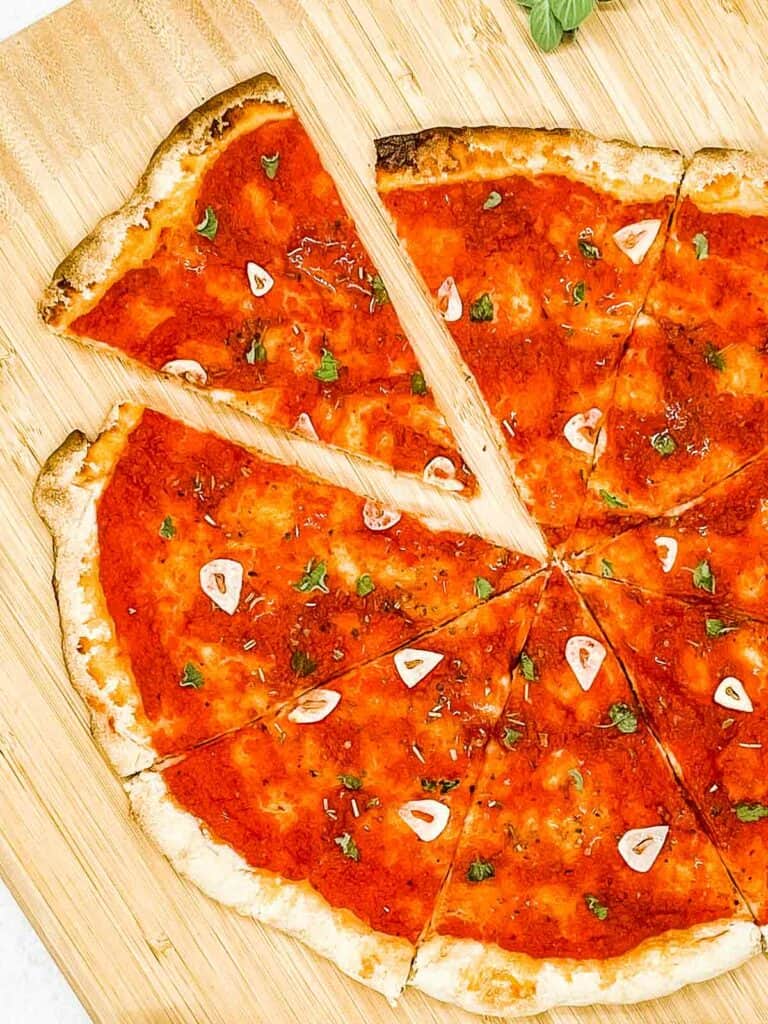
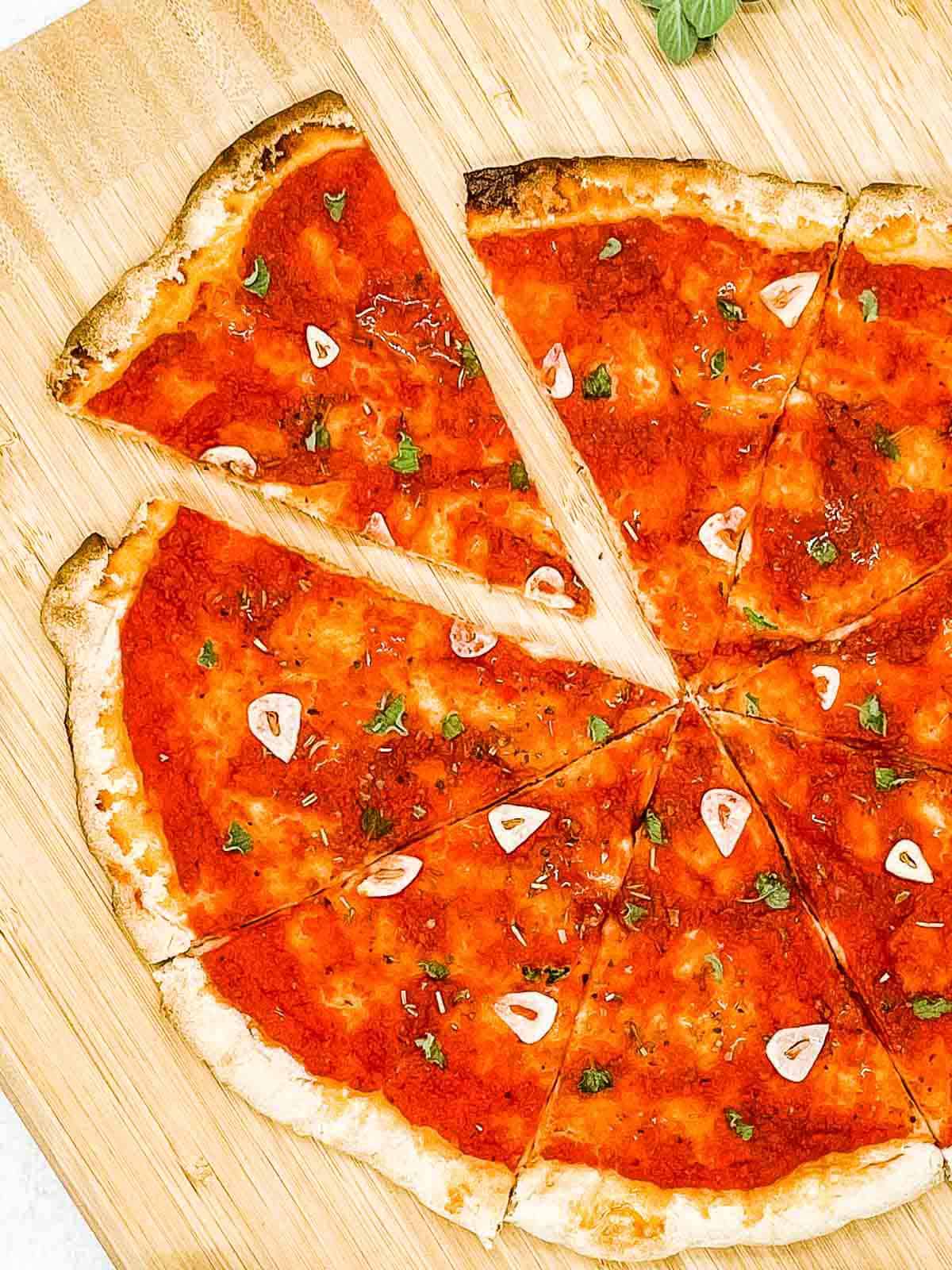
This marinara pizza recipe surprises people because it’s a classic pizza with no cheese at all. Marinara sauce, sliced garlic, fresh oregano, and a drizzle of oil on a crisp base are the whole thing. After years of cooking without meat, I’ve learned a dish this bare lives or dies on how good its few ingredients are.
People hear “marinara” and expect seafood, or the cheese that tops almost every other pizza. This one has neither, and it’s still one of the two original pizzas of Naples.
This post contains affiliate links. As an Amazon Affiliate, if you purchase through those links, I earn a small commission. Thank you!
Why You’ll Love This Recipe
- It comes together in minutes once your base and sauce are ready, so it’s the pizza I make when I want something honest on the table without a long build.
- The flavor is all garlic, tomato, and oregano, nothing competing. When there’s no cheese to hide behind, you taste the sauce properly, and a good marinara is worth tasting.
- It’s naturally vegetarian and vegan, with no swaps to think about. The whole thing is tomatoes, garlic, herbs, and oil.
- It suits a pizza night, an outdoor oven in the garden, or a simple plate for one. I make it both ways, in the Ooni outside and in the kitchen oven, and I’ll tell you how each one behaves.
Ingredients You’ll Need
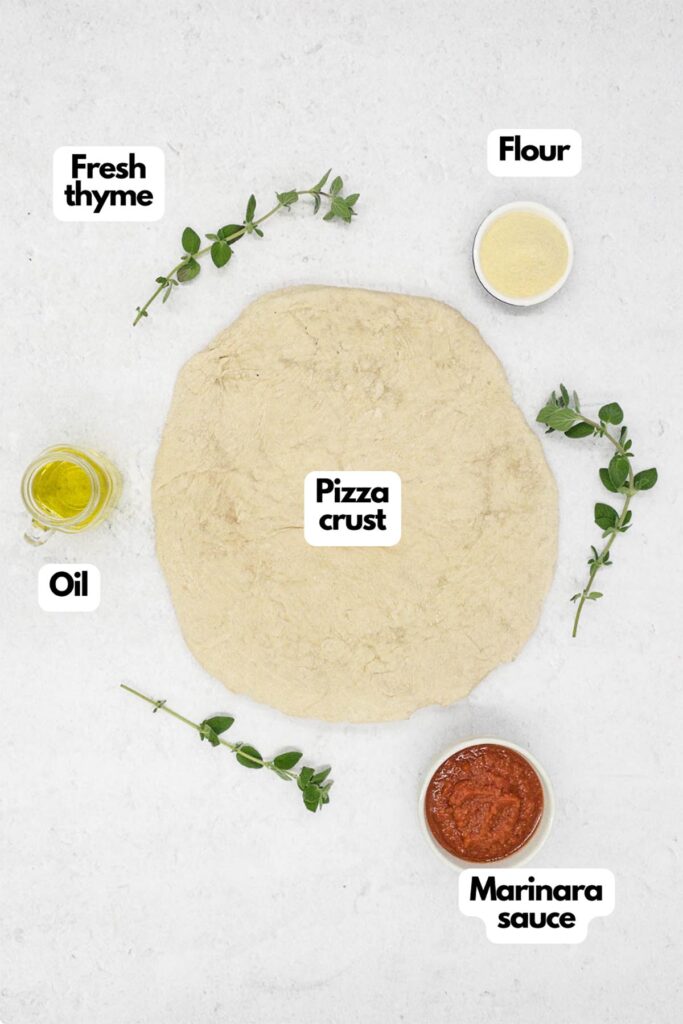
A few of these are worth a closer look; the printable card below has the full list with quantities.
- Marinara sauce. It does almost all the work here, so it’s the ingredient to get right. I use my own homemade marinara sauce because I can cook it down until it’s properly thick, and thickness matters more than anything on a cheeseless pizza. A thin, watery sauce soaks straight into the base and leaves the middle soft. A good jarred marinara works, but spoon it on sparingly and spread it thin.
- Garlic. Sliced thin rather than crushed, goes on raw and roasts in the heat of the oven. Thin slices cook through and turn sweet; thick ones can stay sharp and catch. This is one clove, not a handful, because raw garlic on a bare pizza is loud.
- Fresh oregano. It’s what makes this taste like a pizza marinara rather than a plain tomato flatbread. If you’ve only got dried, use a pinch, but fresh leaves scattered before baking give you the real thing.
- Olive oil or garlic oil. Goes on at the end, not the start. A drizzle over the hot pizza carries the aroma and gives the sauce a little gloss. Garlic oil, if you have it, doubles down on the flavor already there.
- The pizza base. This part is up to you. I usually make my own, but a store-bought base is a perfectly good shortcut on a weeknight. Whatever you use, get it thin, because a thick base under a thin layer of sauce tips the balance toward bread.
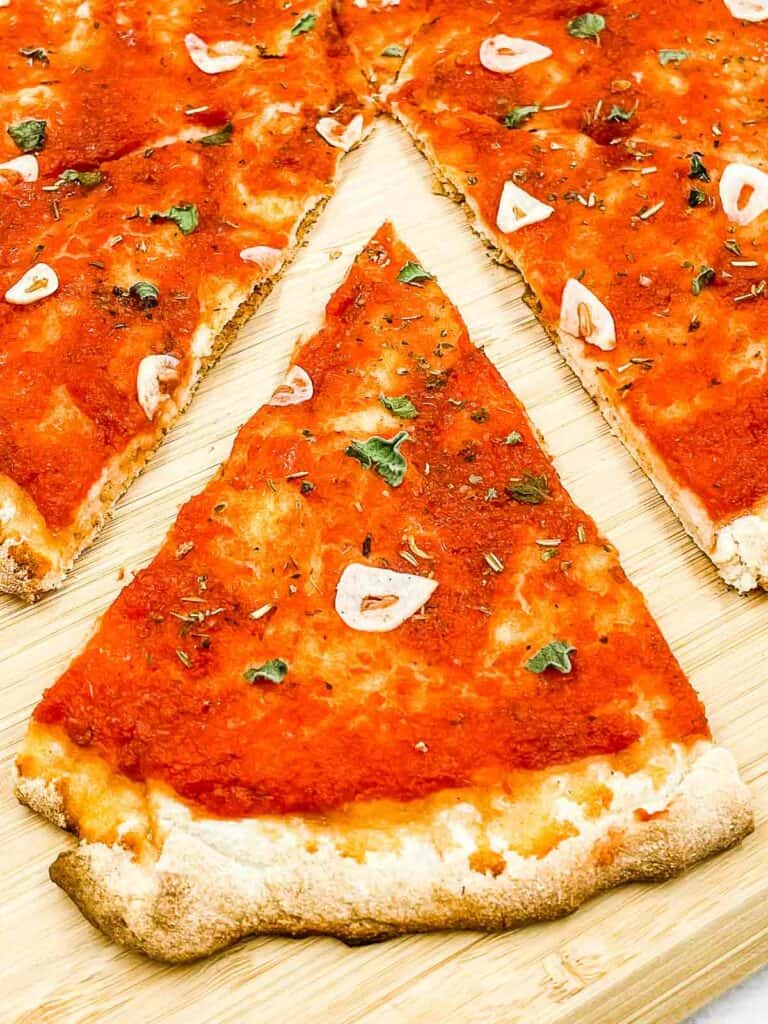
The vivid red sauce gets you first, then you bite into your
pizza with a satisfying crunch, the flavors are simple but oh so good!
How to Make Marinara Pizza
A complete printable recipe and the measurements in both US customary and metric are available in the recipe card below.
Assemble the pizza
Dust your surface with flour and lay your base on it. Spread the marinara thinly, leaving a half-inch clear at the edge for the crust, then scatter the sliced garlic and the oregano. Keep the sauce layer thin and even. Piling it on is the single most common reason a home pizza comes out soggy in the middle.
Bake at high heat
In a kitchen oven, get it as hot as it will go, 500°F (260°C), with a pizza stone heating inside if you have one. A stone that has sat in a hot oven for a good while is what crisps the base from underneath, and it is worth the wait. Bake until the base is crisp and the edges have color, about 8 to 10 minutes.
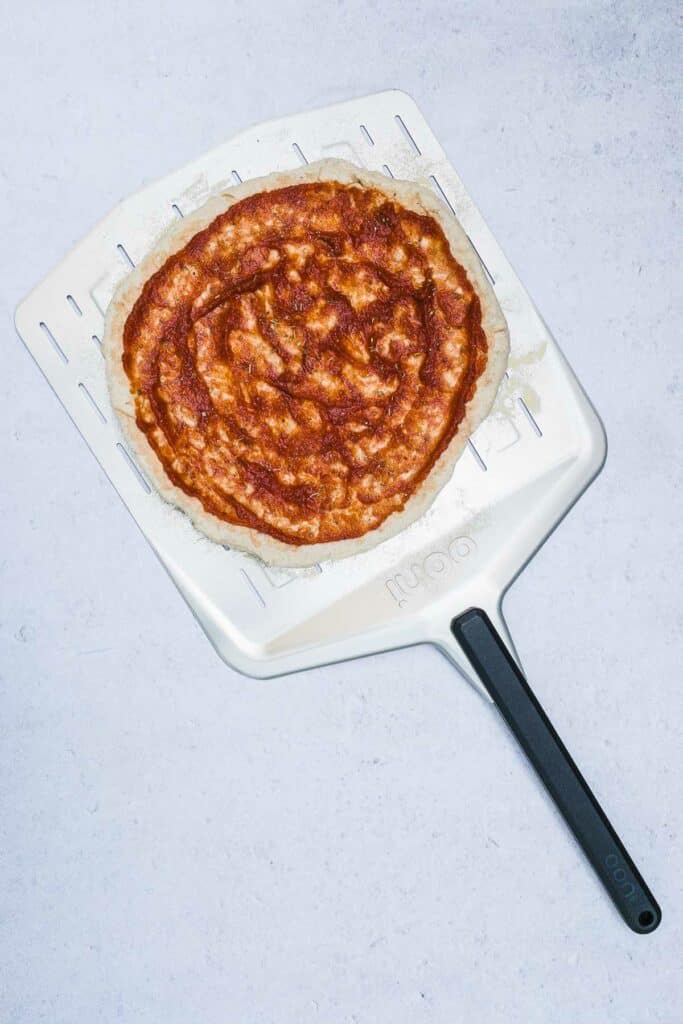
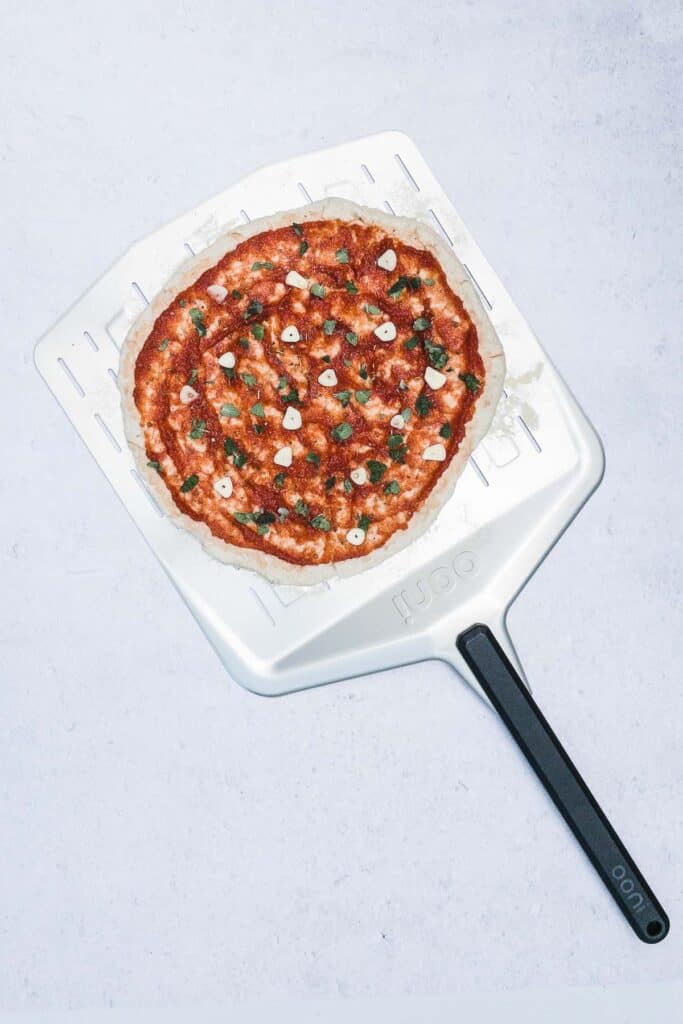
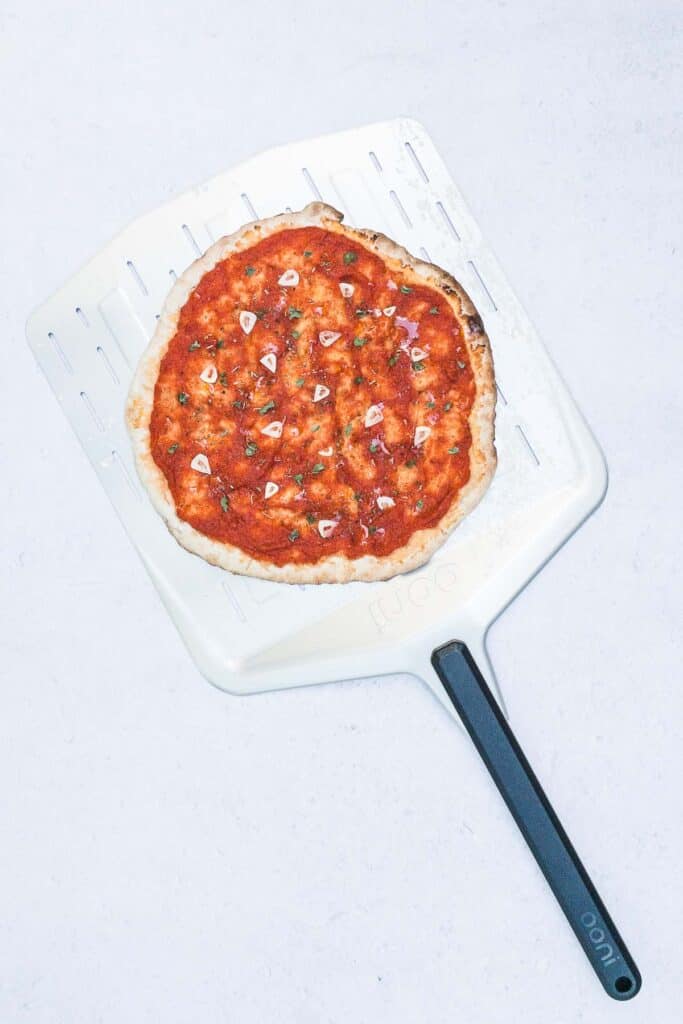
An outdoor pizza oven is a different job. The heat at 450°C is fierce, and the pizza’s done in a minute or two, so you turn it every twenty seconds or so and watch it the whole time rather than walking away. Pull it the moment the base is crisp.
Every oven, stone, and pan runs a little differently, so treat the times here as a guide and watch the pizza rather than the clock, adding or cutting a minute as yours needs.
Finish with oil
Drizzle with oil and eat it straight away, and that’s it. The method is short, so the care goes into two things: a thick sauce and a hot oven. Those are the whole recipe.
If you’re making your own sauce, you can simmer it a day ahead, cool it, and keep it covered in the fridge, which spreads the work out and gives the flavor a night to settle.
Recipe Notes and Expert Tips
- Thicken the sauce before it goes near the base. If your marinara is at all loose, cook it down in a pan until it holds its shape on a spoon. The water in a thin sauce is what steams the dough and leaves it doughy where the sauce sits.
- Preheat longer than you think. Most of the time a disappointing home pizza is an oven, or a stone, that was not hot enough. Give a stone a good while at full heat before the pizza goes in, not five minutes.
- Go light with the garlic and the sauce both. With nothing else on top, there’s nowhere for a heavy hand to hide. A thin layer of sauce and one sliced clove is the balance I keep coming back to.
- Finish with the oil off the heat. The drizzle goes on after the pizza is out, not before it bakes. Added at the end, the olive or garlic oil keeps its aroma instead of cooking away.
Recipe Variations
- Scatter torn mozzarella over the sauce and you’ve moved somewhat close to a margherita pizza. I’ve tested it both ways plenty of times, and I go cheesy when I want something richer.
- For more depth without changing the character, sprinkle a little Italian seasoning over the sauce before it bakes and add a few fresh basil leaves as it comes out. This is a tested one I make often, and it stays a marinara firmly.
- A pinch of red pepper flakes over the sauce brings a gentle heat that suits the garlic. That change is tested too, and it needs nothing else adjusted.
How to Store Leftovers
Cold marinara pizza keeps in the fridge for 3 to 4 days in a sealed container, and freezes for up to 2 months with the slices separated.
To reheat, a hot oven or a dry skillet brings the base back to crisp far better than a microwave, which tends to leave it soft. Let any refrigerated slices come out of the fridge while the oven heats so they warm through evenly.
What to Serve With Marinara Pizza
Because the pizza itself is light, I build the rest of the plate around it. A simple green salad with a sharp lemon dressing is all it needs, cutting the oil and the garlic. When I want something more substantial, a bowl of crispy baked sweet potato fries alongside turns it into a proper dinner, and the sweetness plays nicely against the tomato.
For a pizza-night spread, I put out a cheeseless marinara next to a three-cheese pizza so there is something for everyone, and nobody has to choose just one.
FAQs
No, a traditional pizza marinara has no cheese. It’s one of the two original Neapolitan pizzas, and it’s the cheeseless one, topped with just tomato, garlic, oregano and oil. Add mozzarella and you’ve made a different pizza, closer to a margherita. The name confuses people because “marinara” sounds like it should involve seafood, but here it refers only to the simple tomato sauce.
Almost always, too much sauce or sauce that is too watery. The liquid steams the dough from above before the base can crisp. Cook your sauce down until it is thick, spread it thinly, and make sure your oven or stone is fully preheated so the base sets fast.
Yes. A kitchen oven at its highest setting with a preheated pizza stone gets you a crisp base. It just takes a few minutes rather than the minute or two an outdoor oven needs. The stone is the part that matters, so give it plenty of time to heat.
No. A good jarred marinara and a store-bought base both work well and turn this into a quick dinner. If you’re using jarred sauce, spread it thin, since it’s often looser than a sauce you’ve cooked down yourself.
More Easy Pizza Recipes for You to Try at Home
If this one has you making pizza at home, here are a few more from my kitchen to try next.
- Neapolitan Pizza. The closest relative to this one, with fresh mozzarella and basil over pizza sauce.
- Caprese Pizza. It skips the tomato sauce for sliced fresh Heirloom tomatoes, mozzarella, and a balsamic glaze, and I make it when tomatoes are at their best.
- Flatbread Pizza. My shortcut when I don’t want to deal with dough, since it’s a ready flatbread base, topped and baked, done even faster than this one.
- French Bread Pizza. The one I make to feed a crowd, with garlic-buttered bread crisped first so it holds up under the toppings.
Equipment
- Pizza oven
- or pizza stone
Ingredients
- Flour to coat your work surface
- 1 12 inch pizza base
- ½ cup Marinara sauce
- 1 clove Garlic thinly sliced
- 1 handful Oregano leaves
- 1 drizzle Olive oil or garlic oil
Instructions
If using the Ooni pizza oven
- Preheat your pizza oven to 850°F/450°C
- Lightly dust your pizza paddle with flour, then place your pizza base on the flourFlour, 1 12 inch pizza base
- Spread marinara sauce evenly on the base of your pizza, leaving approximately ½ inch from the edges. Then add fresh oregano and garlic½ cup Marinara sauce, 1 handful Oregano leaves, 1 clove Garlic
- Place the pizza in the oven and cook, using the pizza turner to turn the pizza every 20 seconds for an even cook, until the base has crisped and the topping is evenly cooked approximately 1 -2 minutes
- Drizzle with olive oil or garlic oil, serve immediately, and enjoy your marinara pizza!1 clove Garlic
If using a kitchen oven
- Preheat your oven to 500°F/260°C, if you are using a pizza stone put it in the oven so it heats up
- Lightly dust your work surface with flour, then place your pizza base on the flourFlour, 1 12 inch pizza base
- Spread marinara sauce evenly on the base of your pizza, leaving approximately ½ inch from the edges. Then add fresh oregano and garlic1 clove Garlic
- Place your pizza on your pizza stone or on a pizza tray and cook until the base has crisped and the topping is evenly cooked approximately 8 – 10 minutes
- Drizzle with olive oil or garlic oil, serve immediately, and enjoy your marinara pizza!1 drizzle Olive oil
Notes
Nutrition
