
Dirty Martini Recipe
 Add Preferred Source
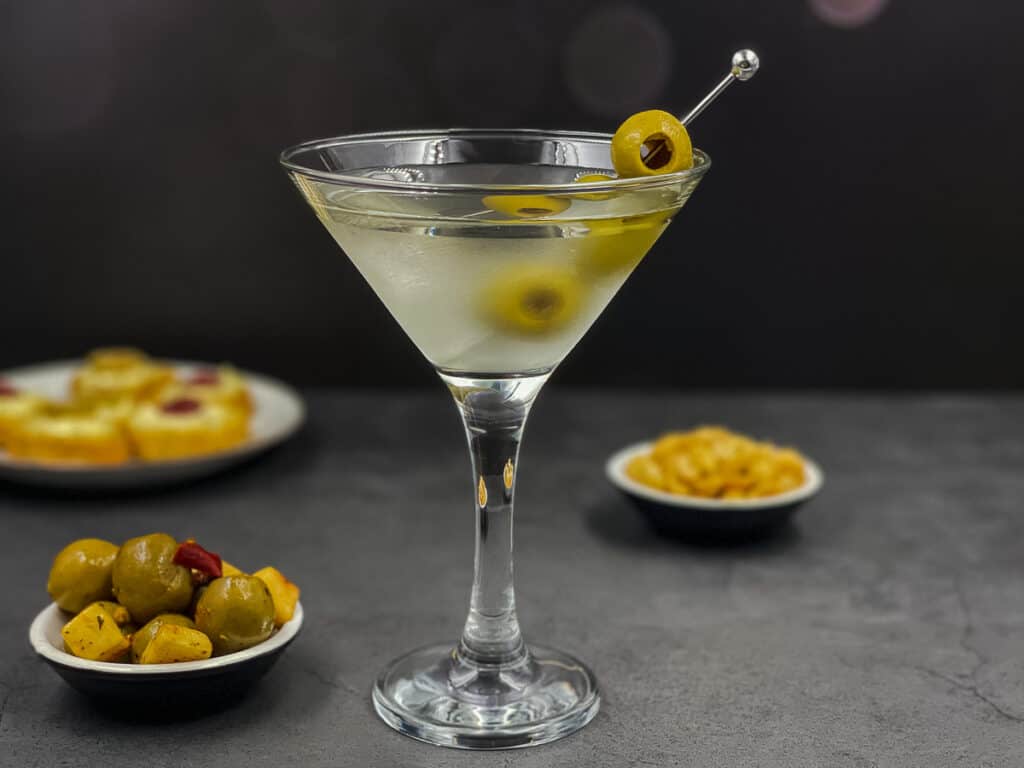
A dirty martini is a martini with a measure of olive brine stirred in, which turns the classic dry martini savory and gives it its cloudy look and its name. It’s gin or vodka, dry vermouth, and that splash of brine, and it only takes about three minutes start to finish.
What I like about it is how much the brine changes for how little you add, and getting that amount right is the whole skill in a drink this short. I make these when people come over, because it asks almost nothing of you in return.

This post contains affiliate links. As an Amazon Affiliate, if you purchase through those links, I earn a small commission. Thank you!
Why You’ll Love This Recipe
- It’s a three-minute drink. Everything goes into one mixing glass with ice, gets stirred, and gets strained. Nothing to prep ahead, nothing to clean up beyond the glass.
- You control exactly how dirty it is. Bar martinis are made to someone else’s taste, and at home you add the brine by eye, taste, and adjust.
- It works for gin drinkers and vodka drinkers from the same recipe. The brine and vermouth stay the same either way, so one method covers whichever spirit is in the house.
- If you already make a plain vodka martini, this is that same drink with one extra ingredient, and an easy next one to learn.
Ingredients You’ll Need
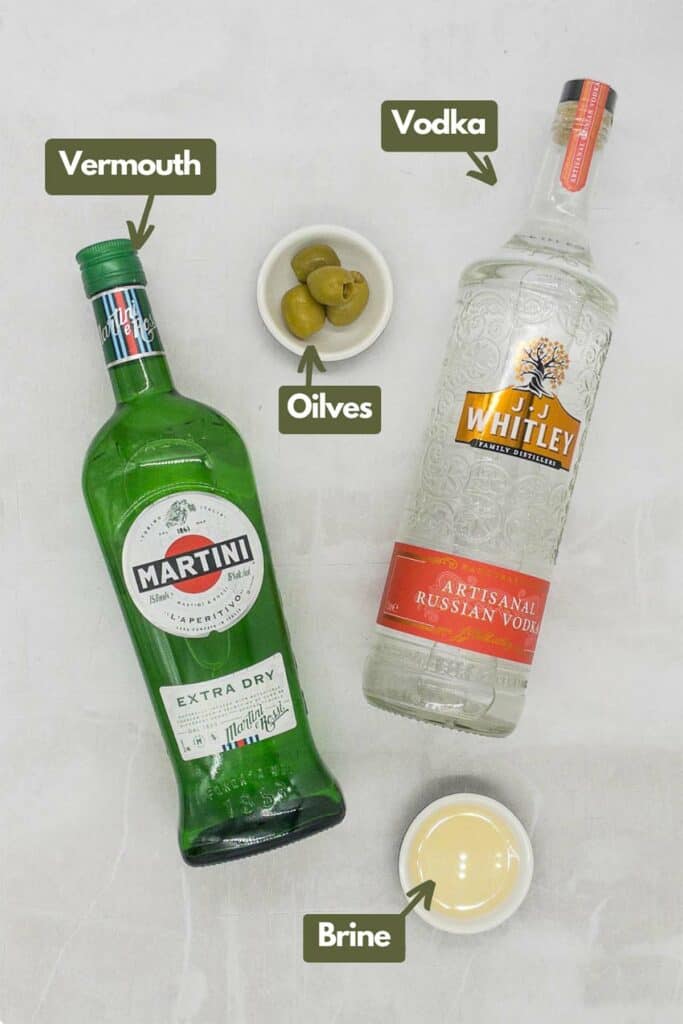
You’ll need all the ingredients shown in the photograph below.
- Gin or vodka. This is the one real choice. Gin brings its botanicals, the juniper and citrus, which sit alongside the olive brine and give you a more complex drink. Vodka steps back and lets the brine and vermouth lead, so it tastes cleaner and plainly savory. Neither is more correct. I’d send a gin drinker to gin and a vodka drinker to vodka and leave it there. With only three ingredients, whichever you choose wants to be a bottle you’d happily drink on its own.
- Dry vermouth. Vermouth is a fortified wine flavored with botanicals, and it goes here in a small measure. It’s easy to overpour, and too much flattens the drink and turns it sour, so a light hand keeps it balanced. It also doesn’t keep forever once opened, so store it in the fridge, and it lasts longer than a bottle left in a warm cupboard.
- Olive brine. This is what makes the martini dirty. It’s the liquid straight from a jar of olives, and it does two jobs: adding salt and adding that savory olive note. Use the brine from a jar of good olives, since it’s going into the glass undiluted. If you keep cocktail onions in the house, their brine works too and takes the drink toward a Gibson.
How to Make a Dirty Martini
A complete printable recipe and the measurements in both US customary and metric are available in the recipe card below.
Chill Your Glass
Chill your glass first, before anything else. Fill it with ice and cold water and leave it while you build the drink, then tip it out just before you strain. A warm glass warms the martini in the time it takes to drink it.
Mix and Strain
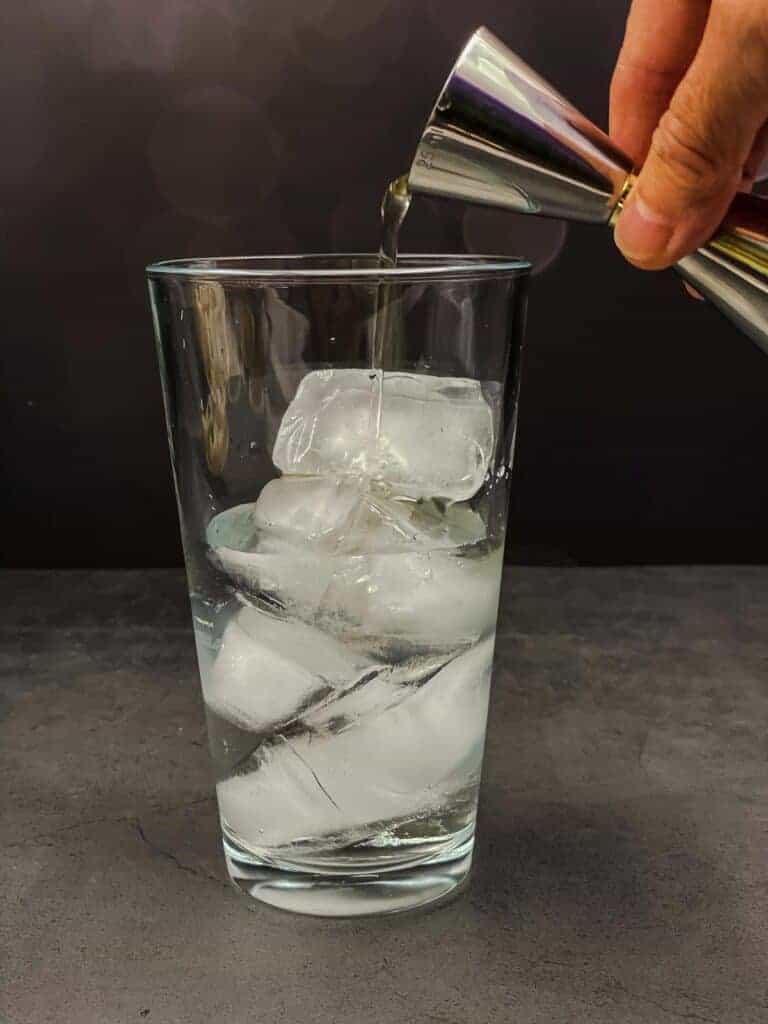
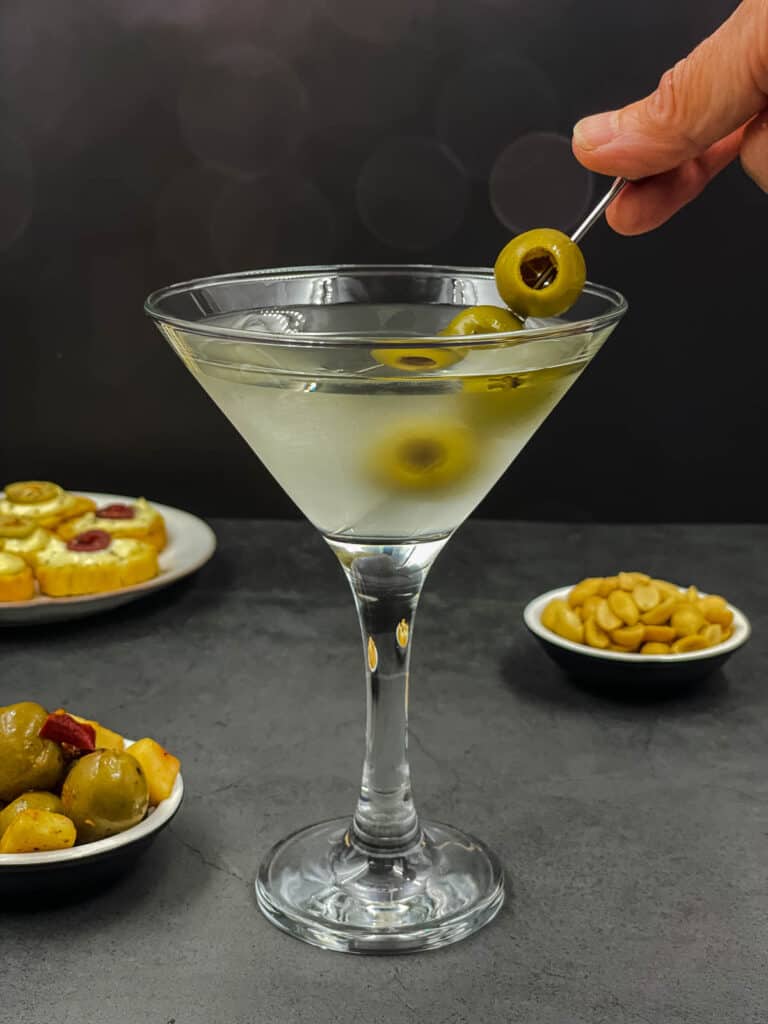
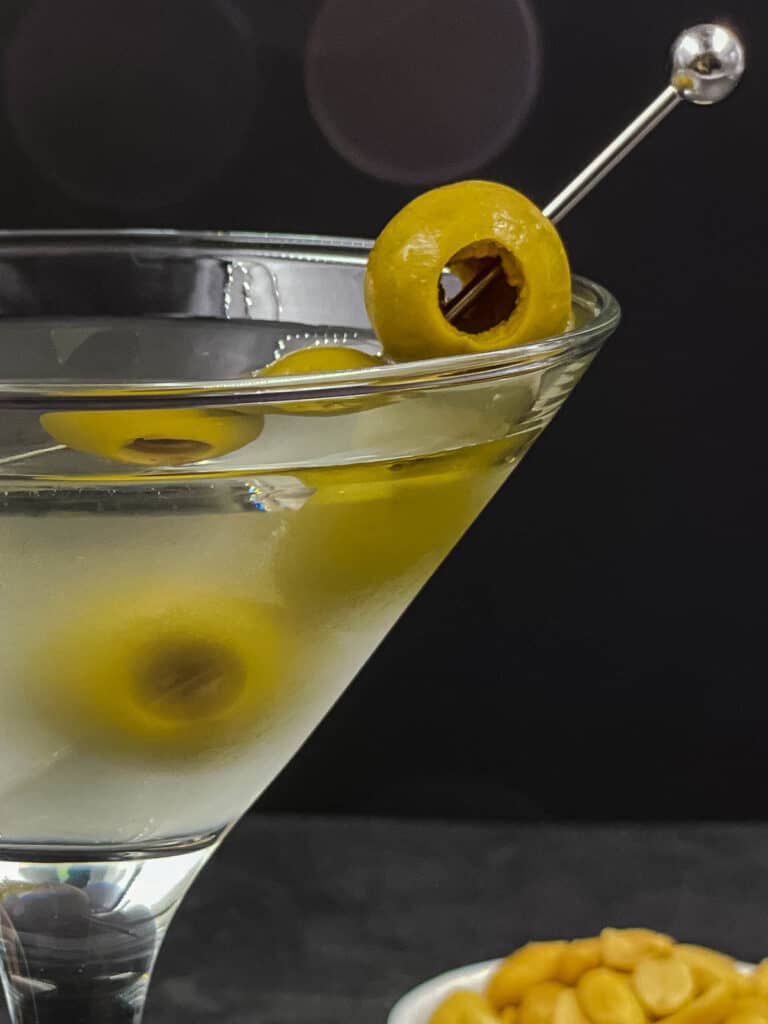
Add everything to a mixing glass full of ice: the gin or vodka, the vermouth, and the olive brine. Stir it for around thirty seconds until it’s properly cold. Strain into the chilled glass and add olives, then serve immediately.
Recipe Notes and Expert Tips
- Stir or shake it. Stirring chills the drink while keeping it clear and silky. Shaking whips in tiny shards of ice and air, so the martini comes out cloudier, colder, and a touch diluted. For a spirit-led drink like this, I stir. If you like it very cold and don’t mind the cloudiness, shake it.
- Go easy on the vermouth. It’s the ingredient most likely to unbalance the drink. Start with the measure in the card and add more only if you want it, never the other way around, because you can’t take it back out.
- Add the brine to taste. Half an ounce is a good starting point. For a filthier drink, add a little more and taste as you go. It’s easier to build up than to rescue a martini that’s gone too salty.
- Chill everything you can. A glass from the freezer, cold spirits, fresh ice. With so few ingredients, temperature is doing a lot of the work, and a lukewarm martini is a disappointing one.
- No cocktail shaker or mixing glass to hand. A mason jar with a lid stands in perfectly, either to stir in or to shake if that’s the way you’re going.
Recipe Variations
- Swap the olives for cocktail onions and their brine, and you’ve made a Gibson, the same drink with a sharper, oniony edge instead of the olive one. It’s a genuine classic in its own right, not an untested improvisation.
- For a filthier martini, push the olive brine up past the half ounce until it’s properly briny and cloudy. It’s the same recipe dialed further in the dirtier direction, so nothing else changes.
- Leaving the brine and olives out altogether takes you back to a plain gin or vodka martini, useful when someone at the table doesn’t want theirs savory. That’s the standard martini, a safe and known drink.

How to Store Leftovers
A dirty martini is built to drink straight away, so it isn’t a make-ahead drink once it’s poured. To get ahead for a party, stir the spirit, vermouth, and brine together without ice, keep it in the fridge for up to 24 hours, and strain it over fresh ice into a chilled glass when you’re ready. Once it’s poured, drink it, since standing in the glass it only warms and flattens.
What to Serve With a Dirty Martini
This is a briny, salty drink, so it wants savory, salty things beside it. Olives are the obvious partner, and so are salted nuts, good cheese, or a few crackers, with a sharp blue cheese in particular standing up to the brine.
If you’re putting out a spread, it sits happily next to a bowl of homemade garlic aioli with bread or crudités for dipping, the richness playing against the cold, briny drink.
FAQs
Gin or vodka, dry vermouth, and olive brine. The brine is what makes it “dirty,” giving the drink a savory, salty flavor and a slightly cloudy look. Leave the brine out and you have a plain martini.
A classic vodka martini is only vodka and dry vermouth, with no brine. A dirty martini adds olive brine and can be made with either gin or vodka. So every dirty martini is a martini with brine, and a vodka martini has none.
Both are correct. Gin gives you a more botanical, complex drink; vodka gives you a cleaner, plainly savory one. Choose by what you like to drink.
Around half an ounce gives you a standard dirty martini. Less makes it barely dirty, and more makes it a filthy martini. Add it to taste rather than by a fixed rule.
You can, within limits. The How to Store section above has the method; the short version is to pre-mix without ice, chill, and strain over fresh ice when you serve. What you shouldn’t do is leave a finished, poured martini standing, since it warms and dilutes.
More Martini Recipes to Try
If you like this dirty martini, these are the other martinis I’d point you to next:
- Vesper Martini. Gin and vodka together with Lillet Blanc, the Bond drink, and the one for when you want something stronger and more sippable.
- French Martini. Vodka, Chambord, and pineapple juice, for when the room wants something fruity and sweet rather than savory.
- Passion Fruit Martini. The one I’d make for a celebration, served with a little shot of fizz alongside.
- Strawberry Martini. A fresh-strawberry summer drink with a sugared rim, the sweet end of the martini range and a good one for a warm-weather party.

Equipment
- Mixing glass or cocktail shaker
- Bar spoon
Ingredients
- 2½ oz Gin or vodka
- ½ oz Dry vermouth
- ½ oz Olive brine
- Olives to garnish
Instructions
- Fill a mixing glass with ice and add your gin or vodka, dry vermouth, and olive brine, either shake or stir to combine
- Strain into your cocktail glass and garnish with olives. Celebrate in style – cheers!
Notes
Chill your martini glass before you use it Quality
With few ingredients, make sure you use the best quality gin or vodka that you can afford Don’t have a mixing glass or cocktail shaker?
Use a mason jar instead, this is a great workaround No green olives?
Use cocktail onions instead
Nutrition
