
Irish Soda Bread
 Add Preferred Source
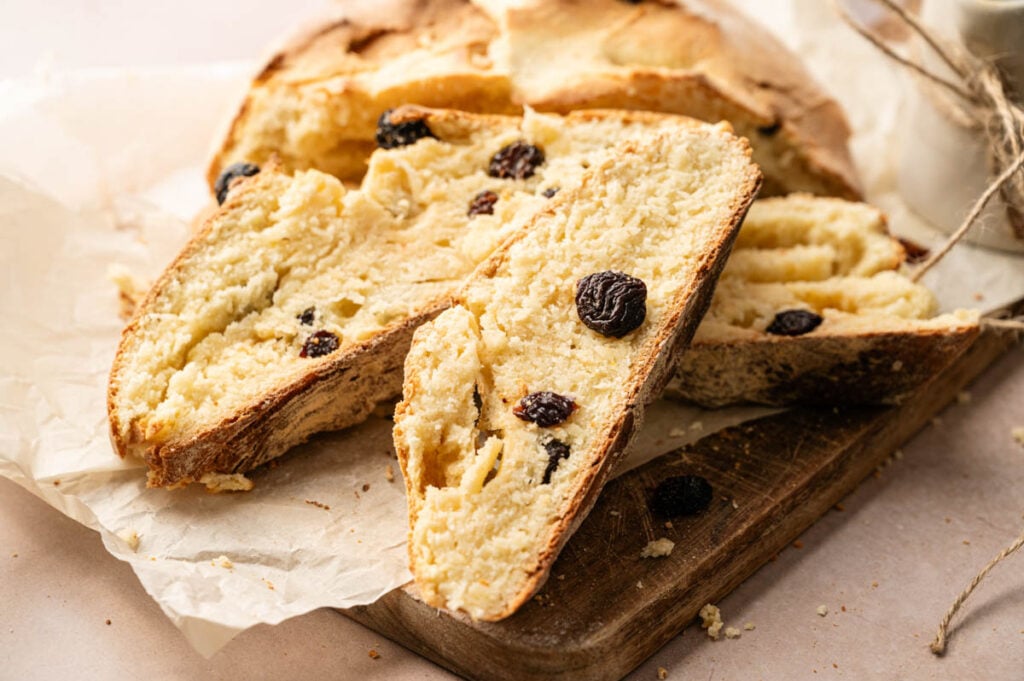
Irish Soda Bread is the loaf I make when I want fresh bread on the table, and I haven’t planned ahead. There’s no yeast, no proofing, and no long wait, so the dough is mixed and in the oven within about fifteen minutes of deciding to make it.
I started baking it for St. Patrick’s Day, but the no-wait part is why it stayed in my regular rotation. What keeps this one soft rather than dense is cold butter cut into the flour and cold buttermilk, and the raisins and orange zest are what make a plain quick bread worth slicing.
This post contains affiliate links. As an Amazon Affiliate, if you purchase through those links, I earn a commission. Thank you!
Why You’ll Love This Recipe
- No yeast and no rising time, so it goes from bowl to oven in about fifteen minutes of hands-on work.
- The cold butter and cold buttermilk give you a tender crumb instead of the heavy, cakey texture soda bread can fall into.
- One teaspoon of orange zest lifts the whole loaf, and it’s the difference between a flat quick bread and one people come back to.
- It suits a St. Patrick’s Day spread, a soup night, or a weekend brunch, and it travels well to a potluck because the crumb holds together in slices.
- It keeps for two days at room temperature and freezes for two to three months, so a single loaf can feed a few different meals.

Ingredients You’ll Need
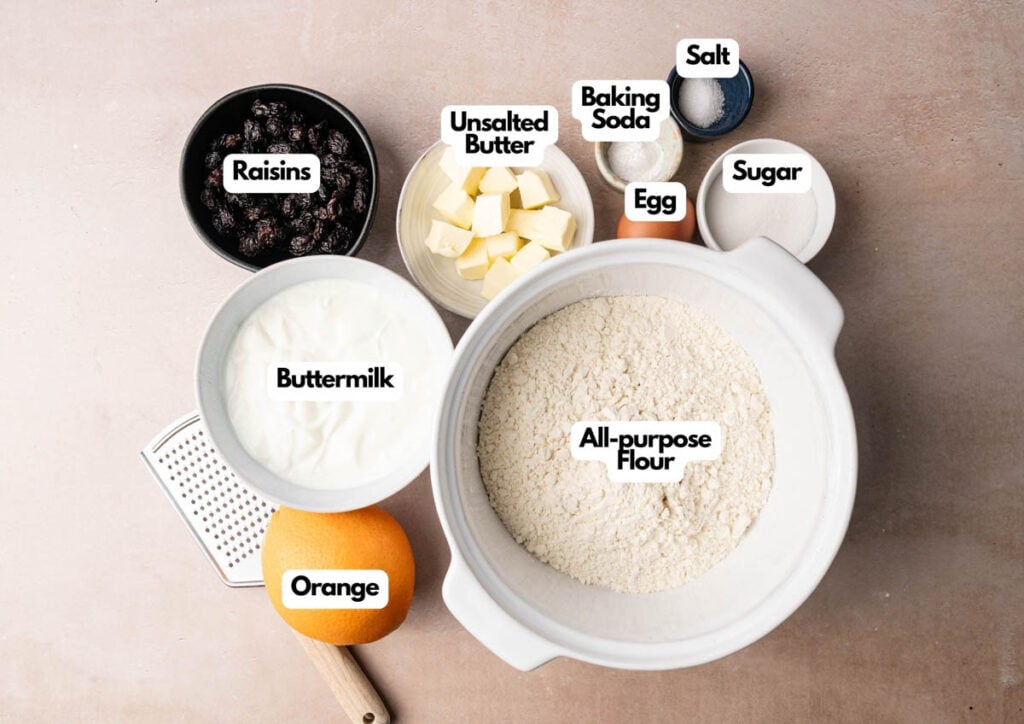
You’ll need all the ingredients shown in the photograph below.
- Cold unsalted butter. Keep it cold and cut it into half-inch cubes. Cold fat leaves small pockets through the dough that steam open in the oven, and that’s what gives you a tender crumb. Softened butter blends in smoothly, and you lose that texture, so chill it until you’re ready to cut it in.
- Cold buttermilk. The acidity in buttermilk reacts with the baking soda, which is what lifts a bread with no yeast in it. Keep it cold for the same reason as the butter. If you don’t have any, stir two tablespoons of lemon juice or white vinegar into one and three-quarter cups of whole milk and let it sit five minutes until it curdles.
- Unsalted butter, not salted. I use unsalted here because the recipe already has one and a half teaspoons of salt worked in, and salted butter varies enough from brand to brand that you can’t judge the seasoning. If salted is all you have on hand, just hold back a pinch of the added salt.
- Orange zest. One teaspoon is small, but it carries the whole loaf. Zest only the orange part of the peel and stop at the white pith, which is bitter. This is the ingredient I’d never leave out.
- Dried raisins. Toss them in a tablespoon of flour before they go into the dough. The flour coating keeps them suspended through the bake instead of sinking to the bottom. Golden raisins work too and come out a little milder and sweeter.
How to Make Irish Soda Bread
A complete printable recipe and the measurements in both US customary and metric are available in the recipe card below.
Make the Dough
Start by cutting the cold butter into the dry ingredients (all-purpose flour, sugar, baking soda, and salt) until the mixture looks like coarse crumbs with pea-sized pieces of butter still visible.
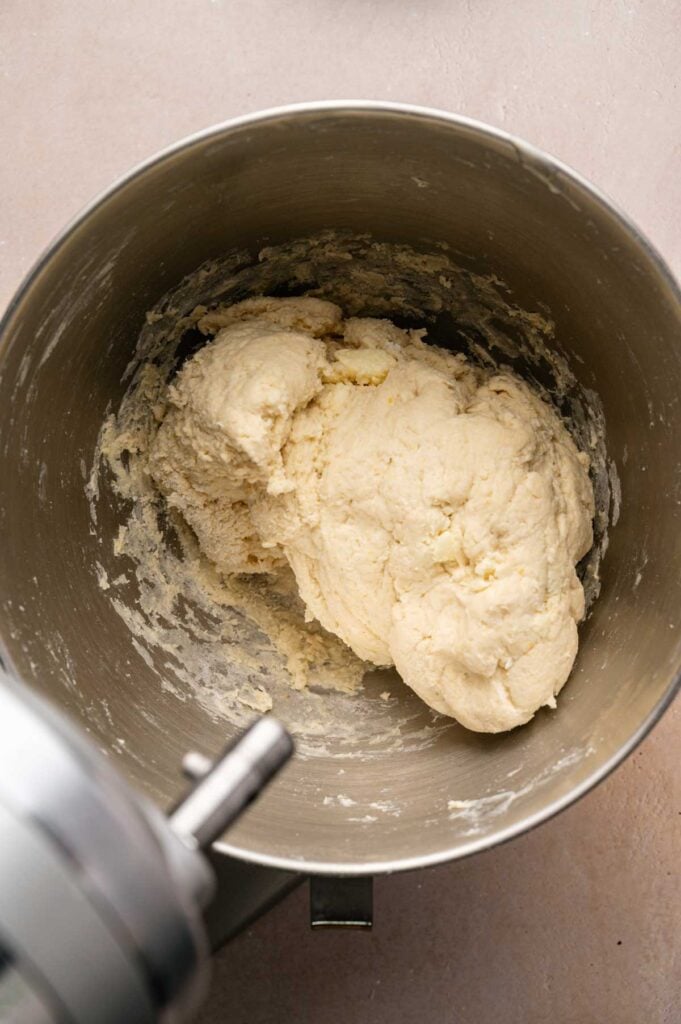
Whisk the cold buttermilk, egg, and orange zest separately, then pour the wet into the dry and stir just until it comes together.
The dough should look shaggy, not smooth, and this is the point most people get wrong: overmixing develops the gluten and gives you a tough, dense loaf.
Add the Raisins
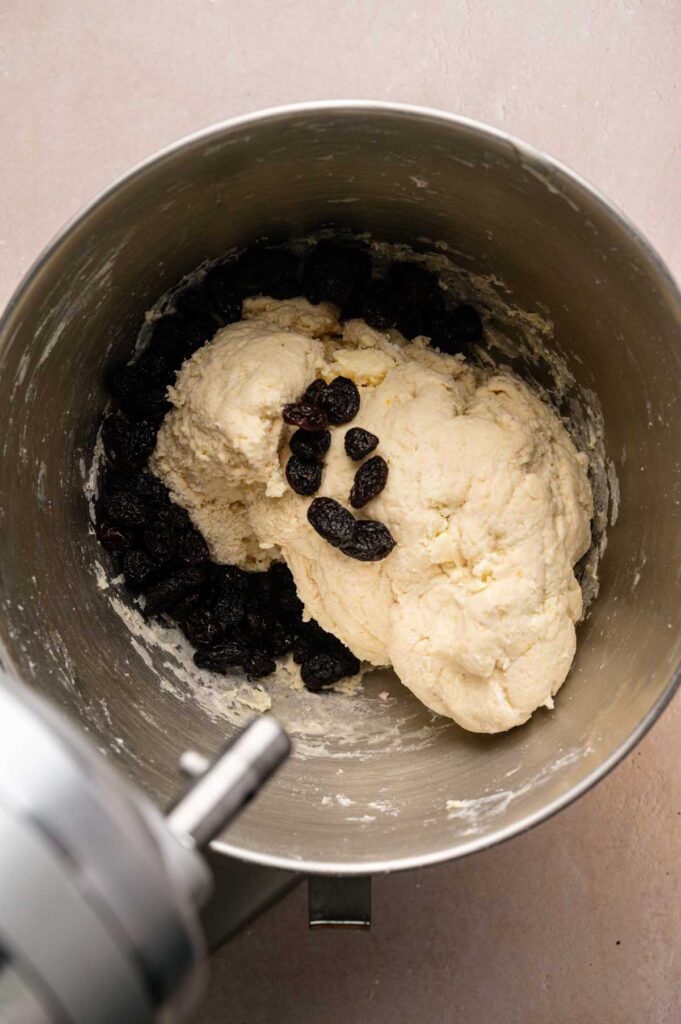
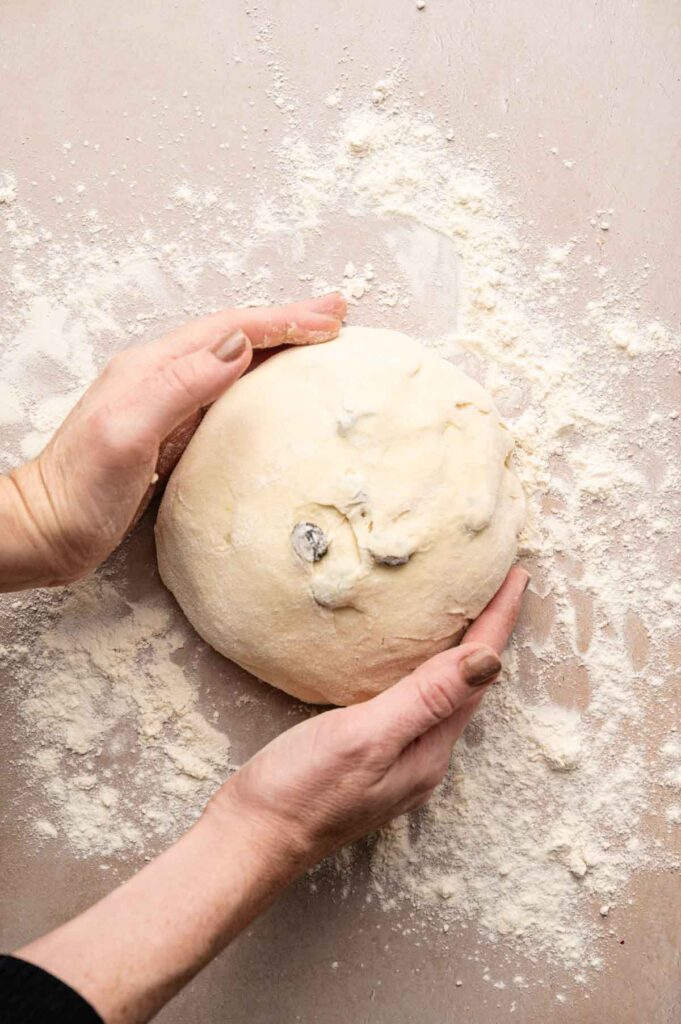
Fold in the floured raisins, turn the sticky dough onto a lightly floured surface, and knead only a few times to bring it together. Use just enough flour to stop it from sticking, because extra flour worked in at this stage dries the bread out.
Shape and Score
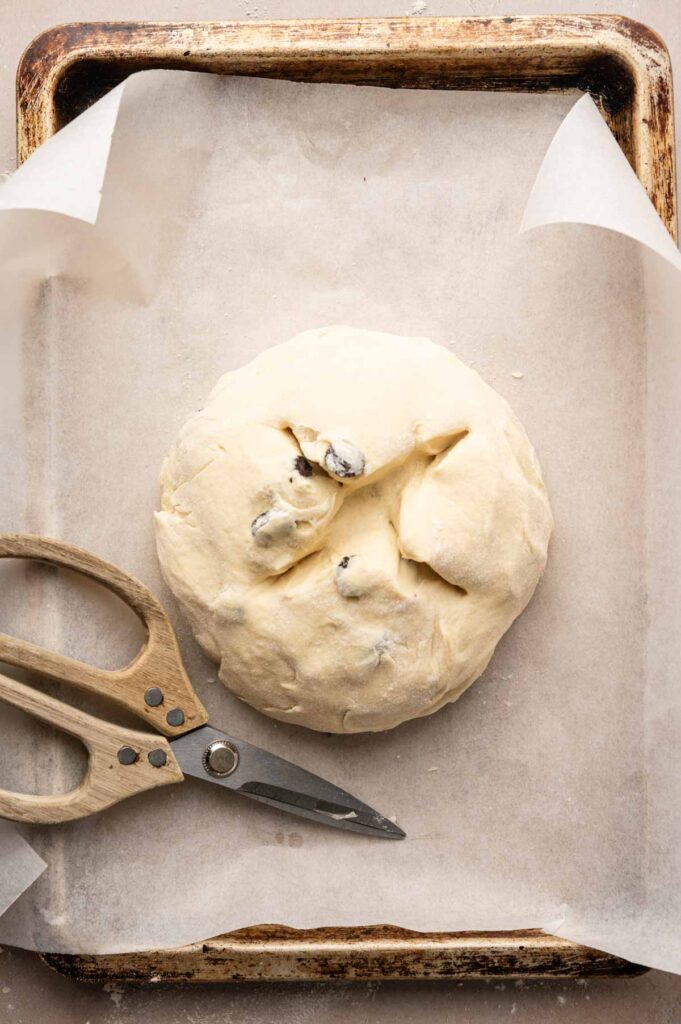
Shape it into a round, place it on a prepared baking sheet, and cut a shallow X across the top. This helps it bake evenly.
Bake and Cook
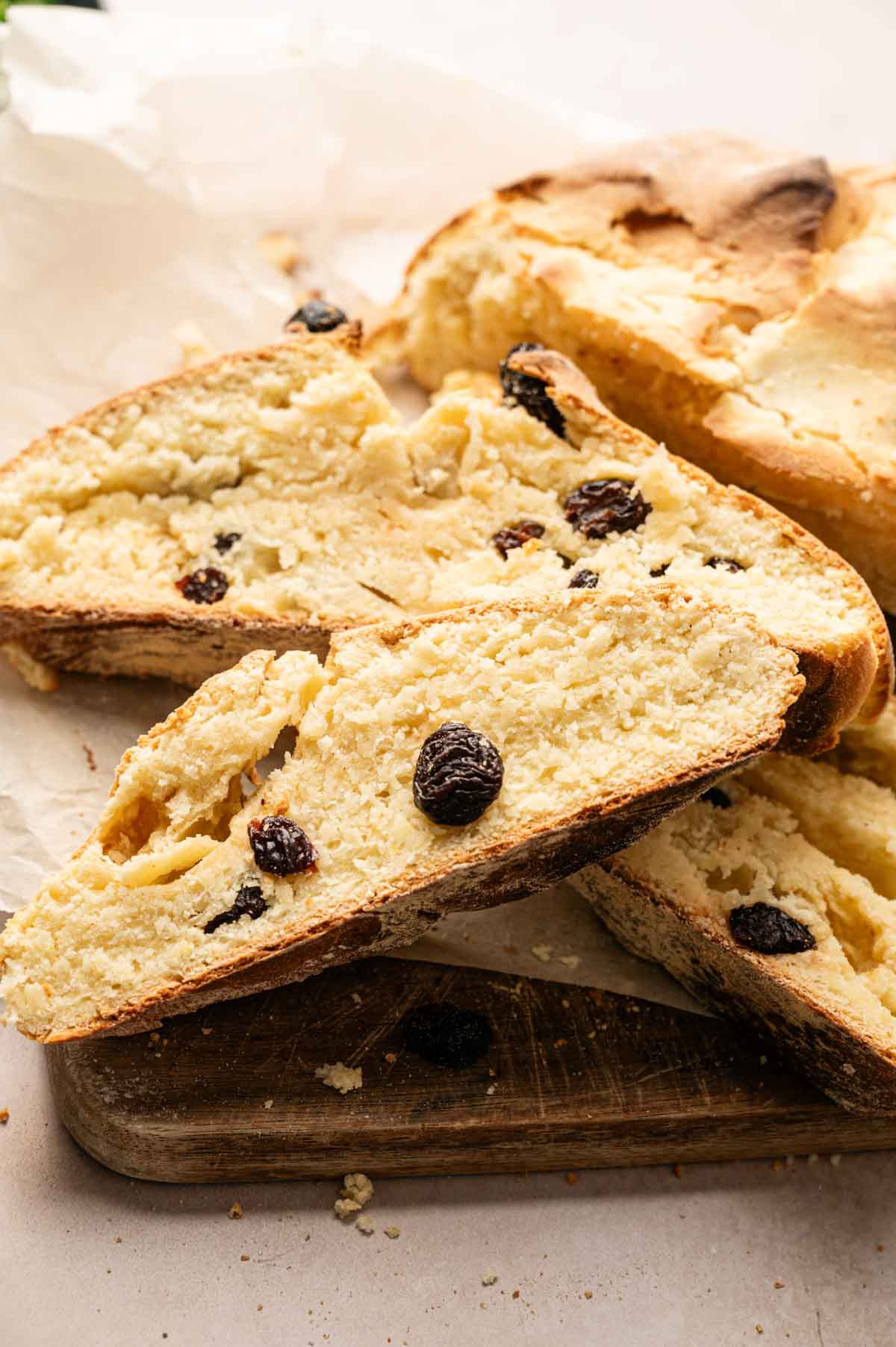
In a preheated oven at 375°F (190°C), bake until it’s light golden and a toothpick in the center comes out clean, about 45 to 55 minutes. Cool slightly before slicing.
Recipe Notes and Expert Tips
- Keep the butter and buttermilk cold. This is the single thing that decides whether the crumb comes out tender or tough. Cold ingredients slow the mixing and keep the dough from overworking.
- Stop mixing while it still looks rough. The moment the dry and wet come together, stop. A smooth, worked dough means developed gluten, and that’s a dense loaf.
- Flour the raisins first. A tablespoon of flour tossed through the raisins keeps them suspended instead of settling into a band at the bottom of the loaf.
- Cut the X shallow, not deep. The cross helps the center bake through evenly, but cut too deep, and the loaf splits unevenly as it rises.
- Check at 45 minutes. Slide a toothpick into the center. Clean means it’s done; if it comes out wet, give it another five to ten minutes and check again.
Recipe Variations
- Fold in one to two tablespoons of caraway seeds for a more traditional Irish pub-style loaf, earthy and slightly peppery against the sweet raisins. It’s a real shift in character rather than a small tweak, and it leaves the bake unchanged.
- Golden raisins in place of the dark ones give you a milder, sweeter loaf. It’s the swap I’d point you to if the dark raisins are too much, and it changes neither the method nor the timing.
- For a richer crumb, replace up to half a cup of the buttermilk with heavy cream. It comes out more tender, though you give up some of the tang the buttermilk brings, so it’s a trade I’d only make when I want it softer.
- Whole-wheat flour in place of the white makes a heartier, nuttier loaf. The crumb comes out denser and a little less tender, so treat it as a trade rather than a straight substitution.
How to Store Leftovers
Store the cooled loaf at room temperature, wrapped tightly in plastic wrap or foil, for up to two days. The crust softens a little as it sits, but the flavor holds.
To freeze, slice the loaf first and flash-freeze the pieces in a single layer on a sheet pan for about an hour, then move them to a freezer bag or airtight container. Frozen this way, the slices don’t stick together, and they keep for two to three months.
Thaw slices in the fridge overnight or on the counter for about half an hour, or toast them straight from frozen for three to four minutes. To bring back the crust on a thawed slice, warm it briefly in the oven.
What to Serve With Irish Soda Bread
I serve thick slices with hearty soups and stews because the crumb soaks up broth without falling apart, which is also why it holds up on a potluck table. It’s just as good at breakfast with salted butter and jam, or alongside scrambled eggs and fruit for a fuller brunch spread.
If you’re baking your way through homemade breads, a warm homemade flatbread recipe or this soft naan bread for dipping covers the same job for a soup night. When I do have the afternoon, I’ll make a yeasted homemade French bread loaf too for a weeknight.
For a St. Patrick’s Day breakfast or a special brunch, set out Irish butter, honey, and orange marmalade so people can top their own slices. The sweetness from the raisins and orange makes it work under both sweet and savory toppings, so toasted slices also take avocado, ricotta, or cream cheese well.
FAQs
Use unsalted. The recipe already has one and a half teaspoons of salt mixed in, and salted butter varies too much between brands to season accurately. If salted is all you have, hold back a pinch of the added salt to compensate.
Overmixing is the usual cause. Stir only until the wet and dry just come together, and the dough looks shaggy, then stop. Working the dough past that develops gluten and gives you a heavy, tight crumb instead of a tender one.
Wrap the cooled loaf tightly in plastic wrap or foil and keep it at room temperature; it holds for up to two days. For anything longer, slice and freeze it rather than leaving it out.
Yes. Left plain, it becomes a savory soda bread that leans toward soup and stew rather than breakfast. You lose the sweetness the raisins and orange bring, so it’s a different loaf, not a lesser one.
You need the acidity to react with the baking soda, but you don’t need to buy buttermilk. Stir two tablespoons of lemon juice or white vinegar into one and three-quarter cups of whole milk, wait five minutes for it to curdle, and use that.
More Homemade Breads to Bake Next
If this one’s got you baking bread from scratch, these are the other recipes I’d point you to next.
- Dinner Rolls. Soft, pull-apart rolls for when you want individual pieces at the table instead of slices.
- Soft Pretzels. A chewy, salty bake for a game day or party spread, good with mustard or a cheese dip.
- Garlic Knots. Buttery, garlicky knots to serve straight alongside a bowl of pasta.
- Flour Tortillas. A soft, no-rise flatbread for when you want tacos, wraps, or quesadillas from scratch.
Ingredients
- 4 cups all-purpose flour plus 1 tablespoon for coating the raisins
- 4 tablespoons sugar
- 1 teaspoon baking soda
- 1 ½ teaspoons salt
- 4 tablespoons cold unsalted butter cut into ½-inch cubes
- 1 ¾ cups buttermilk cold and shaken
- 1 large egg
- 1 teaspoon orange zest
- 1 cup dried raisins

Video
Instructions
- Preheat the oven to 375°F (190°C). Line a baking sheet with parchment paper or a baking mat.
- In a large bowl, mix the all-purpose flour, sugar, baking soda, and salt. Add the cold butter and work it into the flour using a pastry cutter or mixer on low speed until the mixture resembles coarse crumbs.4 cups all-purpose flour, 4 tablespoons sugar, 1 teaspoon baking soda, 1 ½ teaspoons salt, 4 tablespoons cold unsalted butter
- In a separate bowl, whisk together the buttermilk, egg, and orange zest.1 ¾ cups buttermilk, 1 large egg, 1 teaspoon orange zest
- Pour the wet ingredients into the flour mixture and stir just until combined. Do not overmix.
- Toss the raisins with the remaining 1 tablespoon of flour, then gently fold them into the dough.1 cup dried raisins
- Turn the dough out onto a lightly floured surface. Knead gently a few times and shape into a round loaf.
- Place the loaf on the prepared baking sheet and cut a shallow “X” across the top using a sharp knife.
- Bake for 45 to 55 minutes, until the bread is golden and a toothpick inserted in the center comes out clean.
- Let the bread cool slightly before slicing and serving.
Notes
Nutrition
