
Soft Pretzels
 Add Preferred Source
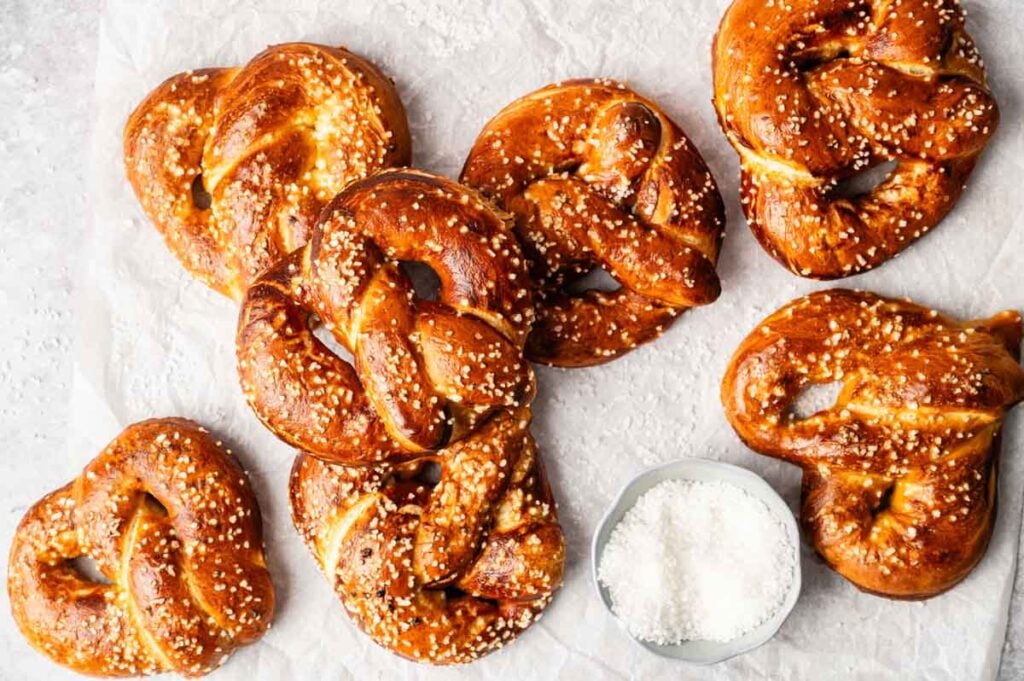
Soft pretzels are one of those things you only seem to get when you’re somewhere else, a ballpark, a mall food court, a biergarten, warm and salty and gone in about four bites. The homemade version solves the real problem here: the ones you can buy have usually gone cold and stiff by the time they reach you.
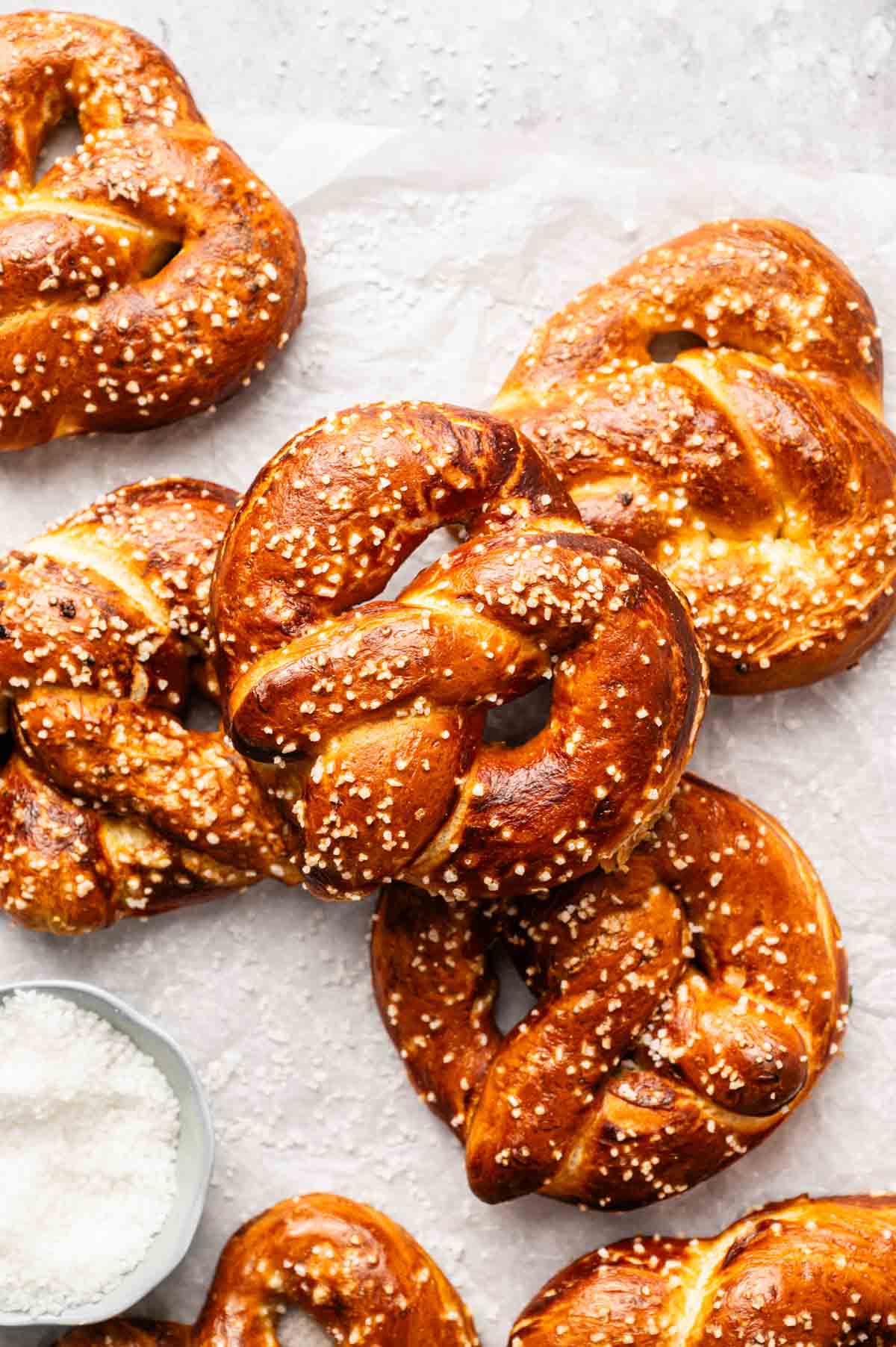
These bake up with a glossy, deep-brown crust and a soft, chewy inside, and the salt goes on while they’re still hot from the oven. After forty years of baking bread at home, the step I’d never skip is the baking soda boil, because that short dip is what turns plain dough into something that tastes like a pretzel.
This post contains affiliate links. As an Amazon Affiliate, if you purchase through those links, I earn a commission. Thank you!
Why You’ll Love This Recipe
- The baking soda boil gives you the glossy brown crust and the chewy pull you expect from a pretzel, not just bread twisted into a shape.
- You get eight full-size pretzels from one batch of basic pantry dough, warm and fresh in a way the store versions never are by the time you eat them.
- They shape by hand with no special equipment, so this is a good one to make with kids who want to roll the ropes and twist them.
- Leftovers keep for up to three days and freeze for up to three months, so a batch is worth making even when you’re not feeding a crowd.
Ingredients You’ll Need
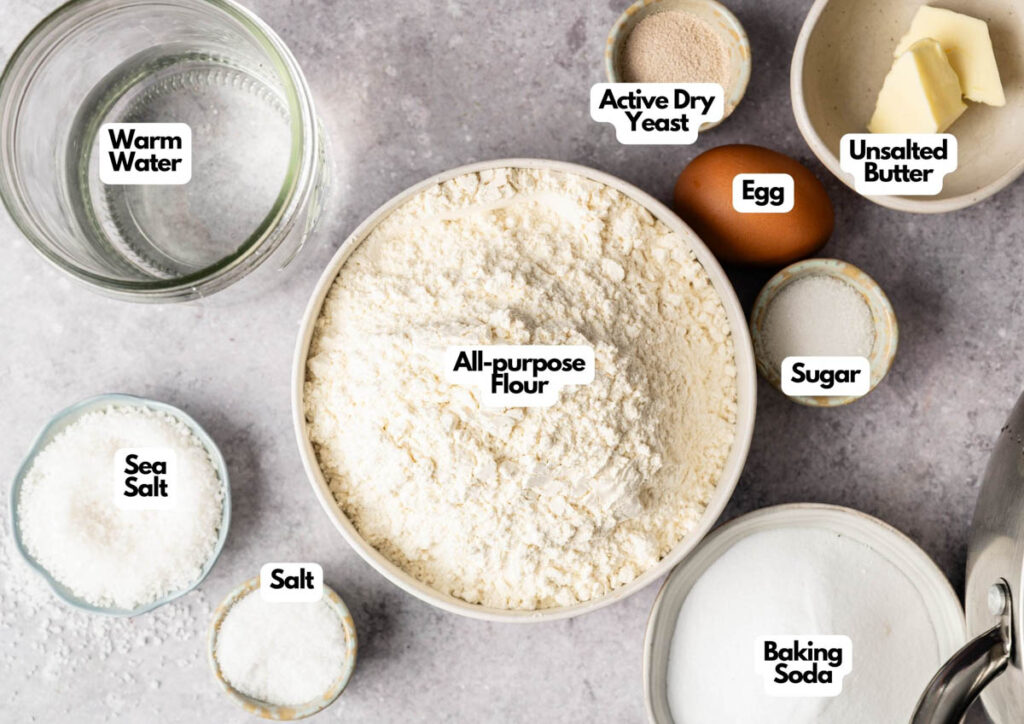
You’ll need all the ingredients shown in the photograph below.
- Active dry yeast. It’s what makes the dough rise, and it’s also the ingredient most likely to let you down. If it doesn’t foam in the warm water within about ten minutes, it’s dead, or the water was too hot, and it’s better to find that out now than after you’ve mixed the flour in.
- All-purpose flour. What I use here rather than bread flour. It keeps the inside tender; when I’ve made these with bread flour, they come out firmer and chewier than I want a soft pretzel to be.
- Baking soda. In the boiling water, not the dough. The alkaline bath is what browns the crust and gives that distinct pretzel flavor, so it’s doing real work even though two-thirds of a cup in a pot of water looks like a lot.
- Unsalted butter. Melted, and goes into the dough for richness. Using unsalted lets you control the salt yourself, which matters when there’s also coarse salt going on top.
- Coarse sea salt. The finishing salt on top, not table salt. The bigger crystals stay put and give you that salty bite among the soft crust instead of dissolving into it.
- Egg. It gets brushed on before baking for the golden, glossy finish. Brush it on while the boiled pretzels are still damp, and it grips better.
How to Make Soft Pretzels
A complete printable recipe and the measurements in both US customary and metric are available in the recipe card below.
Activate the Yeast
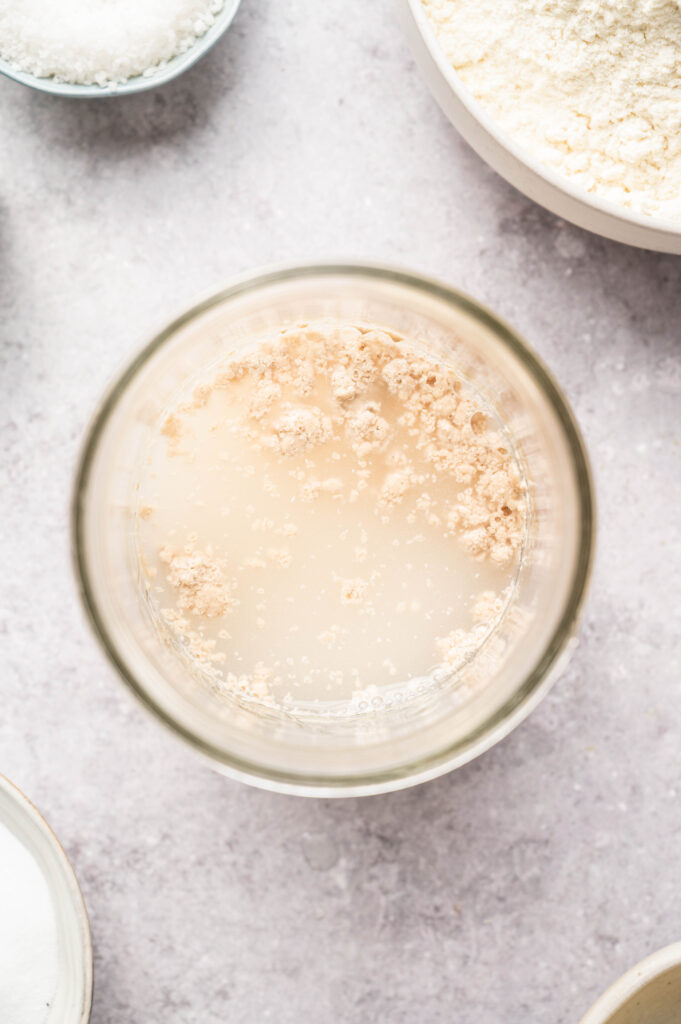
Start by proofing the active dry yeast in warm water with the sugar in a small bowl until it foams, about five to ten minutes.
Make the Dough, Knead, and Rise
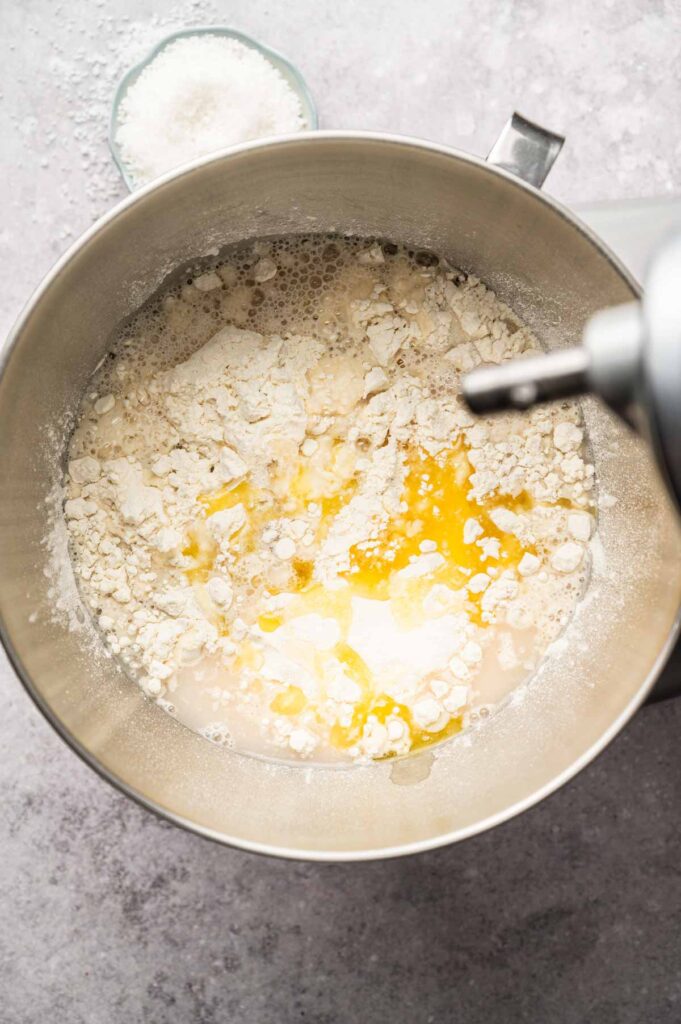
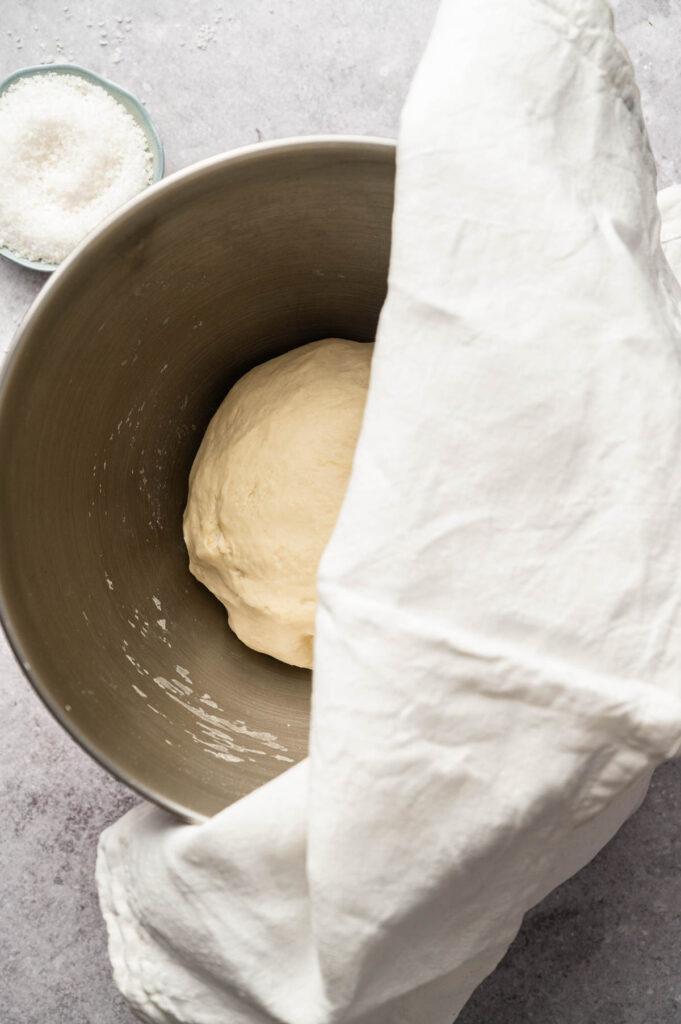
In a large bowl, mix the flour and salt, then add the melted butter and the yeast mixture. Knead until the dough is smooth and springs back when you poke it. Put it in a lightly greased bowl, cover it, and let it rise for an hour until doubled.
Shape the Pretzels
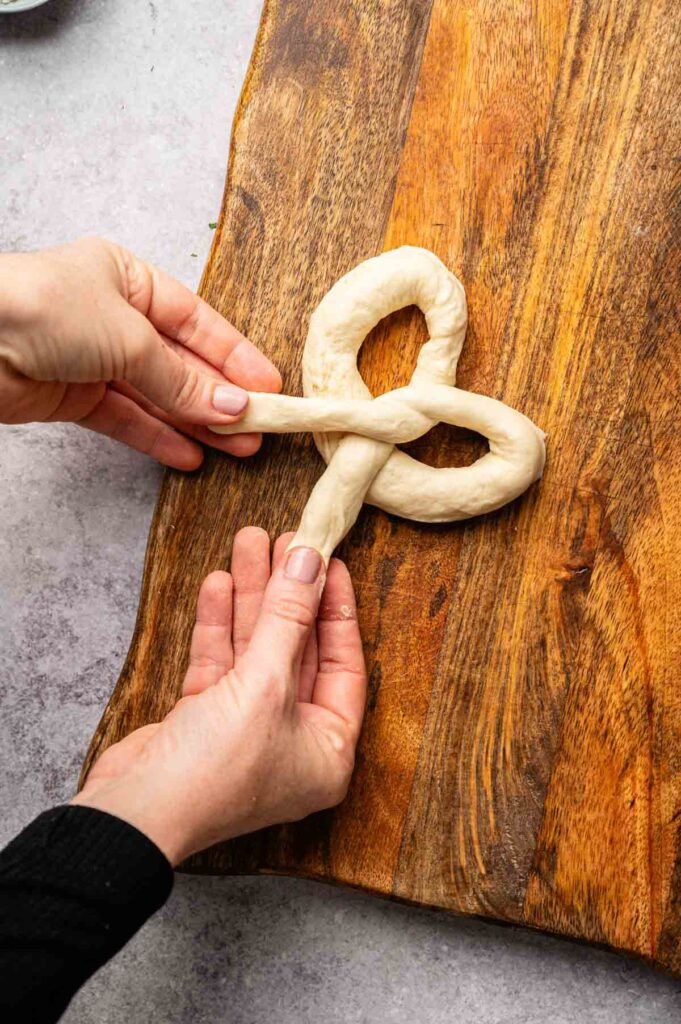
After the rise, punch it down, divide it into eight pieces, and roll each into a long rope about 24 inches before twisting it into the classic pretzel shape.
If you enjoy this kind of hands-on dough work, the same goes for soft homemade naan bread, which is shaped and cooked in a skillet, and for an easy homemade flatbread that skips the yeast entirely when you want bread on the table faster.
Boil in Baking Soda Bath
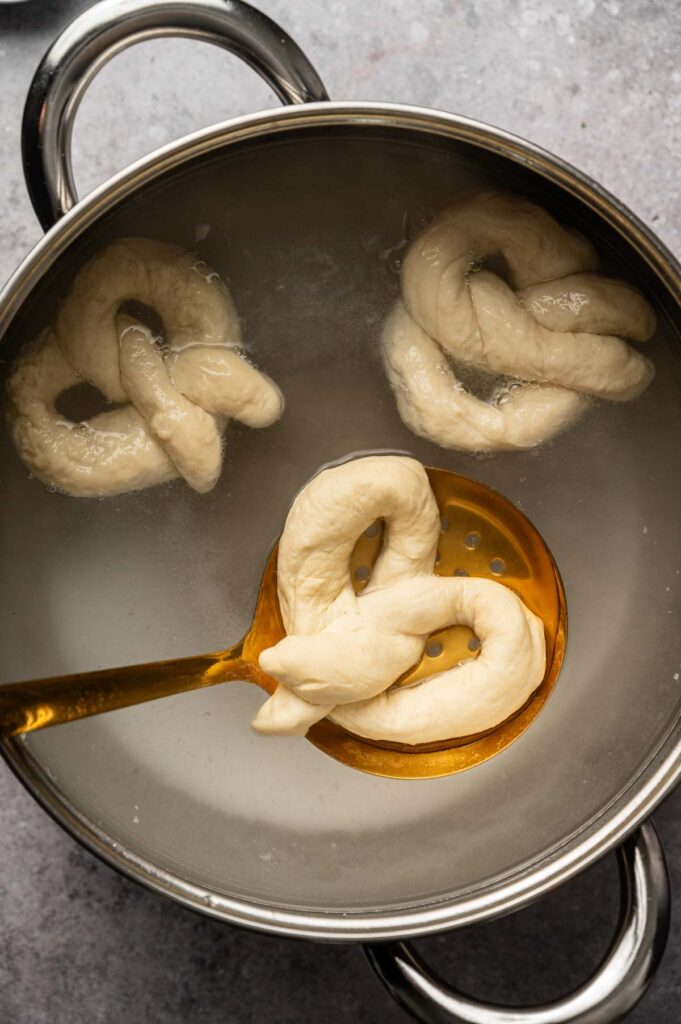
Then comes the baking soda bath. Bring the water to a boil, add the baking soda carefully because it bubbles up, and boil each pretzel for about thirty seconds, working with only one or two at a time.
Crowding the pot drops the water temperature and stops the baking soda from doing its job, which is where a pale, flat batch comes from.
Add Egg Wash and Salt, then Bake
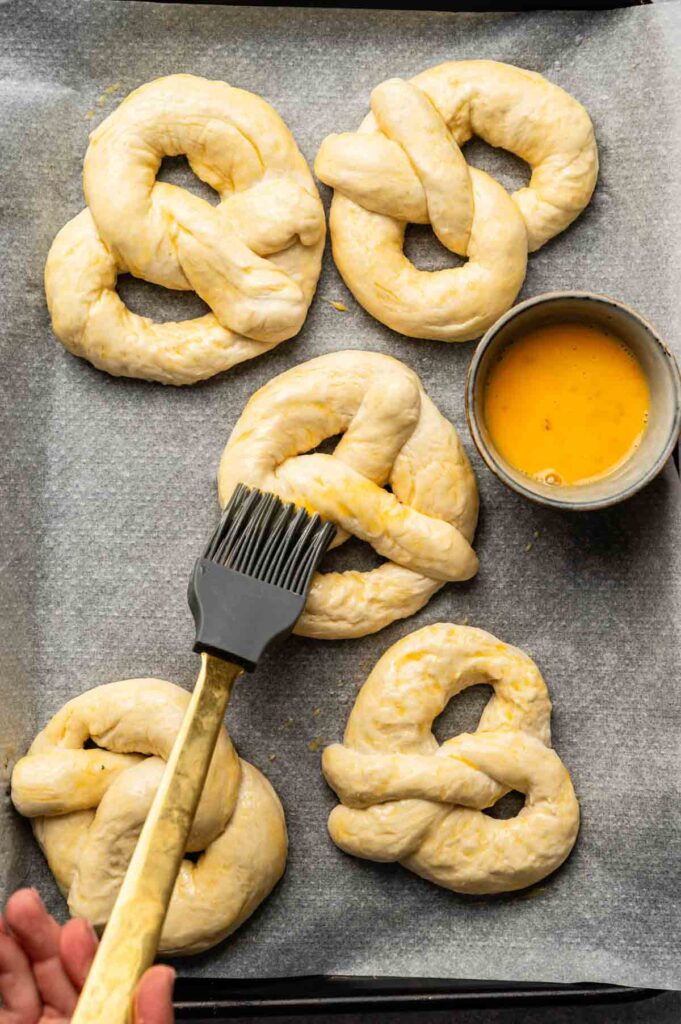
Straight out of the water and onto the lined baking sheets, they get the egg wash and the coarse salt. Then they bake in a preheated oven at 450°F for twelve to fifteen minutes until they’re deep golden and glossy.
Recipe Notes and Expert Tips
- Check your yeast before you commit. If the water and yeast don’t foam within ten minutes, start over with fresh yeast. Dead yeast gives you a dense, tough pretzel, and there’s no fixing it later.
- Keep the ropes even. Roll each piece to the same length so they bake at the same rate. Uneven ropes leave some pretzels done while others are still pale, and a ruler isn’t overkill if you want them consistent.
- Give the boil thirty seconds, no more. That’s long enough to set the brown, chewy crust. Any longer and the surface turns gummy and starts to taste of the baking soda, so I keep it to a count of thirty.
- Move fast once they’re boiled. Get them onto the sheet and brush the egg wash while they’re still hot and damp. The wash grips a wet surface far better than a dry one, and that’s what gives you the glossy finish.
- Watch them from twelve minutes. The gap between golden and over-browned is short at 450°F, so start checking at twelve rather than trusting the clock to fifteen.
Recipe Variations
- Make it more like cinnamon-sugar pretzels. I’ve tested this one, so it works as written. Skip the coarse salt, and toss the warm baked pretzels in melted butter and cinnamon sugar instead. The boil stays exactly the same; only the topping changes, and the timing is unaffected.
- Everything bagel seasoning as a topping is a safe, supported swap that doesn’t touch the method. Brush with the egg wash as usual, then sprinkle everything bagel seasoning over the salt before baking so it sticks.
- Pretzel bites are the easy shortcut when shaping feels fiddly, though I haven’t tested an exact bake time for them. Cut the ropes into short lengths, then boil and bake as written, checking a couple of minutes sooner since smaller pieces color faster; go by color rather than the clock.
How to Store Leftovers
Store cooled pretzels in an airtight container at room temperature or in the fridge for up to three days, and reheat them in the oven for a slightly crisp outside or in the microwave when you’re in a hurry. They’re best warm, so a quick reheat makes a real difference to a day-old pretzel.
For longer storage, wrap them individually and freeze for up to three months, then reheat straight from frozen in the oven until warmed through. If you’re short on wrap, freeze them on a tray for an hour first so they don’t stick together, and you can pull out one or two at a time.
What to Serve With Soft Pretzels
Warm pretzels want something to dip into. Classic yellow mustard or a sharper brown mustard is the traditional pairing, and a warm cheese sauce or beer cheese turns them into party food.
For a proper meal rather than a snack, I serve them alongside a bowl of warm roasted tomato soup for dunking, the way you’d use a grilled cheese. On a games afternoon, I put out a plate of these next to a batch of buttery homemade garlic knots so there is warm bread going round either way.
FAQs
The usual cause is the yeast. If it didn’t foam properly at the start, the dough won’t rise well and you’ll get a heavy, tough result. Over-kneading firms them up too, and I find bread flour gives a chewier, tougher bite than the all-purpose I use here.
It changes the surface of the dough so it browns fast and deep in the oven and takes on that distinct pretzel flavor and chewy skin. Skip it, and you’ll get bread shaped like a pretzel rather than an actual pretzel.
These are at their best warm from the oven, so I’d bake them the day you want them rather than holding raw dough overnight. If you do need a head start, the freezer is the way to do it: a fully baked, frozen batch reheats far better than dough left waiting, and the How to Store section above covers exactly how.
Bake them at 450°F for twelve to fifteen minutes. The high heat sets that glossy crust quickly, so start watching at twelve minutes so they do not over-brown.
More Warm Bread to Bake From Scratch
If shaping this batch left you wanting more bread projects, these are the ones I would point you to next.
- French Bread. This is the one I make when I want a proper crusty loaf for the table rather than a snack.
- Irish Soda Bread. Another one to make when you’ve got no time to wait on yeast, since it skips the rise entirely.
- Dinner Rolls. Soft, pull-apart rolls for a family meal or a holiday spread.
- French Bread Pizza. For the night you want to put that bread-baking to work as dinner.
Equipment
- Stand mixer with the dough hook attachment
Ingredients
For the Dough:
- 1 ½ cups warm water
- 2 ¼ teaspoons active dry yeast
- 1 tablespoon sugar
- 3 ½ cups all-purpose flour
- 2 teaspoons salt
- 2 tablespoons unsalted butter melted
Boiling Solution:
- 10 cups water
- ⅔ cup baking soda
Topping:
- 1 egg beaten
- Coarse sea salt

Video
Instructions
- In a small bowl, combine the warm water, sugar, and yeast. Let it sit for 5–10 minutes until foamy.1 ½ cups warm water, 2 ¼ teaspoons active dry yeast, 1 tablespoon sugar
- In a large bowl, mix the flour and salt. Add the melted butter and the yeast mixture. Stir until a dough forms.3 ½ cups all-purpose flour, 2 teaspoons salt, 2 tablespoons unsalted butter
- Knead the dough for 5–7 minutes (by hand or in a mixer) until smooth and elastic. Place the dough in a lightly greased bowl, cover, and let it rise for 1 hour or until doubled in size.
- Preheat the oven to 450°F (230°C). Line two baking sheets with parchment paper.
- Punch down the risen dough and divide it into 8 pieces. Roll each piece into a 24-inch rope, then shape into a pretzel (make a “U,” cross the ends, and fold them down).
- Bring 10 cups of water to a boil and carefully add the baking soda. Boil each pretzel for 30 seconds, 1–2 at a time.10 cups water, ⅔ cup baking soda
- Place them on the baking sheets. Brush with beaten egg and sprinkle with coarse salt.1 egg, Coarse sea salt
- Bake for 12–15 minutes, until golden brown and glossy.
- Let cool slightly and enjoy warm—plain, with mustard, or with cheese dip!
Notes
Nutrition
