
Fluffy Southern Cornbread Recipe
 Add Preferred Source
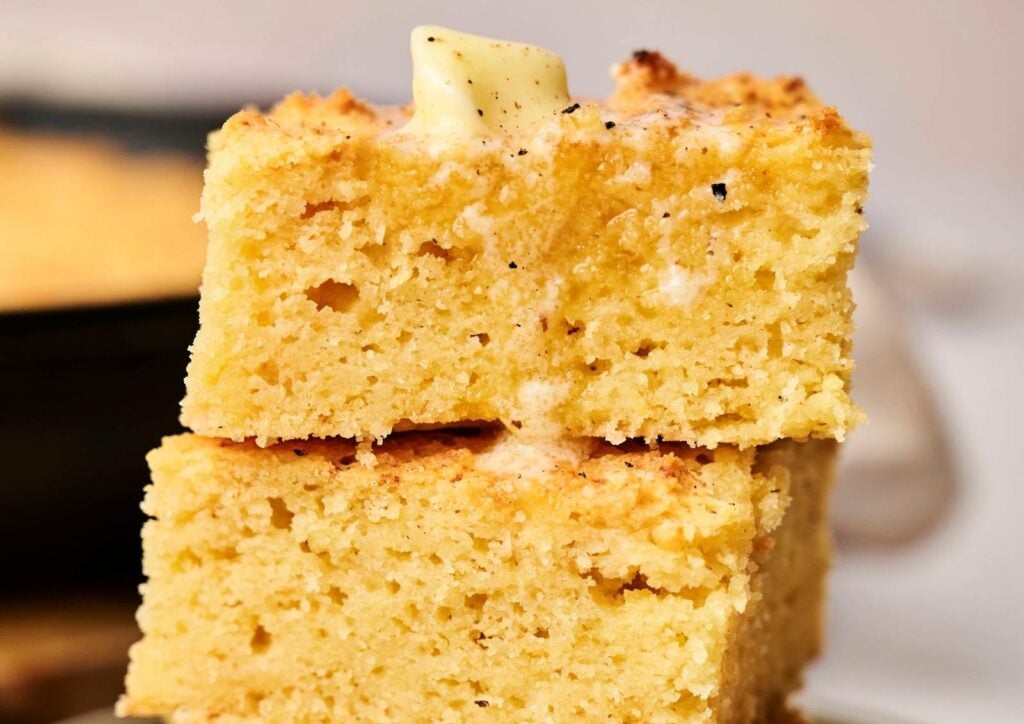
Cornbread is one of those bakes that turns a plain weeknight bowl of chili into something you look forward to. This is a fluffy Southern cornbread, soft through the middle with a golden top and a crisp edge. It uses buttermilk for a gentle tang and comes together in one bowl, which is most of why it stays in my regular rotation.
I make it the way I first learned to like it, leaning sweet but not like cake. My dad, who has opinions about cornbread, will tell you the cast iron edge is the whole point, and on that one thing he’s right. The good news is you don’t need much skill to get there, just a hot oven and a light hand with the batter.
This post contains affiliate links. As an Amazon Affiliate, if you purchase through those links, I earn a small commission. Thank you!
Why You’ll Love This Recipe
- It’s fast. Ten minutes of stirring, a little over twenty in the oven, and you’re pulling a golden pan out while the rest of dinner finishes. On a Tuesday that matters.
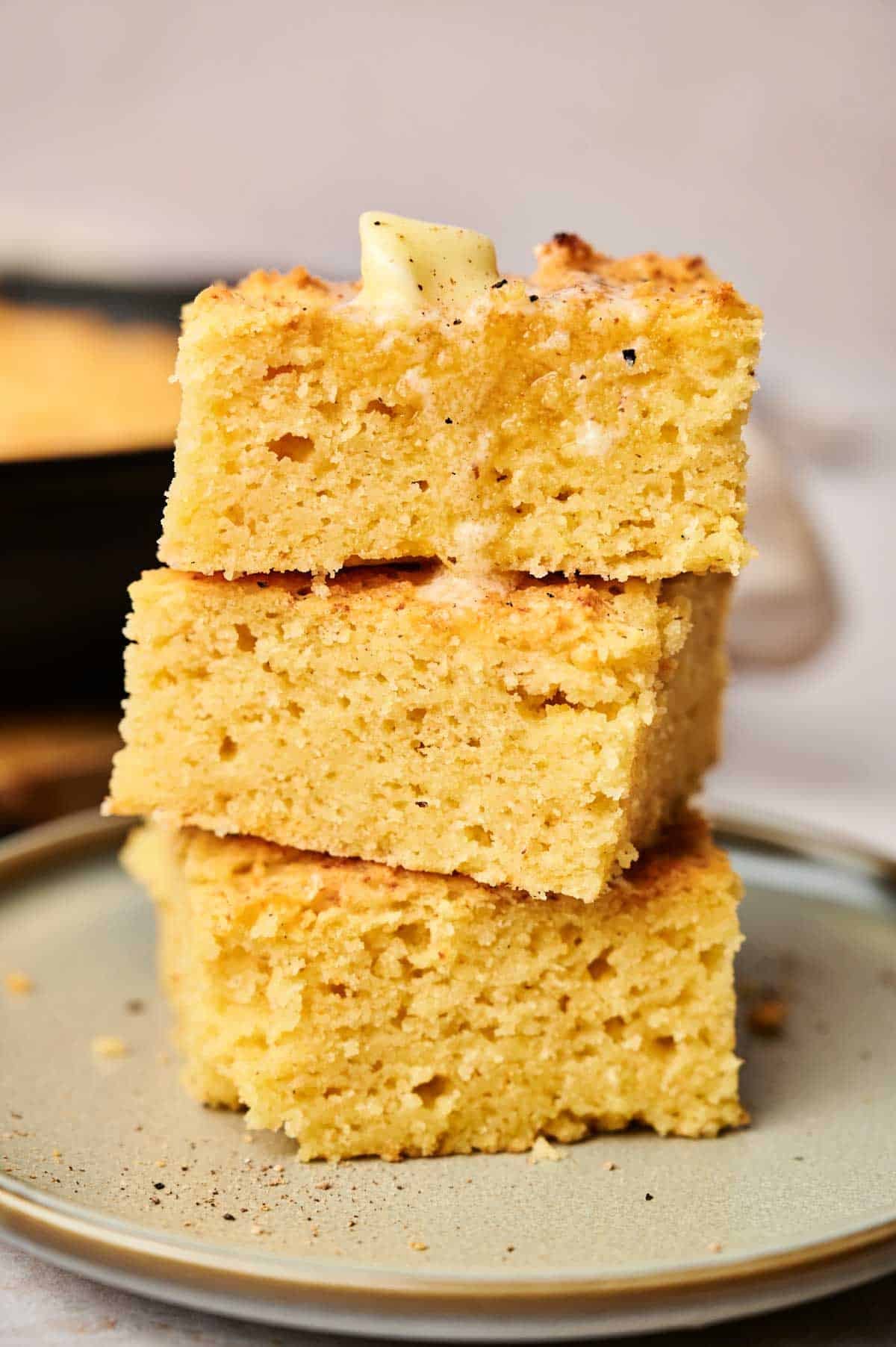
- It stays soft. The buttermilk and the melted butter keep the crumb tender for days rather than drying into the crumbly, sandy cornbread that falls apart on the way to your mouth. Wrapped well, it’s still good the next morning toasted with butter.
- It goes with almost everything. This is the side that turns beans, soup, or a slow-cooked stew into a full meal, and it takes butter and honey on top without complaint.
Ingredients You’ll Need
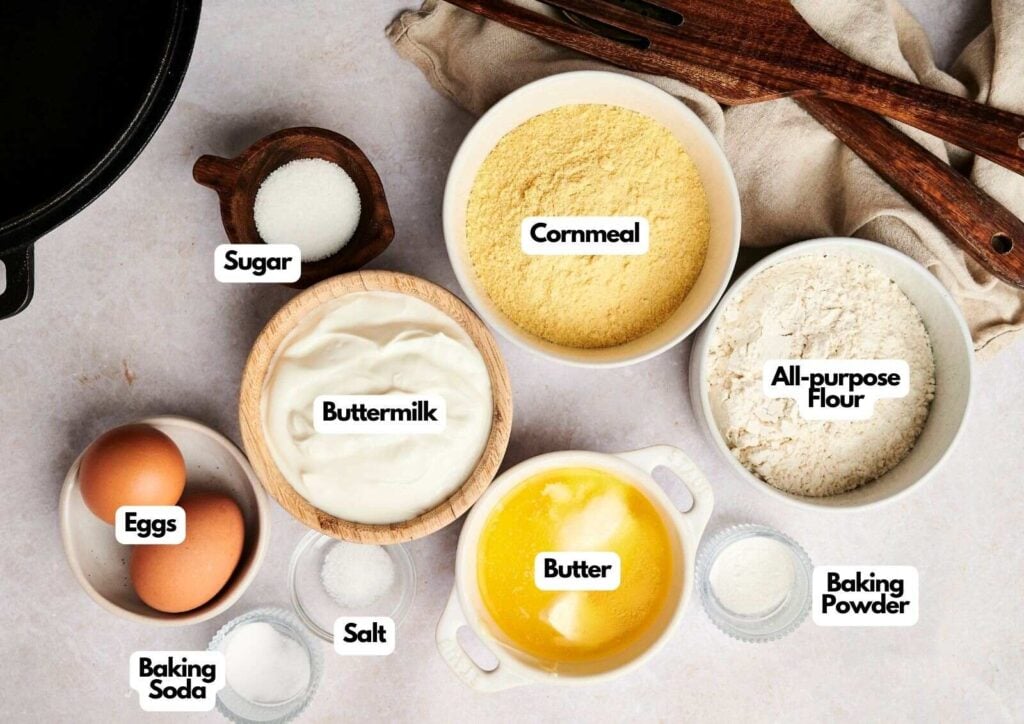
You’ll need all the ingredients shown in the photograph below.
- Yellow cornmeal. This is what makes it cornbread rather than a plain quick bread, and it’s where the color and that faint sweetness come from. A standard fine or medium grind is what you want. If you like a coarser, craggier crumb, use medium grind; a stone-ground cornmeal gives you more texture and a stronger corn flavor.
- Buttermilk. The tang is doing real work here, and so is the acidity, which reacts with the baking soda to help the cornbread rise and stay light. If you have none in the fridge, stir a tablespoon of lemon juice or white vinegar into a cup and a half of regular milk and give it five minutes to clabber before you use it. It’s not identical, but it’s close.
- Unsalted butter, melted. Melted rather than creamed. Unsalted lets you control the seasoning, since the recipe already has its own salt.
- All-purpose flour. Cornmeal on its own bakes up dense and gritty, so the flour is what gives you the fluffy, tender side of this cornbread. The one-to-one ratio of flour to cornmeal here is the balance I keep coming back to.
- Baking powder and baking soda. Both, not one. The powder does the general lift and the soda reacts with the buttermilk’s acidity for a little extra rise and a browner top.
How to Make Cornbread
A complete printable recipe and the measurements in both US customary and metric are available in the recipe card below.
Heat the Oven and the Pan
Get the oven to 390°F before you mix anything, and if you’re using a cast iron skillet, put it in there to heat while the oven comes up. A hot pan is what gives you that crisp, browned edge the moment the batter hits it. Grease it well with butter either way.
Mix Dry, Then Wet
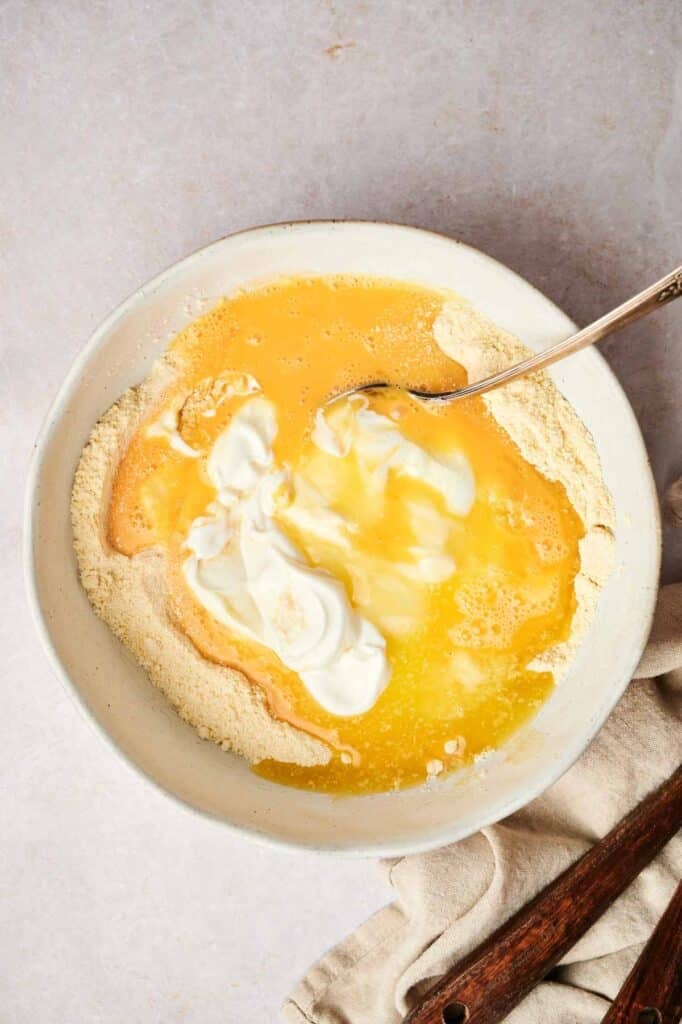
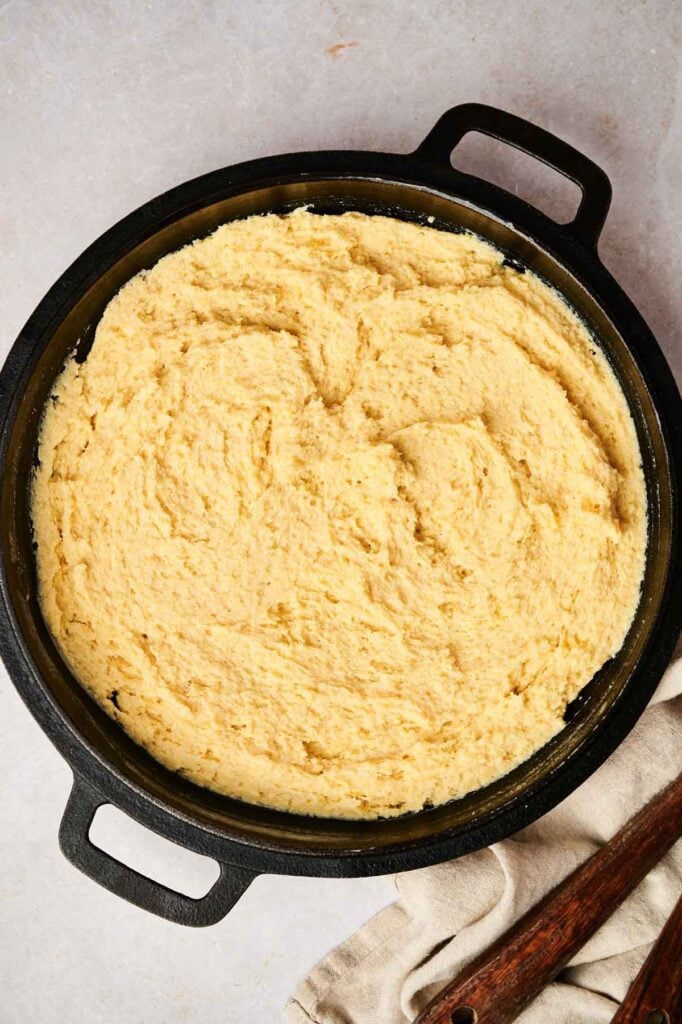
Whisk the flour, cornmeal, sugar, baking powder, baking soda, and salt together first so the leaveners are evenly spread. Make a well, pour in the buttermilk, eggs, and melted butter, and stir. Here’s the part that matters most: stop stirring the moment the dry streaks disappear.
A few lumps are fine. Overmixing builds gluten and gives you dense, tough cornbread instead of a soft crumb, and it’s the single most common reason a batch comes out heavy.
Bake and Cool
Spread the batter evenly and bake for 22 to 25 minutes, until the top is golden and a toothpick in the center comes out clean. Then let it sit in the pan for ten minutes before you cut it.
It’s tempting to slice straight away, but the cornbread firms up as it rests, and cutting early is how you end up with a crumbling middle.
Recipe Notes and Expert Tips
- Don’t skip the resting. Ten minutes in the pan is the difference between clean slices and a crumbly mess. The crumb needs the time to set.
- A hot pan is the crust. If a crisp edge is what you’re after, preheating the cast iron matters more than anything else you do here. A cold pan gives you a paler, softer edge.
- Taste your cornmeal first if it’s been in the cupboard a while. Cornmeal can go stale and bitter, and no amount of good technique fixes that once it’s in the batter.
- Under-bake by a minute rather than over. Carryover heat keeps cooking it in a hot pan after it leaves the oven, and a slightly-pulled cornbread stays moist where an over-baked one dries at the edges.
Recipe Variations
- Add a handful of grated sharp cheddar and some sliced jalapeño to the batter for a savory version that goes with a bowl of chili. I’ve tested this one many times; it needs nothing else changed, though the cheese browns fast so keep an eye on the top.
- Fold in a cup of drained sweetcorn kernels if you want actual pockets of corn through the crumb. This is a tested change on my end, and because the corn adds moisture you should give it an extra minute or two in the oven and check the center is set before you pull it.
- Cut the sugar back by half for a plainer, more traditional style that leans savory. This is a supported, low-risk swap; the cornbread bakes the same either way, so it comes down to how sweet you want it.
How to Store Leftovers
Store leftover cornbread in an airtight container at room temperature for up to two days. For longer, move it to the fridge, where it keeps for about a week, or freeze it well wrapped for up to three months.
To bring frozen or fridge-cold cornbread back, warm it in a low oven rather than the microwave, which tends to make it rubbery. A few minutes at 300°F and a little butter and it’s close to fresh again.
What to Serve With Cornbread
Cornbread earns its place next to almost anything saucy or slow-cooked, and it’s a natural for the Southern table. Here’s what I put it out with most.
A pan of creamy Southern mashed potatoes alongside it makes the kind of comfort-food plate people go quiet over. Both are rich, so I keep the rest of the meal simple. And for after, I usually have a Southern sweet potato pie waiting, which keeps the whole meal in the same warm, Southern register.
My cheesy Southern pineapple casserole is the sweet-savory oddball of the spread, and cornbread is the thing that bridges it to the savory sides. If you’ve never had the two together, that’s the pairing to try first. For a holiday table, a sweet potato casserole with its brown sugar pecan top and cornbread cover most of what a plate needs beside the main.
FAQs
Usually one of two things: too much cornmeal relative to flour, or over-baking. This recipe uses equal parts flour and cornmeal to keep the crumb tender, and pulling it as soon as a toothpick comes out clean stops it drying at the edges. The ten-minute rest also helps it hold together when you slice.
Yes, the soured-milk substitute in the ingredient notes above works well here. The reason it matters is the acidity: it carries the tang and reacts with the baking soda for lift, so a plain milk swap with no acid added won’t give you the same rise or flavor.
That’s a genuine regional split, and it comes down to preference. This recipe sits gently sweet in the middle, which is the version I grew up liking. If you want it plainer and more savory, the sugar variation above shows how far to pull it back.
Cornbread is happy made a day ahead. Cool it fully, wrap it well, and keep it at room temperature overnight, then warm it in a low oven before serving. It also freezes well for up to three months, which makes it easy to bake a batch when you have the oven on anyway.
More Easy Southern Recipes to Try
A few more from the Southern side of the site if you’re building out the meal.
- My Corn Casserole is the pan that empties first at a holiday table, and it keeps the corn theme going right alongside the cornbread.
- When I want something rich and cheesy, I make this Cheesy Hashbrown Casserole, which works as a breakfast bake or a comfort-food side next to the bread.
- The Easy Potato Casserole is my cheap, golden, melted-cheese side for when the meal needs another food on the table that costs almost nothing.
- And when I want dessert to be the event, I make Mississippi Mud Pie, with its Oreo crust, fudgy brownie layer, and chocolate pudding piled high.
Ingredients
- ¾ cup unsalted butter melted
- 1 cup all purpose flour
- 1 cup yellow cornmeal
- 1 ½ tablespoons sugar
- 2 teaspoons baking powder
- ½ teaspoon baking soda
- ½ teaspoon salt
- 1 ½ cup buttermilk
- 2 large eggs

Video
Instructions
- Preheat your oven to 390°F (200ºC).
- Grease a 9-inch baking dish or cast iron pan with butter.¾ cup unsalted butter
- In a large bowl, mix together the flour, cornmeal, sugar, baking powder, baking soda, and salt. Once the dry ingredients are well combined, create a well in the center of the mixture. Pour the buttermilk, eggs, and melted butter into the well. Stir everything together until just combined. Be careful not to overmix, as this can make the cornbread tough.1 cup all purpose flour, 1 cup yellow cornmeal, 1 ½ tablespoons sugar, 2 teaspoons baking powder, ½ teaspoon baking soda, ½ teaspoon salt, 2 large eggs, 1 ½ cup buttermilk
- Pour the batter into your greased dish, spreading it evenly to ensure an even bake. Place the dish in the preheated oven and bake for 22-25 minutes, until the top is golden and a toothpick inserted into the center comes out clean.
- Allow the cornbread to cool in the pan for 10 minutes before slicing and serving. This resting time will help the cornbread hold its shape when cut.
Notes
Nutrition
