
Corn Casserole
 Add Preferred Source
If you’ve ever brought a dish to a holiday table and watched everyone reach past your fussy, labored-over side to scoop up something far simpler, Corn Casserole is the simpler thing. It’s the pan that empties first, and the recipe people ask you to write down before they leave.
I make it because it asks almost nothing of me and gives back more attention than dishes I spend an hour on. It comes together in one bowl from canned corn, sour cream, butter, and a box of corn muffin mix, then bakes into a soft, spoonable center under a cheddar top.

This post contains affiliate links. As an Amazon Affiliate, if you purchase through those links, I earn a commission. Thank you!
Why You’ll Love This Recipe
- One bowl, one spoon, no mixer. You stir everything together, pour it into the dish, and it holds up fine on a busy holiday morning.
- The texture sits between cornbread and corn pudding: soft and moist in the middle, not dry and crumbly.
- It’s mild and a little sweet, so it plays the easygoing side that goes with almost any main, the same role my potato casserole plays when I want something creamy and low-effort on the table.
- It makes ahead and freezes, so you can bake it before a busy holiday and free up the oven.
- Six ingredients, most of them from the pantry, and five minutes of actual work.
Ingredients You’ll Need
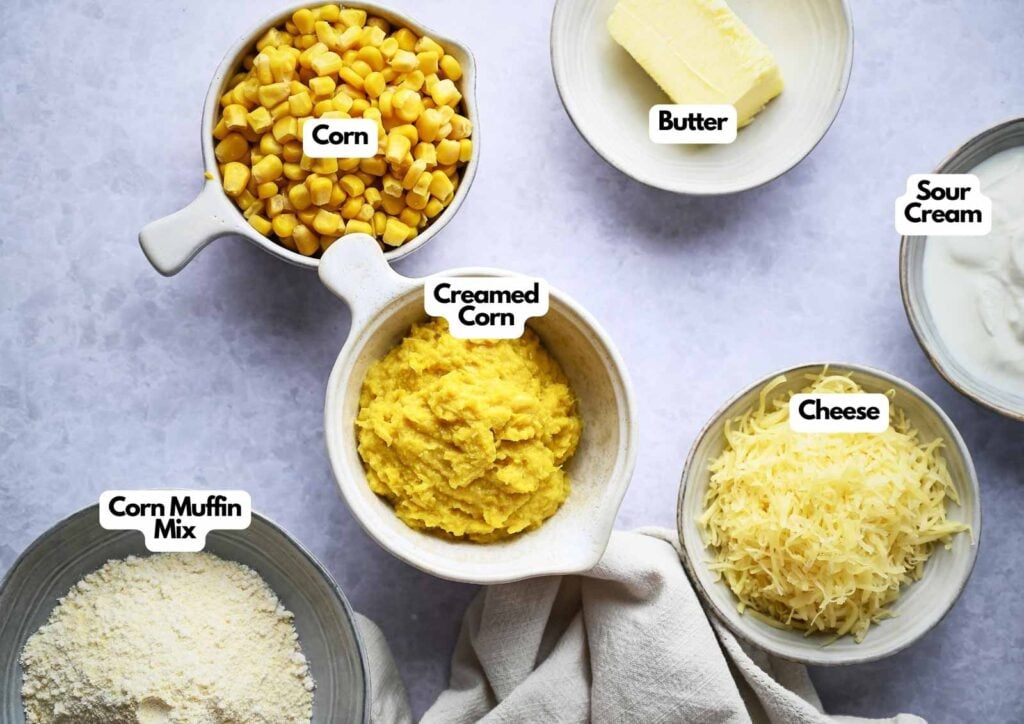
You’ll need all the ingredients shown in the photograph below.
Corn muffin mix. This is the structure of the whole dish, so the box you grab matters. Most standard brands, including the original Jiffy mix, list lard, which is rendered pork fat, so it isn’t vegetarian. Check the label and choose a mix made with vegetable shortening instead. The card uses 8 ounces.
Creamed corn and whole kernel corn. You use both: creamed corn for the soft, custardy body and drained kernels for bite. Drain the whole kernel corn well, because that’s the one thing that decides whether your casserole sets or stays wet.
Sour cream. It keeps the crumb moist and adds a little tang against the sweet corn. Take it out of the fridge about fifteen minutes before you mix, because cold sour cream stirs in unevenly and can leave the center wet where it didn’t blend.
Cheddar. This goes on near the end rather than in the batter. Shred it yourself from a block if you can, since pre-shredded cheese is coated to stop it clumping and melts less smoothly.
How to Make Corn Casserole
A complete printable recipe and the measurements in both US customary and metric are available in the recipe card below.
Prep the Oven and Dish
Heat the oven to 350°F (180°C). Lightly grease a medium baking dish, bottom and sides, so the edges lift out cleanly.
Mix the Batter
In a large bowl, stir together the creamed corn, the drained whole kernel corn, the corn muffin mix, the sour cream, and the melted butter until evenly combined. Stop as soon as there are no dry pockets of mix left. Overmixing works the batter and can toughen the finished texture, so this is one place where less stirring is better.


Bake Until the Center Sets
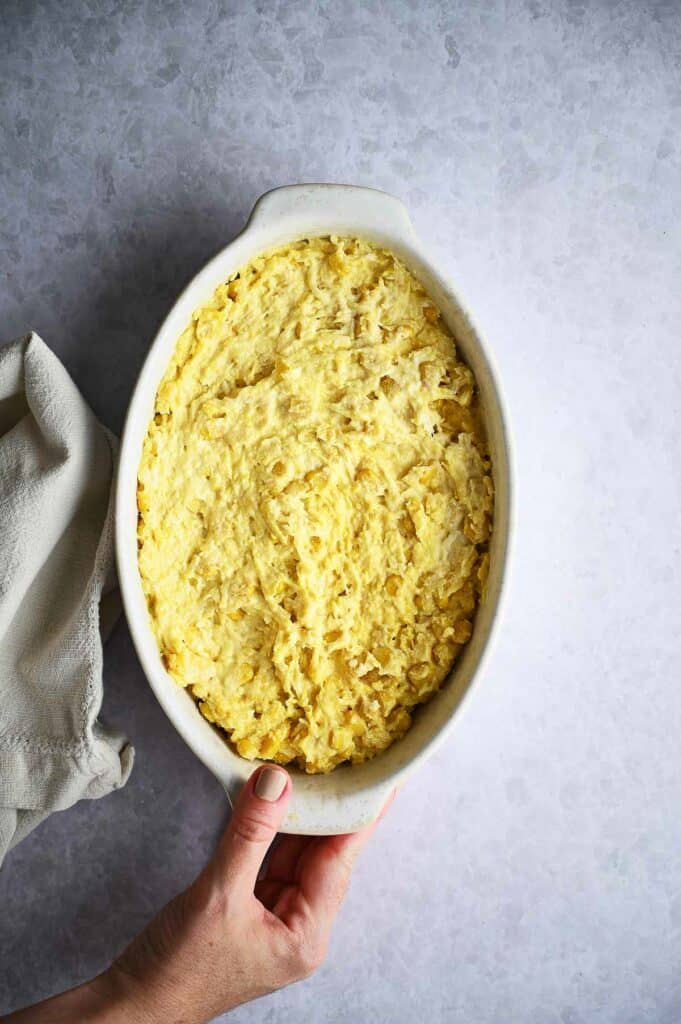
Pour the batter into the dish, spread it level, and bake uncovered for about 45 minutes. You’re waiting for the edges to turn golden and firm and for the center to stop looking wet. Give the dish a gentle shake: a slight jiggle in the middle is right, but a wet wobble means it needs longer. This is the step people rush, and an underbaked center is the single most common way this dish goes wrong.
If the top is browning before the middle catches up, lay a loose sheet of foil over it and keep going. Ovens vary, so trust the look of the center over the clock. It’s the same doneness cue I rely on for a hashbrown casserole, where a soft middle also needs to set before it comes out.
Add the Cheese and Finish
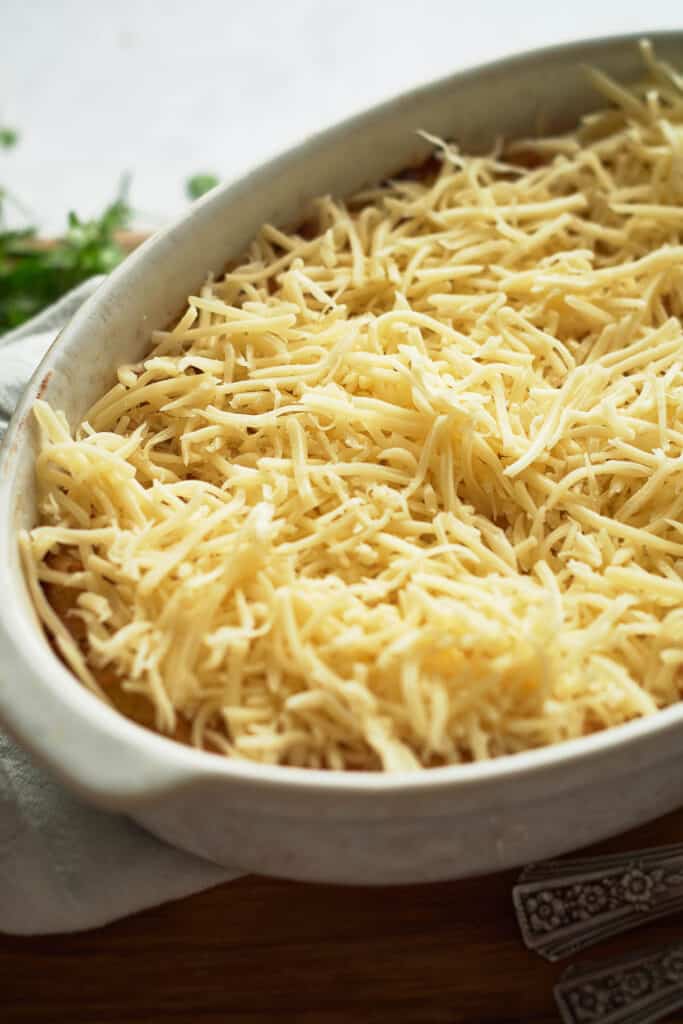
Take the dish out and scatter the shredded cheddar evenly over the top. Return it to the oven for 5 to 10 minutes, until the cheese has melted. Adding it now rather than at the start keeps it from overbrowning while the casserole bakes.
Let it sit for a few minutes before you scoop. It keeps firming as it cools, so that short rest is what gives you clean spoonfuls instead of a soft slump on the plate. Serve warm.
Recipe Variations
Make it sweeter. For a result closer to corn pudding, stir 1 to 2 tablespoons of sugar into the batter. I do this when I want it to lean toward dessert.
Add mild heat. A few diced green chilies stirred into the batter give it a gentle savory warmth. I like it this way when it’s sitting next to something rich.
Make it richer. Mix in 4 ounces of softened cream cheese along with the sour cream for a creamier center. This is the version I make when I want it a little more indulgent.
Split the dish for different tastes. One reader pressed sliced jalapeños into just half the dish after pouring, so the heat lovers and the kids each got their side. I haven’t tried it myself, but it doesn’t change the bake, so there’s no risk in it.
Recipe Notes and Expert Tips
- Drain the kernels like you mean it. Extra liquid is the reason a corn casserole turns out wet in the middle and never sets. Press the drained corn against the colander to get the last of it out.
- Use room-temperature sour cream. Cold dairy blends unevenly and leaves damp patches in the center.
- Judge by the center, not the timer. The edges brown before the middle is done. It’s ready when the center no longer looks wet and only just jiggles.
- Rest before scooping. Five minutes off the heat lets it firm up enough to serve neatly.
How to Store Leftovers
Refrigerate leftovers within two hours of baking. You don’t need to let the casserole cool to room temperature first, because leaving a dairy-based dish out that long is what makes it unsafe. So, cover it and put it in the fridge while it’s still warm. Stored in an airtight container, it keeps for up to four days.
To reheat, warm individual portions in the microwave in 30-second bursts, or cover the dish with foil and heat it in a 325°F oven until it reaches 165°F in the center, about 15 minutes.
For longer storage, freeze it for up to three months. Portion it into freezer-safe containers so you can thaw only what you need. Then, thaw overnight in the fridge and reheat gently so the center stays soft.
Baking it ahead uses the same fridge window as leftovers, since both are just cooked casserole in the fridge. I aim to bake it only a day or two before serving, not because it’s unsafe past that, but because the custardy center dries a little with each day and each reheat, and it tastes freshest closer to when it was baked.
Cool and store it in a shallow layer rather than one deep block, which lets it drop out of the warm range faster and is the safer habit either way.
If you’re taking it to a potluck, treat it as the perishable dairy dish it is. The safe zone is above 140°F or below 40°F, and the stretch in between is where bacteria grow fastest. The reliable way is to transport it hot, straight from the oven, wrapped in a towel inside an insulated carrier to hold it at or above 140°F, then serve it within two hours of it leaving that heat, or one hour if the day is above 90°F.
A towel alone keeps it warm but not necessarily hot enough for long. So for a longer trip or a long afternoon on the table, the safer route is to carry it cold in a cooler at or below 40°F and reheat it to 165°F once you arrive.
What to Serve With Corn Casserole
I treat this as a rich, soft side, so I build the rest of the plate around it with things that bring a little freshness or structure. Creamy mashed potatoes and warm dinner rolls lean into the comfort end, while roasted green beans or a plain green salad cut against the sweetness.
For a fully vegetarian spread, I like it next to a pot of vegetarian chili or a bowl of butternut squash soup, where the corn plays the mild, starchy note against something with more spice or depth. The sweetness of the corn sits well against tangy and savory dishes, so I mix and match rather than matching like with like.
More Easy Recipes
If this one earns a spot in your rotation, here are four more from my kitchen that work the same way: mix, bake, and bring to the table.
- I make egg casserole when I want a make-ahead breakfast that feeds a crowd, with eggs, cheddar, and sautéed peppers and broccoli baked in.
- Green bean casserole is the one I pull out when the corn casserole’s already claiming the sweet, soft corner of the table and I want something with more bite beside it.
- Sweet potato casserole is what I make when I want a side that leans sweeter, especially over the holidays.
- I make Brussels sprouts casserole when the spread needs a green vegetable with some texture to break up all the soft, creamy dishes.

Equipment
Ingredients
- 14 ¾ ounces creamed corn
- 15 ¼ ounces whole kernel sweet corn drained
- 8 ounces corn muffin mix
- 8 ounces sour cream
- 1 stick butter melted
- 1 cup Cheddar cheese shredded

Video
Instructions
- Set your oven to 350°F (180°C). Lightly grease a medium casserole dish.
- In a large bowl, combine the creamed corn, drained sweet corn, corn muffin mix, sour cream, and melted butter. Stir until everything is evenly mixed.14 ¾ ounces creamed corn, 15 ¼ ounces whole kernel sweet corn, 8 ounces corn muffin mix, 8 ounces sour cream, 1 stick butter
- Pour the mixture into the prepared casserole dish and spread it evenly. Bake uncovered for about 45 minutes, or until the top is golden and the center is set.
- Remove from the oven, sprinkle shredded Cheddar cheese evenly over the top, and return to the oven for 5 to 10 minutes, or until the cheese has melted.1 cup Cheddar cheese
- Let the casserole cool slightly before serving warm. Perfect as a comforting side dish for any meal!
Notes
- Choose the right cornbread mix. Most standard brands contain lard (pork fat), so look for one made with vegetable shortening. If you also need it gluten-free, that’s a separate label to check, since a vegetarian mix isn’t automatically gluten-free.
- Drain the corn well. Extra liquid keeps the center from setting.
- Use room-temperature sour cream. Cold sour cream blends unevenly and can leave damp patches in the center, so take it out about 15 minutes ahead. Don’t leave it sitting out longer than a couple of hours, since it’s still a perishable dairy product.
- Mix until just combined. Overmixing can toughen the texture.
- Add the cheese near the end. Added too early, it overbrowns before the casserole is done.
- Store safely. Refrigerate within two hours of baking, keep up to four days, or freeze up to three months. Reheat to 165°F in the microwave or a 325°F oven.
Nutrition

This is so good and it heats up very well the next day too!
This was delicious!
I loved the suggestion for extra heat from sliced jalapeno peppers!!
I made the batch up and put it in my casserole then pushed sliced jalapeno peppers into half of the mixture. That way hubby and I got the fire but the kids could enjoy the non-jalapeno side. Worked really well.
So easy to make and tasted great. I think I’ll make it again and try adding some canned carrot as well 🙂
Great recipe!