
Flatbread Recipe
 Add Preferred Source
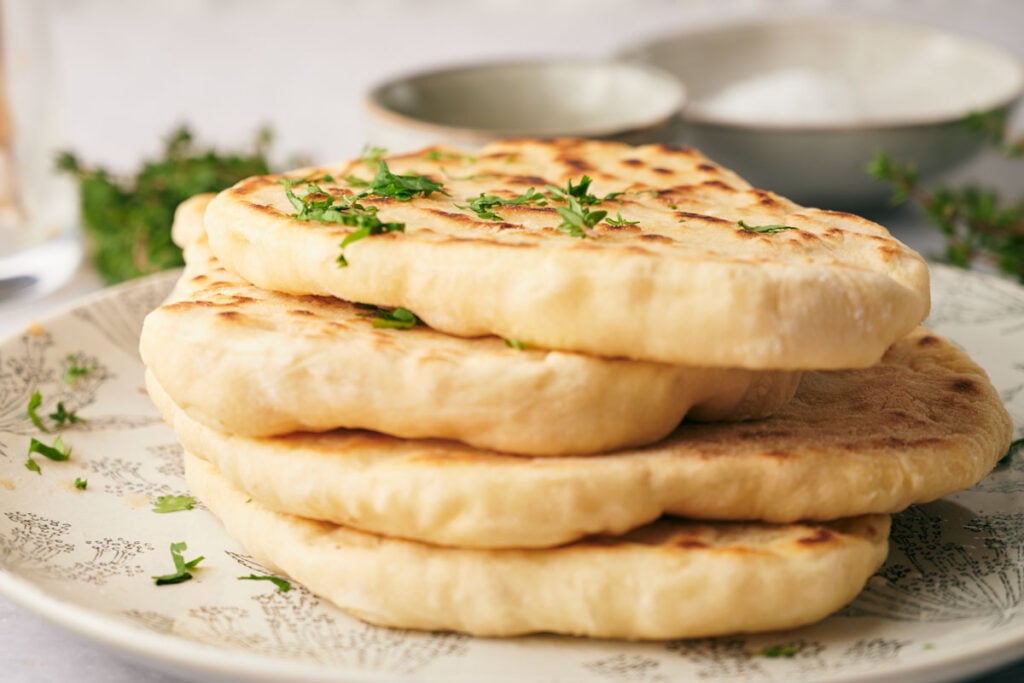
Every time I make Flatbread, the kitchen smells amazing and everyone hovers around waiting for the first piece. It’s soft and tender with golden brown spots and little air pockets throughout. The slightly crispy edges are honestly the best part, warm, chewy, and absolutely perfect right off the skillet.
This post contains affiliate links. As an Amazon Affiliate, if you purchase through those links, I earn a commission. Thank you!
I make my own flatbread for game day snacks, weekend dinners, and potlucks because it’s quick to make and always a hit. It’s perfect for appetizer spreads, easy pizza nights where everyone customizes their own toppings, or just tearing off pieces of fresh bread and dipping into your favorite sauce. It keeps at room temperature for 3 days or freezes for up to 3 months.
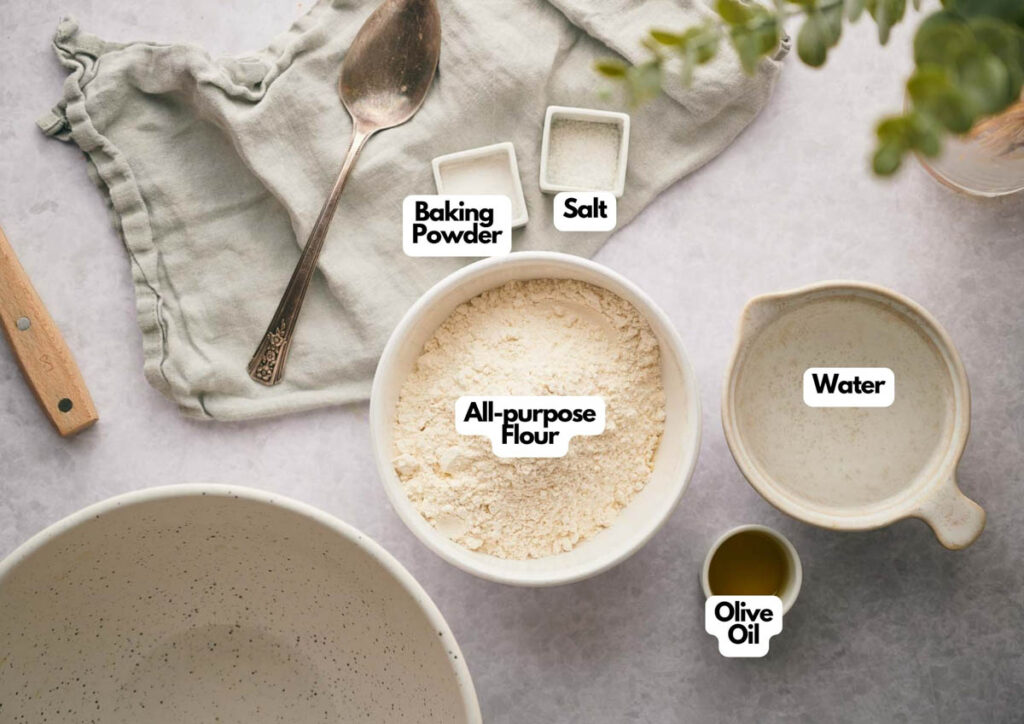
Ingredients You’ll Need
You’ll need all the ingredients shown in the photograph below.
How to Make Flatbread with Step-By-Step Instructions
Scroll down for the full recipe card containing a full printable recipe and measurements in both US customary and metric units.
This no-yeast flatbread is surprisingly quick and rewarding, and you’ll love how the dough transforms into soft, golden homemade bread in just minutes, even without plain Greek yogurt.
Mix the Dough
Add all-purpose flour, baking powder, and sea salt to a medium or large mixing bowl and mix to combine. If you want a heartier, nuttier flatbread with more fiber, replace up to half the all-purpose flour with whole wheat flour. I’ll be slightly denser and less soft, though.
If you want a chewier texture, use bread flour instead. This great recipe can also be made gluten-free by swapping the all-purpose flour with a 1-to-1 gluten-free flour blend; just make sure your baking powder’s gluten-free, too.
Pour in lukewarm or slightly warm water and a little olive oil, and stir with a wooden spoon until it starts to take a messy form. Feel free to upgrade to extra-virgin olive oil for a more flavorful dough with a subtle fruity note that would complement Mediterranean toppings.
Now, using your hands, knead the dough right in the bowl. Keep kneading it until it takes shape. You can also use a stand mixer with a dough hook attachment, but be careful not to overwork it.
Let the Dough Rise
Tip the dough onto a lightly floured surface and continue to knead for a couple of minutes until it’s smooth. It should feel soft and slightly sticky but not too tacky. Have extra flour nearby so you can dust your work surface and hands as needed if the dough is too wet or keeps sticking.
Place dough in a greased bowl and cover it with plastic wrap or a clean tea towel. Let the ball of dough rest for 20 minutes at room temperature.
Shape the Flatbreads
Lightly flour your work surface and tip the flatbread dough onto it. Divide it into two equal parts with a bench scraper (or more if you are making mini flatbread), and, using your hands or a rolling pin, stretch and flatten it to an oval-shaped thin crust at around ¼ inch thick.
Don’t worry about making them perfectly round; the rustic oval shape is part of the charm. I use a nonstick wooden rolling pin to make sure my flat bread stays smooth without sticking.
Cook the Flatbreads
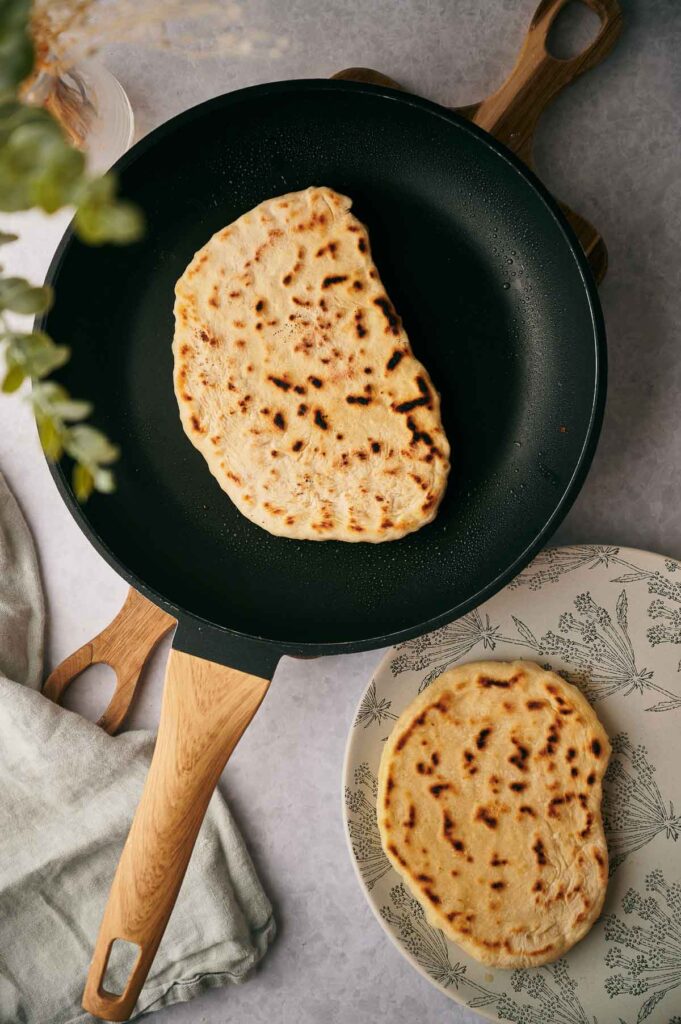
Heat a large nonstick skillet over medium heat. You’ll need a really hot skillet before you add the dough to get those beautiful golden spots. Place the flatbread dough in the pan and cook until air pockets form and the bread turns just golden brown, approximately 2 to 3 minutes.
You’ll see the bread puff up slightly as it cooks. Flip the bread over with a wide spatula and repeat on the other side. Repeat the process with the remaining flatbread dough.
Stack the cooked flatbreads on a plate and cover them with a clean kitchen towel to keep them warm and soft while you finish the rest, or use a low oven to keep them hot on a parchment-lined baking tray in a single layer.
Serve Fresh and Warm
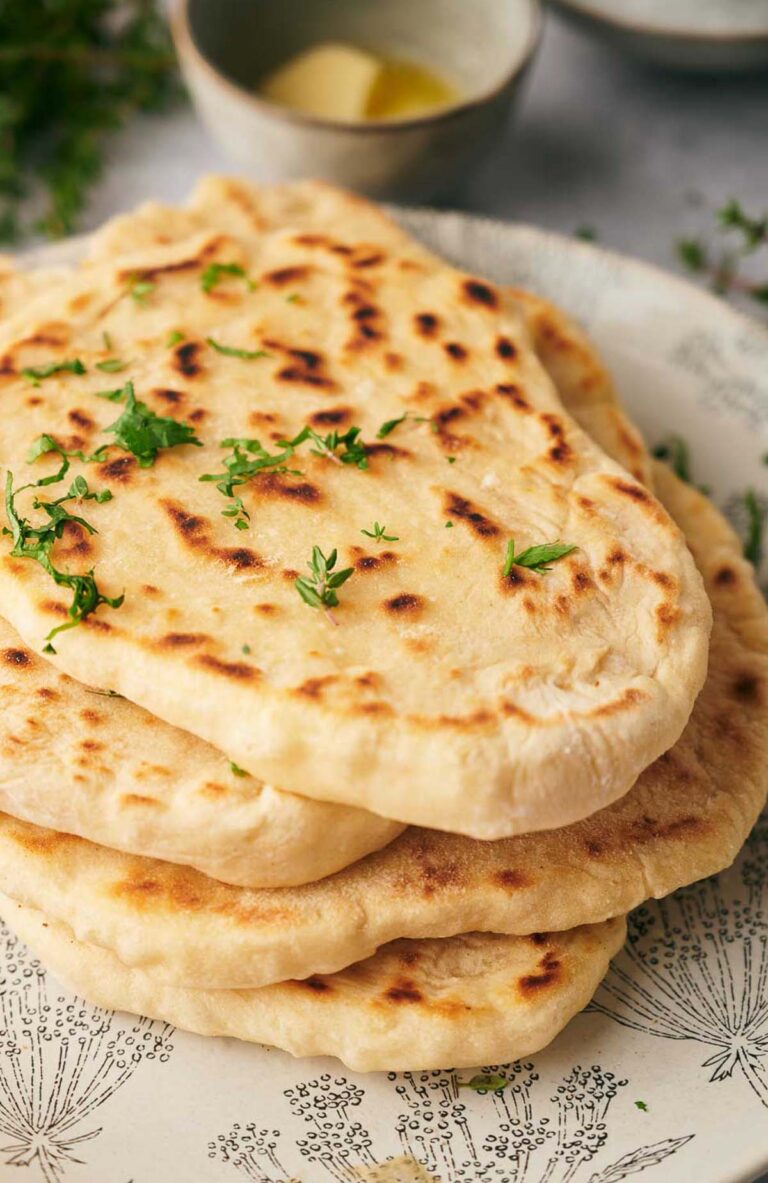
Serve them plain or with your favorite toppings, or let them cool to pack or store for later. Enjoy!
This perfect flatbread recipe travels beautifully to potlucks, picnics, and casual gatherings because it stays soft and flexible at room temp. Stack the cooled flatbreads with a piece of parchment paper between each one, then wrap the whole stack tightly in aluminum foil.
Place them in an airtight container, and if you’d like to keep them warm, wrap the container in a kitchen towel and place it inside a thermal carrier or a tortilla warmer to retain the heat for a longer time.
Ingredients
- 1½ cup all-purpose flour
- 1½ teaspoon Baking powder
- ¼ teaspoon sea salt
- ½ cup water lukewarm
- 2 tablespoons olive oil
Instructions
For the flatbread
- Add flour, baking powder, and sea salt to a medium mixing bowl and mix to combine. Add water and olive oil and stir until it starts to take a messy form, then use your hands to knead the dough, keep kneading it until it takes shape. Tip it onto a lightly floured surface and continue to knead for a couple of minutes until the dough is smooth. Place the dough in a greased bowl and cover it with plastic wrap and leave for 20 minutes at room temperature.1½ cup all-purpose flour, 1½ teaspoon Baking powder, ¼ teaspoon sea salt, ½ cup water
- Lightly flour your work surface and tip the flatbread dough onto it. Divide it into 2 equal parts, and, using your hands or a rolling pin, make an oval shape at around ¼ inch thick.
- Heat a large non stick skillet over medium heat, you'll need the skillet to be really hot. Then place the flatbread dough in and cook until air pockets have formed and the bread has started to turn golden brown, approximately 2 – 3 minutes, flip the bread over and repeat. Repeat the process with the remaining flatbread dough.
Notes
Nutrition
How to Store Leftovers
Store homemade flatbread wrapped in a clean kitchen towel or placed in a zip-top bag with wax paper between layers to prevent them from sticking together, at room temperature for 2 to 3 days.
It’s a great make-ahead recipe that lets you make a double batch (or more), since the bread will stay soft and pliable if you keep it covered, so it doesn’t dry out.
For longer storage, wrap each flatbread individually in plastic wrap or flash-freeze them on a freezer-safe sheet pan in a single layer for about 1 hour, then stack and place them all in a freezer bag and freeze for up to 3 months.
When you’re ready to eat them, thaw the flatbreads at room temperature for about 30 minutes, then reheat them in a dry skillet over medium heat for 1 to 2 minutes per side until warmed through and soft again.
What to Serve With Flatbread
It’s incredibly versatile and works with just about any Mediterranean or Middle Eastern spread. I love serving it alongside hummus, baba ganoush, tzatziki, or labneh for dipping, or piling it with roasted veggies, falafel, and fresh herbs for a build-your-own mezze platter.
You can sprinkle it with chopped fresh parsley or brush it with fresh garlic butter, whether made with real minced garlic cloves or garlic powder. It’s also perfect for scooping up shakshuka, wrapping grilled halloumi in it, or serving alongside lentil soup or vegetable curry.
Use it as a base for quick flatbread pizzas topped with marinara, mozzarella, and your favorite vegetables, or tear it to dip in olive oil and za’atar. This tender flatbread is sturdy enough to hold up to whatever you pile on top, and it makes great lunch wraps, too, with feta and greens.
More Easy Recipes for You to Try at Home
I’ve got more simple homemade bread recipes you’ll want to make on repeat.


Oh my word, I loved this Flatbread Pizza recipe so much! I wanted to cut costs and start making more of my own food, but I didn’t realise how easy it would actually be. This flatbread feels so fresh and light and healthy, and I’m really excited to mix it up with different toppings each time now. Thank you so much for sharing! x
You are more than welcome! And isn’t the flavor SO much better than store bought 🙂