
Yellow Squash Casserole
 Add Preferred Source
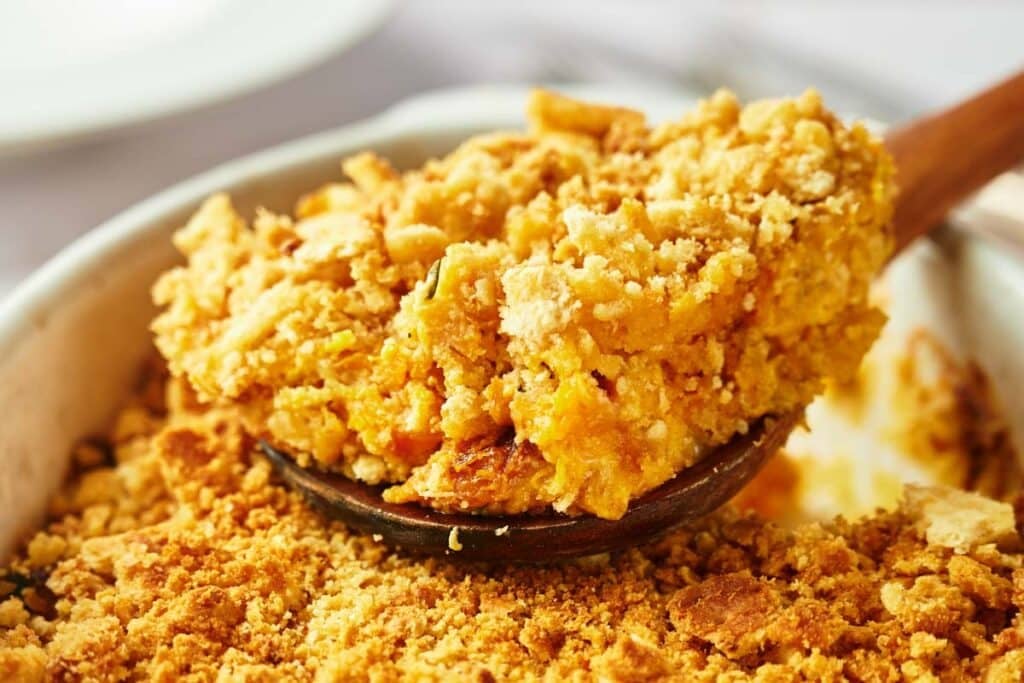
Yellow Squash Casserole is the side I make when summer squash is everywhere, and I want it to taste like more than a plain vegetable. Sharp cheddar and sour cream turn tender roasted squash into something rich and savory, and a crushed Ritz and Parmesan crust bakes over the top until it’s golden and crunchy.
What I’ve done for years is roast the squash before it ever goes in the dish, so it comes out sweet and concentrated instead of watery. That one habit is what gives you a casserole you can cut into neat squares, and it’s the detail most versions skip.
This post contains affiliate links. As an Amazon Affiliate, if you purchase through those links, I earn a commission. Thank you!
Why You’ll Love This Recipe
- Roasting the squash first concentrates its flavor and drives off the water it naturally carries, so the filling sets firm enough to serve in squares.
- The topping goes on after the filling has had its first bake, so the crushed Ritz and Parmesan crust stays crisp instead of sinking in and turning soft.
- Sharp cheddar and sour cream do the heavy lifting on flavor, and the quarter teaspoon of cayenne keeps the richness from reading as one flat note.
- If you’ve made my creamy broccoli casserole, this one works the same way: an egg-set vegetable filling under a buttery cracker top. It’s a natural partner on a potluck or holiday spread next to the green bean casserole.
Ingredients You’ll Need
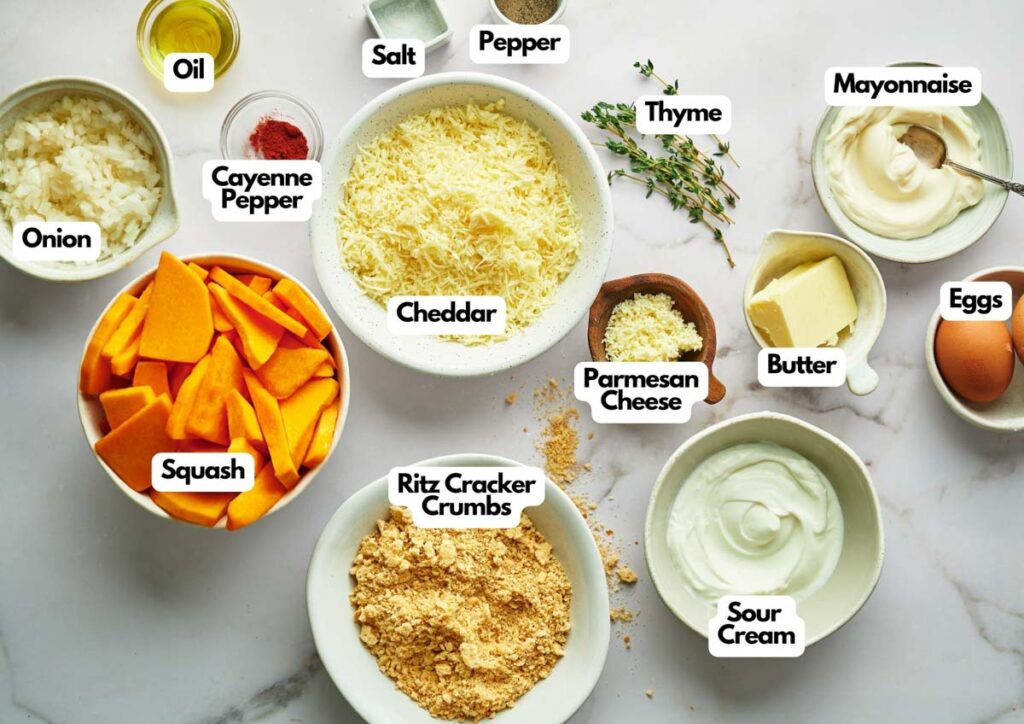
You’ll need all the ingredients shown in the photograph below.
Yellow squash. Three pounds, sliced. It’s the star of the dish, and because summer squash is about 95 percent water, roasting and then draining it is the step that keeps the casserole thick rather than loose.
Sharp cheddar. Eight ounces. Grate it yourself from a block. Pre-shredded cheese is coated in starch that stops it melting smoothly, and you want this filling silky rather than grainy.
Sour cream and mayonnaise. Eight ounces of sour cream and half a cup of mayonnaise. Together they carry the creaminess through a long bake without thinning out, and the sour cream brings a slight tang against all that cheddar. Sour cream does the same job in my cheesy potato casserole, if you want another use for the tub.
Eggs. Two, whisked in first. They set the filling as it bakes, which is what lets you cut a clean square instead of spooning up a loose scoop.
Ritz crackers and Parmesan. Forty crackers, crushed, with vegetarian Parmesan and melted butter. This is the crust. Use a vegetarian Parmesan, since traditional Parmesan is made with animal rennet.
Fresh thyme and cayenne. A tablespoon of thyme and a quarter teaspoon of cayenne. The cayenne is gentle, more warmth than heat, and it keeps the creamy filling from tasting flat.
How to Make Yellow Squash Casserole
A complete printable recipe and the measurements in both US customary and metric are available in the recipe card below.
Roast the Squash and Onion
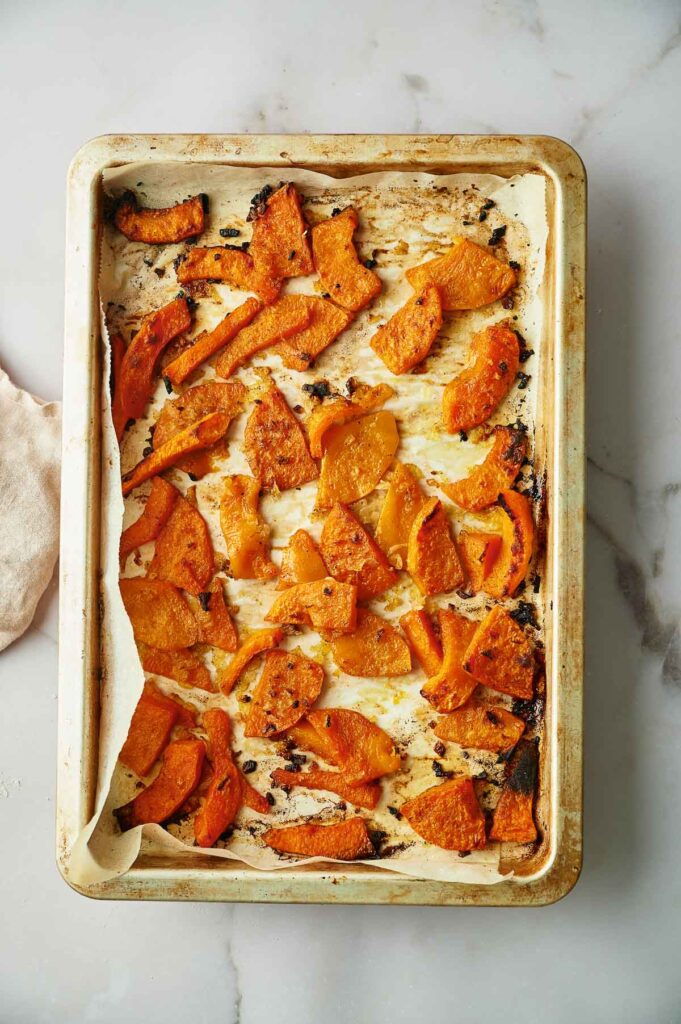
Preheat your oven to 350°F (180°C). On a large rimmed sheet pan, toss the sliced squash and chopped onion with the olive oil, kosher salt, and black pepper until evenly coated, then spread them in a single layer. Roast for 20 to 25 minutes, until the squash gives easily under a fork.
Drain the roasted squash and onion thoroughly in a colander, or pat it dry with paper towels, then let it cool for about 10 minutes. Draining well here is what keeps the finished casserole from turning watery, so don’t rush it.
Mix the Filling
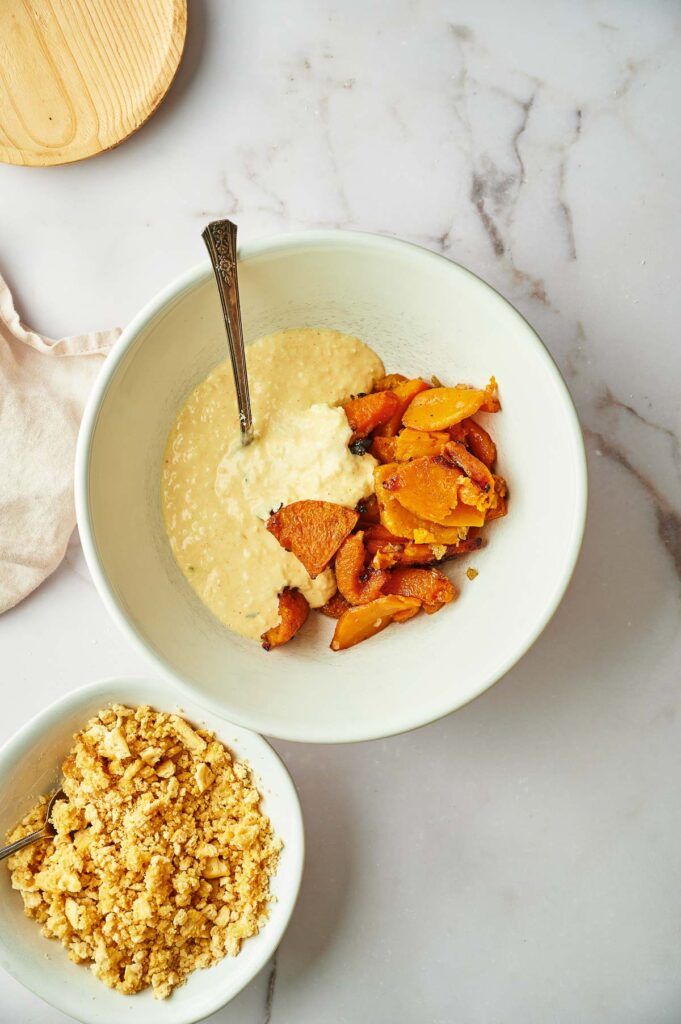
Whisk the two eggs in a large bowl until smooth. Add the mayonnaise, sour cream, shredded cheddar, fresh thyme, and cayenne, then gently fold in the cooled squash until just combined. Fold rather than stir, so the squash keeps its shape, and the filling stays light.
Let the squash cool before it goes in, because folding hot squash into raw egg starts to cook the egg before it reaches the oven.
First Bake
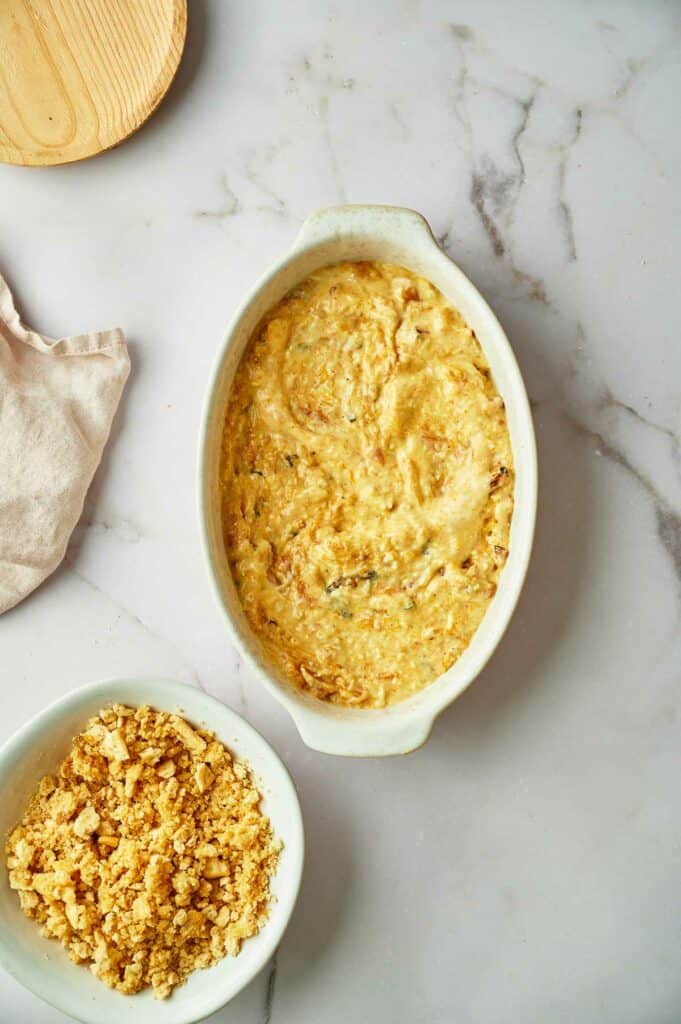
Pour the filling into a prepared baking dish and bake at 350°F for about 20 minutes, until it begins to set and lightly browns. It won’t be fully firm yet, and that’s fine, since it goes back in with the topping.
Make the Ritz Topping
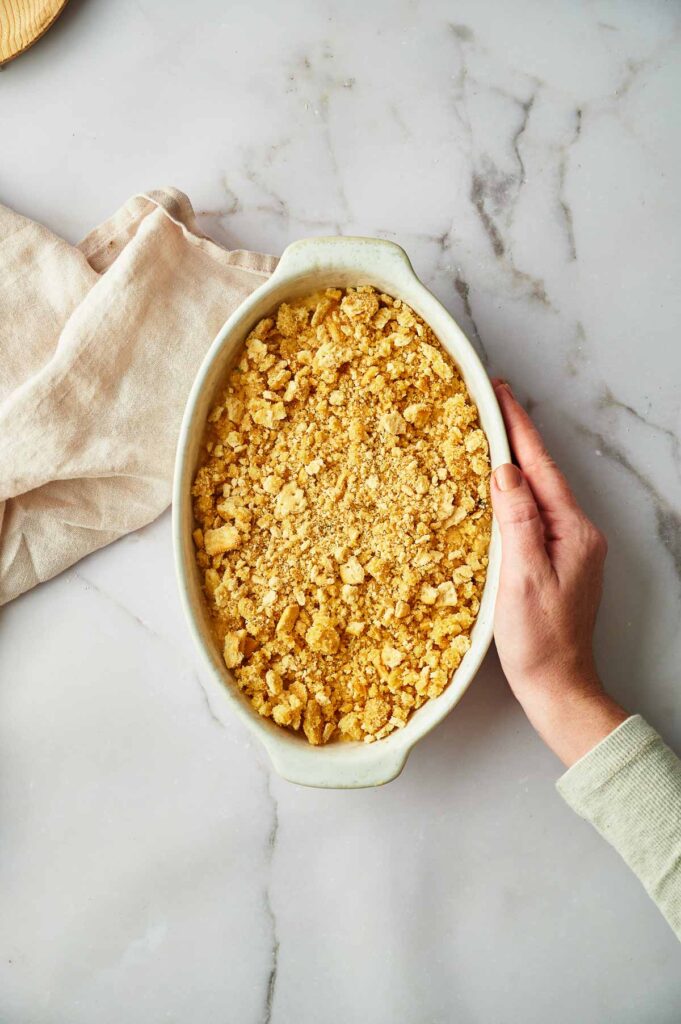
While the filling bakes, stir the crushed Ritz crumbs, vegetarian Parmesan, and melted butter together until the crumbs are evenly coated. Pull the dish out after its first 20 minutes and scatter the topping evenly over the surface.
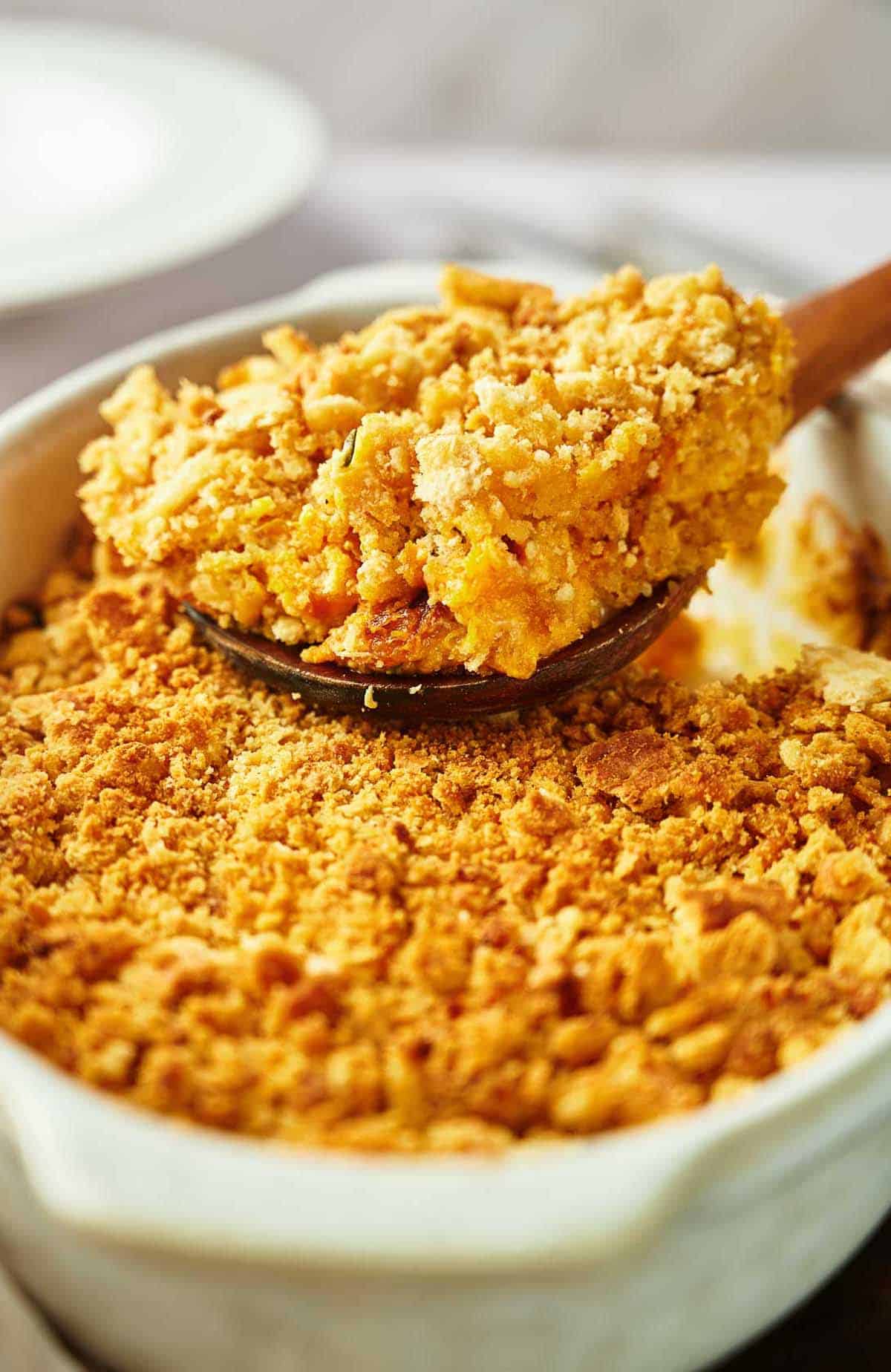
Return it to the oven and bake for another 25 to 30 minutes, until the top is deep golden brown and the filling is bubbling at the edges. Rest it for 2 to 3 minutes before serving so it settles.
Recipe Variations
- Swap the topping. Crushed cheese crackers or panko stand in for the Ritz and still bake up golden. It’s a straight topping swap that keeps the same second bake, so the timing doesn’t change.
- Add a little more heat. If you want more than the gentle warmth the cayenne gives, a pinch more works without changing anything else. Adjust it to your own taste.
- Stir in more cheese. A handful of extra sharp cheddar folded into the filling makes it richer without affecting how it sets. This one’s down to how cheesy you like it.
Recipe Notes and Expert Tips
Drain the squash well. After roasting, press it in a colander or pat it dry. Excess liquid is the most common reason a squash casserole turns out watery, and roasting only helps if you then get the released water off.
Let the squash cool before mixing. Give it at least 10 minutes. Folding hot squash into the egg mixture starts to set the eggs too early and can make the filling grainy.
Grate the cheddar from a block. Bagged shredded cheese carries anti-caking starch that keeps it from melting cleanly. Two minutes with a grater gives you a smoother filling.
Fold, don’t stir. A gentle folding motion keeps the filling light and lets the squash hold its shape rather than breaking down into the cream.
Add the topping after the first bake. Putting the crushed Ritz on partway through, rather than at the start, is what keeps the crust crisp instead of soaking into the filling.
How to Store Leftovers
Let the casserole cool, then cover the dish tightly or move leftovers to an airtight container. Cooked leftovers keep in the refrigerator for 3 to 4 days. To reheat, warm individual portions in the microwave or the whole dish in the oven until it reaches 165°F throughout, which is the safe reheating temperature and also brings the cracker topping back.
To freeze, skip the cracker topping, since it loses its crunch and turns soft once thawed. Wrap portions tightly in plastic wrap and then foil, place them in a freezer-safe container, and freeze for up to 3 months. Thaw overnight in the fridge, then add the topping fresh and reheat in the oven to 165°F.
One thing worth watching, because this is an egg-and-dairy dish: at a potluck or on a holiday table, keep it hot at 140°F or above on a warming tray, or serve it and get the leftovers refrigerated within 2 hours. If the room is above 90°F, that drops to 1 hour. Egg and dairy are why this one needs closer watching than a bread or a fruit dish.
What to Serve With Yellow Squash Casserole
This works as a rich vegetarian main or as a side on a bigger spread. Because it’s on the heavy side, I like something plain and bright next to it rather than another creamy dish.
A simple green salad with a sharp vinaigrette is the one I put out most often, since the acid cuts straight through the richness of the cheddar and cream. Warm crusty bread is never a bad idea alongside, for the last of the filling on the plate.
FAQs
You can prep the parts in advance. The roasted and drained squash, the filling, and the crushed cracker topping can each be covered and refrigerated separately, and a raw egg-and-dairy filling is safe to keep chilled for a day as long as it stays covered and cold. From there, a couple of routes are open to you. You can assemble the filling in the dish, chill it, and run the two bakes on the day, adding the topping between them as the recipe directs. Or you can give the filling its first bake now, chill it, then add the topping and finish with the second bake later. This recipe hasn’t been tested either way, so the reliable path is the on-the-day method the recipe card lays out, with anything prepped ahead brought together when you’re ready to bake.
More Easy Recipes
If this one goes down well, here are more casseroles I put on the same kind of table.
- Sweet Potato Casserole is the sweeter end of the holiday spread, and it’s the one I put out at Thanksgiving.
- Corn Casserole is the easy one when I want something soft and cheesy without much prep.
- Brussels Sprouts Casserole brings a bit more bite when everything else on the plate is soft and creamy.
- Cauliflower Casserole is another roasted-vegetable bake, finished with a crisp panko and Parmesan top.
Ingredients
- 3 pounds yellow squash sliced
- 1 onion chopped
- 3 tablespoons olive oil
- 1 teaspoon Kosher salt
- ¾ teaspoon black pepper
- 2 eggs
- ½ cup mayonnaise
- 8 ounces sour cream
- 8 ounces Cheddar cheese sharp
- 1 tablespoon thyme fresh
- ¼ teaspoon cayenne pepper
- 40 Ritz crackers crushed
- ¼ vegetarian Parmesan cheese
- ½ cup butter

Video
Instructions
- Pre heat your oven to 350°F (180°C).
- In a large rimmed baking sheet add the squash, onion, olive oil, salt, black pepper and toss to combine. Cook until tender for approximately 20-25 minutes. Completely drain the squash mixture and set aside to cool slightly.3 pounds yellow squash, 1 onion, 3 tablespoons olive oil, 1 teaspoon Kosher salt, ¾ teaspoon black pepper
- In a large bowl whisk the eggs, then add mayonnaise, sour cream, cheddar cheese, thyme and cayenne pepper and gently fold in the cooled squash mixture. Now add it into your prepared casserole dish and cook until softened for approx. 20 minutes.2 eggs, ½ cup mayonnaise, 8 ounces sour cream, 8 ounces Cheddar cheese, 1 tablespoon thyme, ¼ teaspoon cayenne pepper
- Meanwhile, in a smaller bowl add the crushed Ritz cracker crumbs, vegetarian parmesan cheese and pour in the melted butter. Now sprinkle the Ritz cracker crumbs over the top of your cooked squash mixture.40 Ritz crackers, ¼ vegetarian Parmesan cheese, ½ cup butter
- Cook for a further 25-30 minutes until the top is golden brown and the cheese is melted and bubbly. Allow to cool for 2-3 minutes, then serve. Enjoy your hearty squash casserole!
Notes
Nutrition

This was comfort food at its finest…SO delicious! Can’t wait to have it again already!