
Spaghetti Marinara From Scratch With San Marzano Tomatoes
 Add Preferred Source
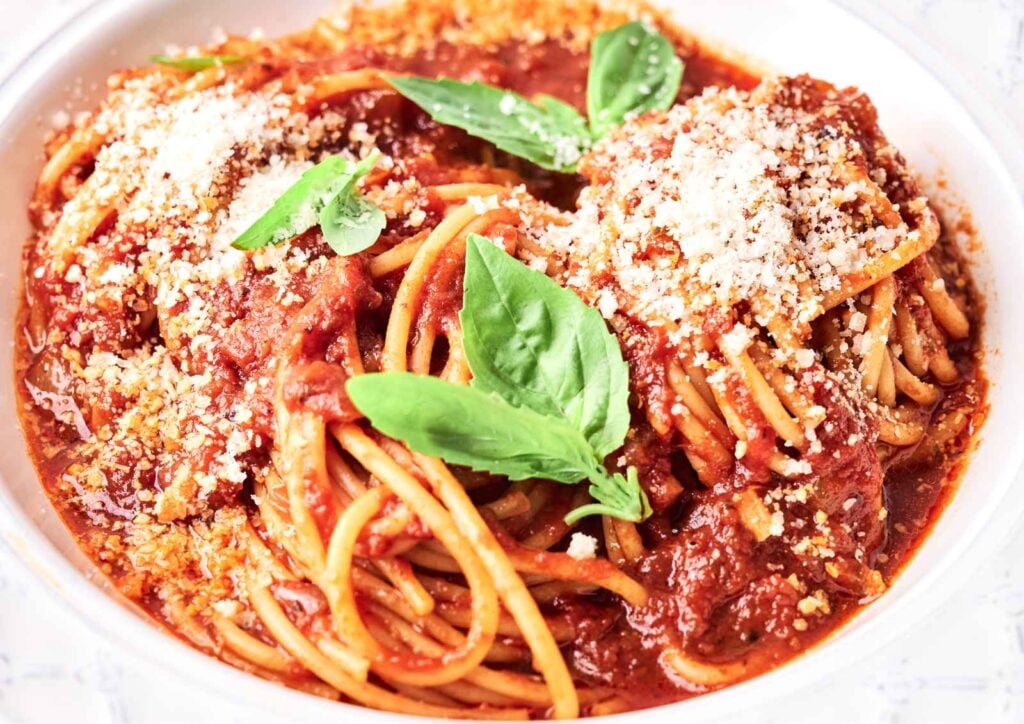
I have cooked more pasta dinners than I could ever count, and Spaghetti Marinara is still the one I come back to when I want something honest on a weeknight. The whole thing rests on the sauce, and the sauce rests on the tomatoes. Use good San Marzano plum tomatoes and give them a slow simmer with onion, garlic, oregano, and a little heat from red pepper flakes, and you end up with something bright and rich that a jar has never once matched in my kitchen.
What I like most is how little it asks of you. A handful of pantry ingredients, one long unhurried simmer, and a pot of well-salted pasta water. None of it is fussy. I have served this to people who eat meat every day and watched them go back for a second bowl without a word about what was missing.
This post contains affiliate links. As an Amazon Affiliate, if you purchase through those links, I earn a commission. Thank you!
Why You’ll Love This Spaghetti Marinara
- You get a deeply flavored sauce from scratch, out of six everyday ingredients, and the flavor comes almost entirely from letting San Marzano tomatoes simmer down rather than from a long shopping list. If you have never made your own homemade marinara sauce, this is the one I would start you on.
- You can walk away from it. Once the sauce is at a low simmer, it looks after itself for the better part of an hour, which frees you up to cook the spaghetti, lay the table, or get a head start on the cleanup.
- It tastes better the next day. The flavors settle and deepen overnight, so a batch of the sauce made ahead is arguably the smarter way to cook this, not a compromise. More on how to hold it in the storage section below.
- It suits a crowd as easily as it suits one. I make it for quiet weeknight dinners and for family gatherings alike, and it scales up without turning into a project.
Ingredients You’ll Need
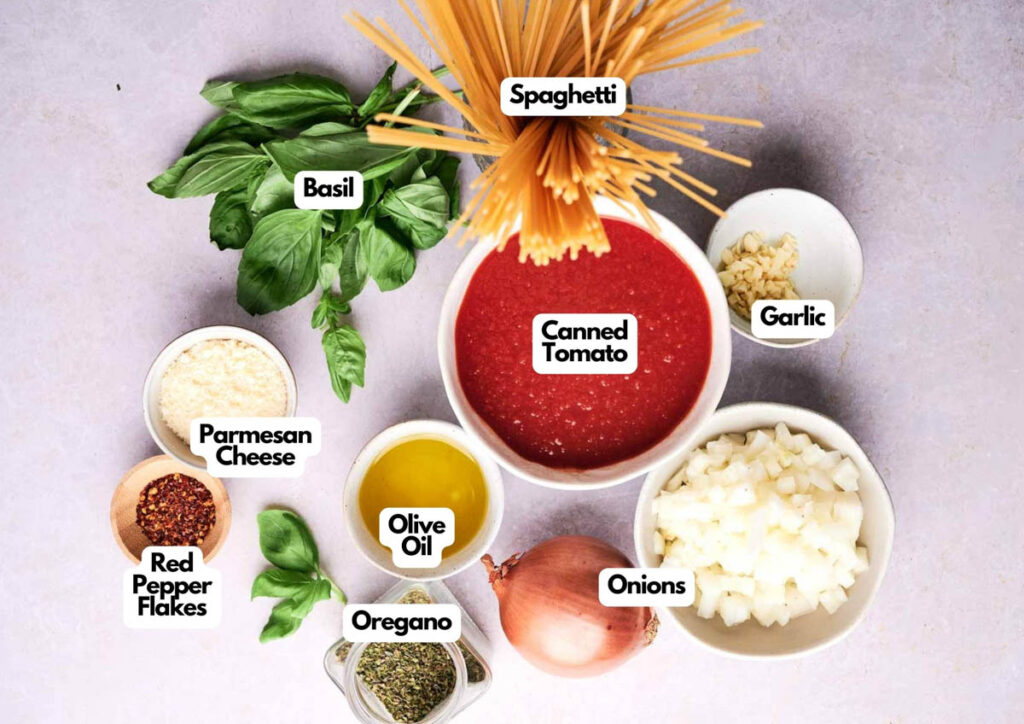
You’ll need all the ingredients shown in the photograph below.
San Marzano plum tomatoes. These are the backbone of the dish. They are sweeter, lower in acidity, and carry fewer seeds than an ordinary canned plum tomato, which is exactly why the sauce comes out rounded rather than sharp. Canned whole ones are genuinely the right call here, since they are picked and packed at peak ripeness. Look for the DOP seal on the can if you can find it.
Onion and garlic. Finely chopped onion and fresh garlic build the savory base under the tomatoes. Chop the onion small so it melts into the sauce over the long simmer instead of staying in noticeable pieces.
Dried oregano and red pepper flakes. Oregano is the herb that reads as classic Italian tomato sauce, and the red pepper flakes add a low background warmth rather than real heat. Keep the flakes to half a teaspoon in the card unless you know you want more.
Olive oil. Three tablespoons goes in with the seasonings. If you want a rounder, more peppery finish, a good extra-virgin olive oil is worth using here over a plain one.
Spaghetti. Sixteen ounces. Buy a brand you like, since with this few ingredients the pasta itself is doing real work. Gluten-free spaghetti stands in fine if you need it.
Fresh basil and Parmesan, to finish. Both are optional garnishes, but I would not skip them. A few torn basil leaves and a shower of vegetarian or vegan Parmesan are what pull the bowl together at the table.
How to Make Spaghetti Marinara
A complete printable recipe and the measurements in both US customary and metric are available in the recipe card below.
Build Your Marinara Base
Add the San Marzano tomatoes to a medium saucepan or a Dutch oven, then the onion and garlic. If you are working from fresh tomatoes rather than canned, break them down first with a food processor or a potato masher so they cook down evenly.
An enameled cast-iron Dutch oven earns its place here because the even heat holds a steady simmer over a long stretch without scorching the bottom.
Season and Simmer
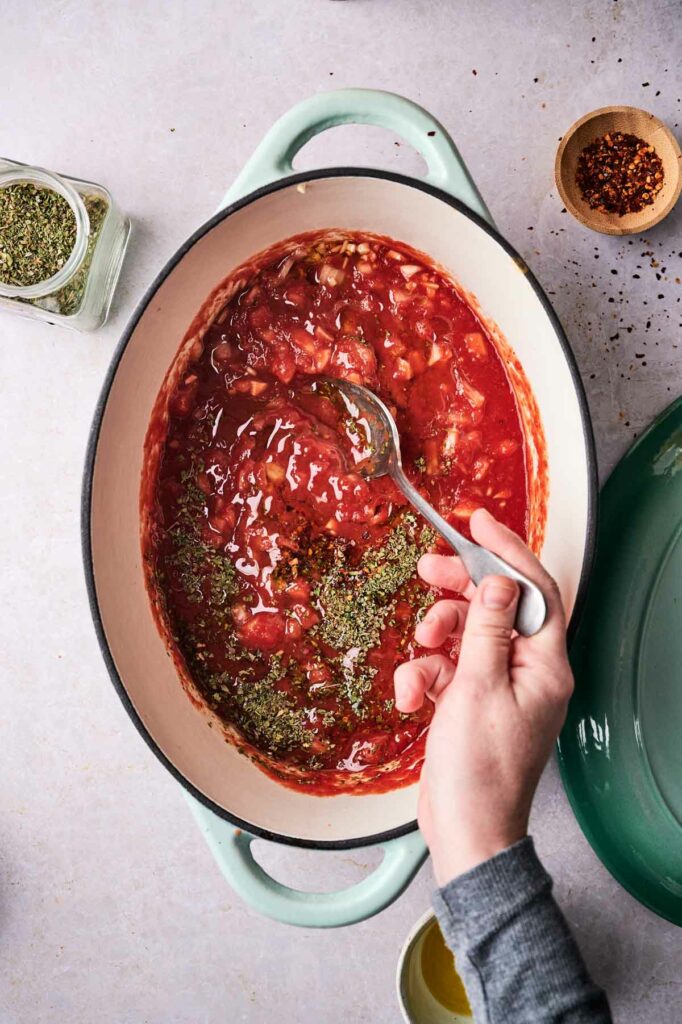
Add the oregano, red pepper flakes, and olive oil, and stir to combine thoroughly. Bring the pan to a simmer over medium heat, then lower the heat and leave it to simmer for the full 45 minutes, stirring now and then.
This is the part not to rush. That unhurried simmer is what turns raw ingredients into something deep and fragrant, and cutting it short leaves the sauce thin and underdeveloped.
If it tastes a little sharp at the end, a small pinch of sugar balances the acidity, though with good San Marzano tomatoes you often will not need it.
Cook Your Spaghetti
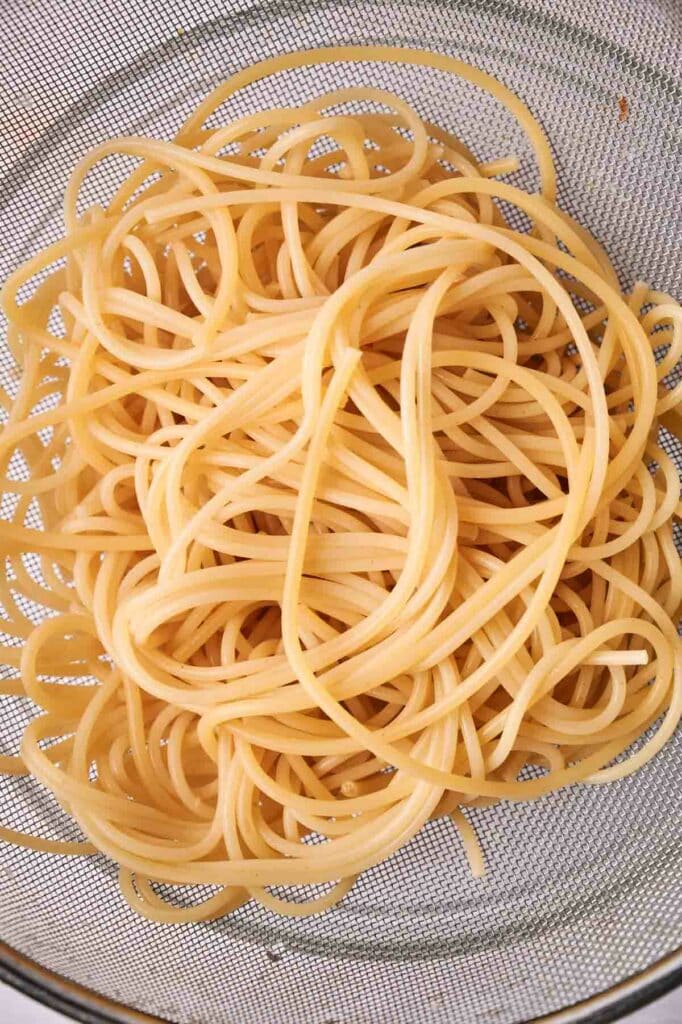
While the sauce finishes, cook the spaghetti in a large pot of well-salted boiling water, following the packet directions and stirring in the first couple of minutes so the strands do not stick. Pull it while it’s still just al dente, since it will keep softening once it meets the hot sauce.
Combine and Coat
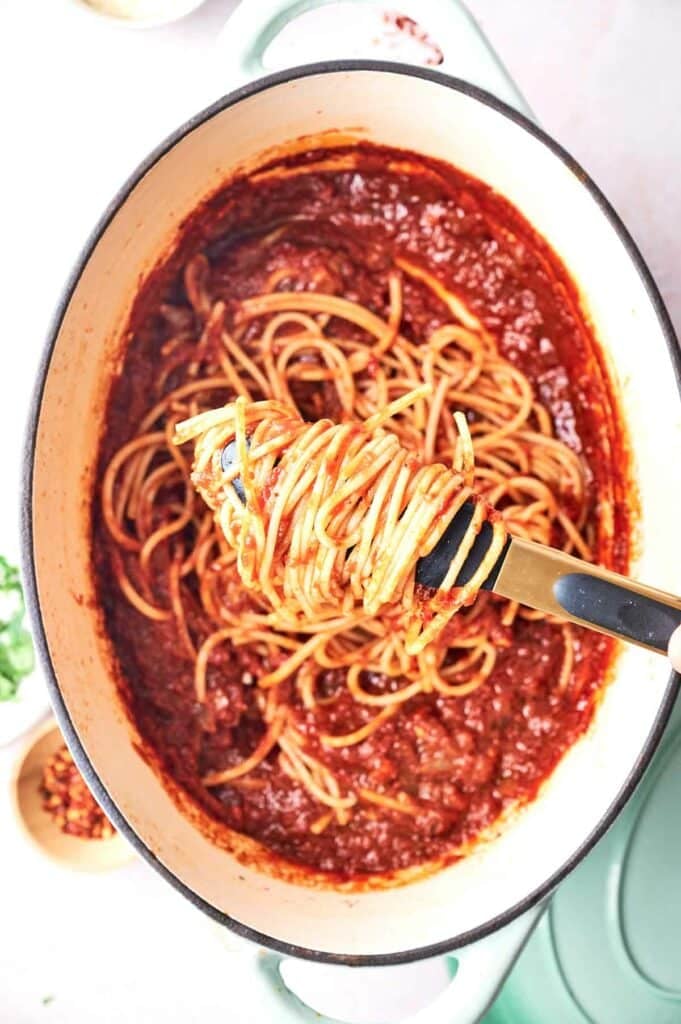
Move the drained spaghetti straight into the sauce and toss until every strand is covered. If a little pasta water rides along with it, so much the better; that starchy water helps the sauce cling to the pasta rather than pool at the bottom of the bowl.
Serve and Garnish
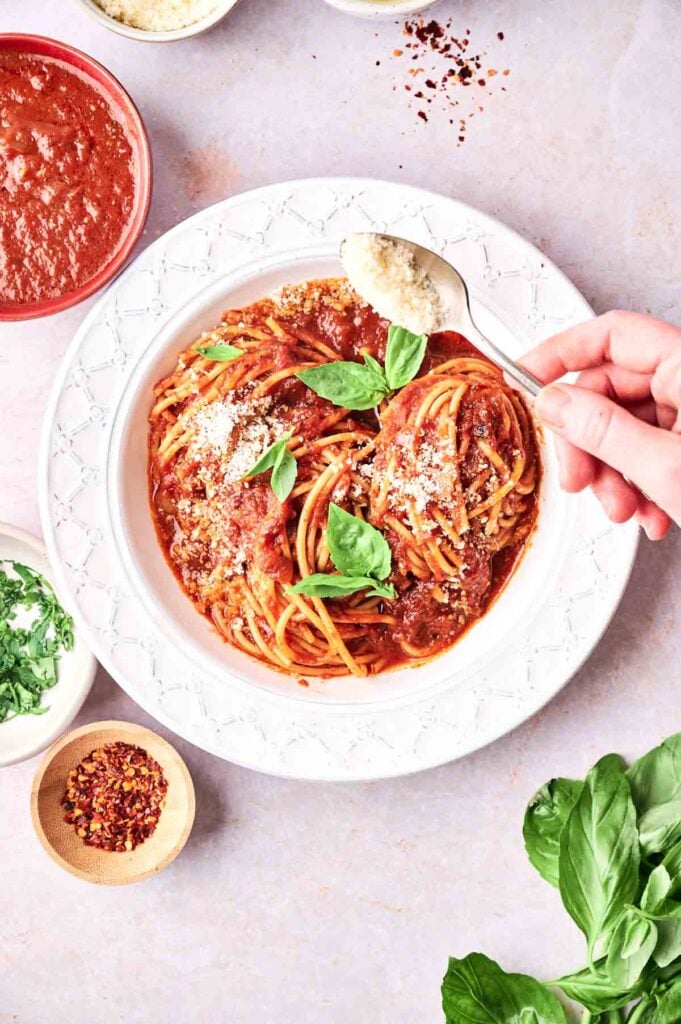
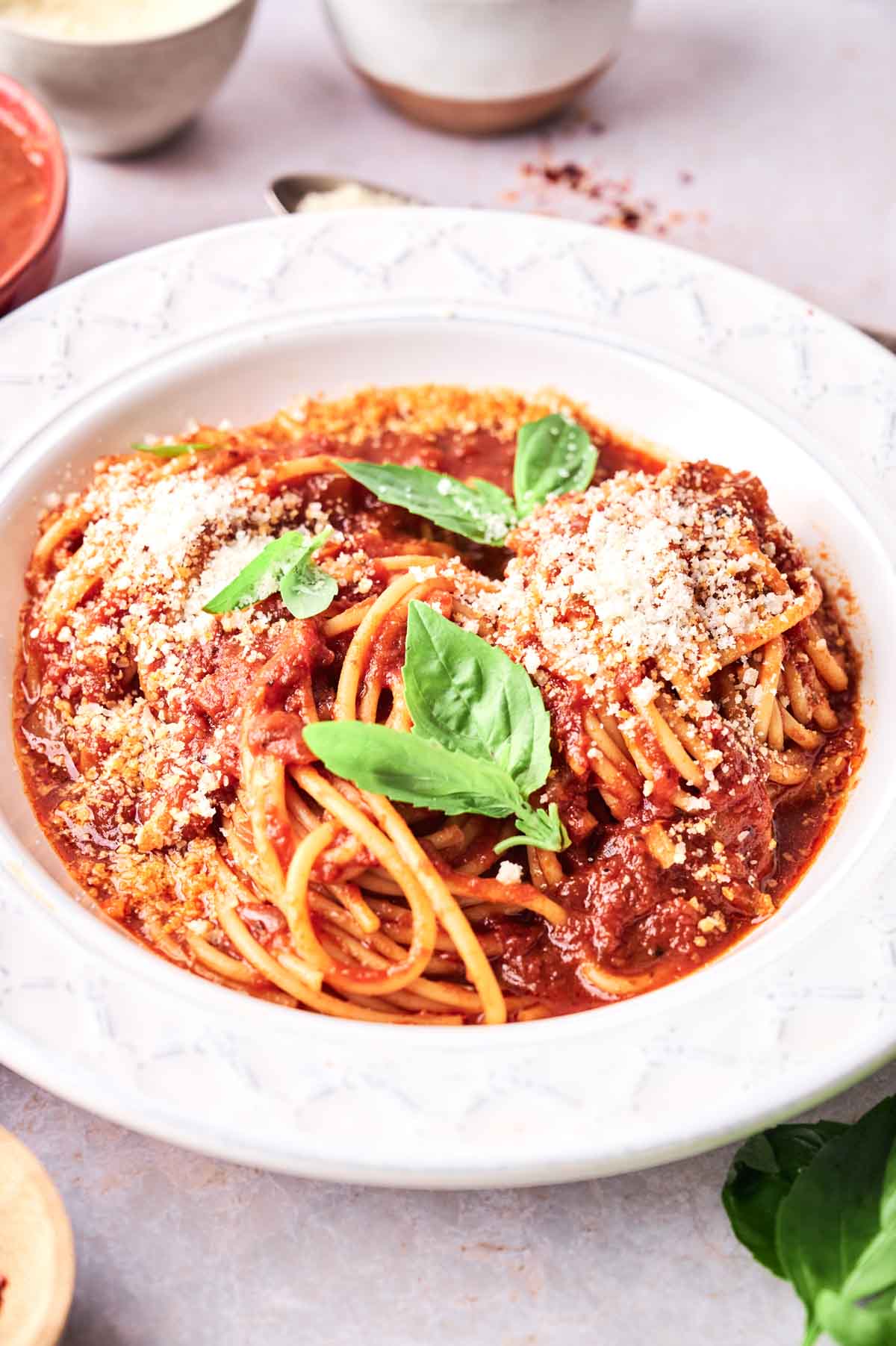
Finish with a handful of torn fresh basil and a generous shower of vegetarian or vegan Parmesan, then serve straight away while it’s hot.
Expert Tips for Spaghetti Marinara
Use whole San Marzano tomatoes. They are less acidic and naturally sweeter than standard canned tomatoes, which is what gives the sauce its depth without any help from tomato paste.
Don’t cut the simmer short. The full 45 minutes over low heat is what develops the flavor. Stop early, and you are left with a thinner, flatter sauce.
Salt the pasta water properly. The water is your only chance to season the spaghetti itself, so be generous. It should taste like a light broth, not the sea and not plain.
Let the pasta water work for you. When you lift the spaghetti into the sauce, a little of that starchy water comes with it. The starch is what helps the sauce bind to each strand, so don’t chase every last drop off the pasta before it goes in.
Toss for a full minute before serving. Spend the time actually working the spaghetti through the sauce in the pan, so it’s coated all the way through, not just dressed on top once it hits the bowl.
Equipment
- Enameled cast iron Dutch oven or medium saucepan
Ingredients
- 2¾ pounds San Marzano plum tomatoes
- 1½ onions finely chopped
- 3 cloves of garlic
- 1½ teaspoons dried oregano
- ½ teaspoon red pepper flakes
- 3 tablespoons olive oil
- 16 ounces spaghetti
- Fresh basil leaves optional to garnish
- Vegetarian or vegan Parmesan cheese optional to garnish

Video
Instructions
- If you are making your own marinara sauce, you'll need to do that first. In a medium saucepan or Dutch oven, add your San Marzano tomatoes, then add onions and garlic.2¾ pounds San Marzano plum tomatoes, 1½ onions, 3 cloves of garlic
- Now add dried oregano, red pepper flakes, olive oil, and then stir to combine thoroughly. Bring the pan to a simmer over medium heat, then lower the heat, stir, and then leave to simmer for 45 minutes.1½ teaspoons dried oregano, ½ teaspoon red pepper flakes, 3 tablespoons olive oil
- Using the cooking instructions on your spaghetti packet, bring a large pan of salted water to a boil and then immerse the spaghetti into it. Stir to ensure the spaghetti doesn't stick together. When the spaghetti is cooked, transfer it to the cooked marinara sauce, if you get a little pasta water in the sauce then that's fine. Toss the spaghetti into the marinara sauce and ensure that it is fully coated. Serve in bowls, with a garnish of fresh basil leaves or a sprinkling of vegetarian or vegan Parmesan cheese16 ounces spaghetti, Fresh basil leaves, Vegetarian or vegan Parmesan cheese
- Perfect pasta – enjoy!
Notes
Nutrition

Spaghetti Marinara Variations
Make it spicier. Push the red pepper flakes up, or slice in a fresh chili with the onion and garlic. If heat is really what you’re after, our spicy penne arrabiata is a good one to look at next, a fiery tomato-and-chili pasta from the same Italian family.
Make it gluten-free. Swap in your favorite gluten-free spaghetti. The sauce itself has no gluten in it, so nothing else needs to change.
Add more body. Fold in sautéed mushrooms or roasted vegetables near the end if you want a heartier, more filling bowl. It shifts the dish from a clean marinara toward something closer to a full vegetable dinner.
Turn leftovers into a baked dish. Leftover sauced spaghetti reheats well, but you can also tip it into a dish, top with cheese, and bake it, much the way a cheesy vegetable pasta bake comes together.
What to Serve With Spaghetti Marinara
Warm, crusty garlic bread is the pairing I want first, purely so there’s something to mop up the last of the San Marzano sauce left in the bowl. Alongside it, I like a crisp green salad with a light vinaigrette to keep things fresh against the rich pasta.
If you want a fuller spread, roasted vegetables like zucchini, eggplant, or bell peppers sit well on the side, and plant-based meatballs keep it hearty and classic. And if you are building a bigger pasta night, put it out next to a second bowl like our Boursin cheese pasta so people can take a little of each.
How to Store Spaghetti Marinara
Leftovers of the finished dish keep well. Let the spaghetti cool completely, then transfer it to an airtight container and refrigerate for 3 to 4 days. When you’re ready to reheat, warm it gently in a pan over low-medium heat with a splash of water to loosen the sauce so it doesn’t dry out or seize.
If you want to get ahead, freeze the marinara sauce on its own rather than the assembled dish. Stored by itself in a freezer-safe container, the sauce keeps in the freezer for up to 1 month. Thaw it overnight in the fridge, reheat it gently, and toss it with a fresh batch of spaghetti cooked that day. Freezing the sauce separately is worth the small extra step, since spaghetti frozen in sauce tends to turn soft, and cooking the pasta fresh keeps it at the right texture.
Spaghetti Marinara FAQs
Yes, and the sauce is the part to make ahead. It tastes better the day after it’s made as the flavors settle, so you can cook the sauce up to a day in advance, refrigerate it, and simply cook fresh spaghetti when you’re ready to eat. For longer lead time, freeze the sauce on its own for up to 1 month.
Often not. San Marzano tomatoes are naturally sweet and low in acid, so many batches need no sugar at all. Taste the sauce after it simmers, and only if it reads sharp, stir in a small pinch to balance it.
Use another good canned whole plum tomato. The sauce will be a touch more acidic, so taste at the end and add that small pinch of sugar if it needs rounding out.
Yes. Use gluten-free spaghetti. Nothing in the sauce contains gluten, so no other change is needed.
More Easy Pasta Recipes to Try
If this one earns a place in your rotation, here are a few more pasta dinners from my kitchen I think you will get real use out of.
I make vegan spaghetti bolognese when I want something heartier on the same spaghetti base, built on lentils and mushrooms for real depth.
Vegetarian lasagna is where I go when the occasion calls for something to bring to the table whole and let people dig into.
Pasta primavera is my pick for when I need a lighter, vegetable-packed pasta dish.
Lemon pasta is the one I make on the busiest nights, bright and quick with barely anything in it.
Pesto pasta rounds out the set for anyone who wants green and herby rather than red and tomatoey.
A gazillion thanks for this. An “Italian sauce” -I’ve attempted many times, but never as detailed or for as long as your recipe. Your recipe is perfect.
I substitute red chili flakes instead of red pepper, and sometimes use one fresh birdseye chili diced instead.
For the low FODMAP version I infuse the oil with the garlic and onion and remove before they brown.
We so pleased that you like it and love seeing how you made it your own! It’s great that you’ve made it into a low FODMAP version too!