
Homemade Pesto Pasta Recipe (Ready in Under 30 Minutes)
 Add Preferred Source
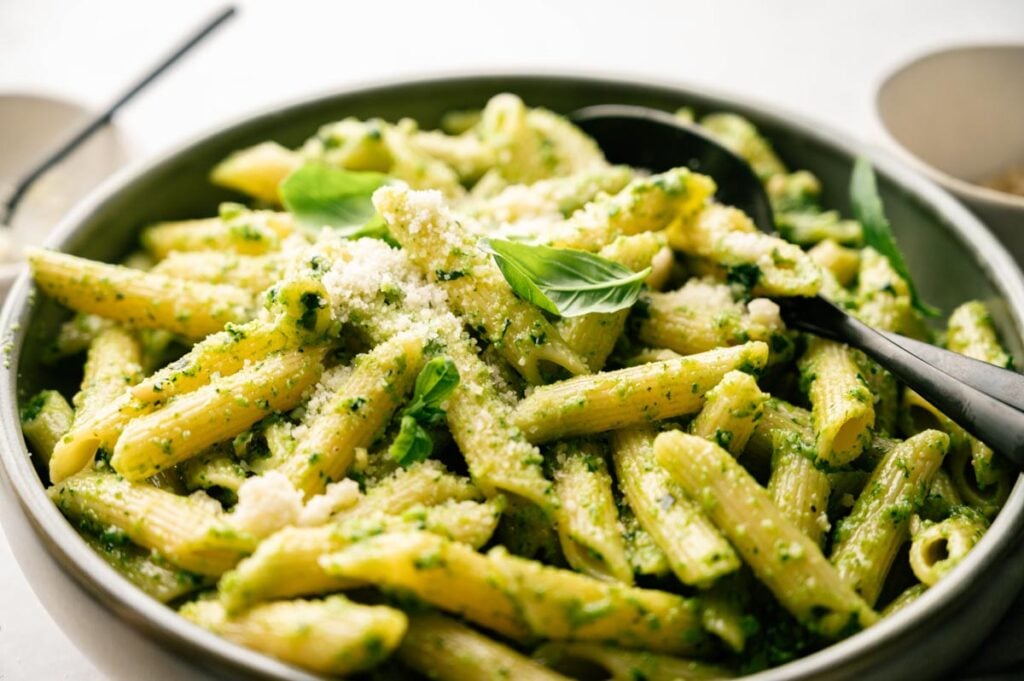
The first time I had real pesto was in Liguria, and it completely changed how I thought about the sauce. It was barely a sauce at all, just basil, oil, and cheese blended together and folded through hot pasta with a spoonful of the pasta water. That is the whole idea behind this pesto pasta: the flavor comes from good raw ingredients handled well, not from anything simmered down on the stove. Once you’ve had it fresh, the jarred stuff is hard to go back to.
What you get here is a weeknight dinner that takes about twenty minutes, most of it waiting for the pasta water to boil. You toast the pine nuts, blitz them with fresh basil, garlic, and Parmesan into a bright green sauce, and toss it through the pasta with a little of the starchy water. That’s the whole method, and it’s the kind of thing you can put together after work without much thought.
This post contains affiliate links. As an Amazon Affiliate, if you purchase through those links, I earn a commission. Thank you!
Why You’ll Love This Pesto Pasta
- It tastes far fresher and greener than anything from a jar. The basil stays bright and grassy, and the garlic keeps its bite because the sauce is blended, not simmered. Jarred pesto is cooked and stabilized to survive a shelf, and the homemade version is louder and greener the second you taste them side by side.
- The sauce turns out silky instead of oily, because a splash of the starchy pasta water is what loosens it and helps it cling to every piece. Most people try to fix a stiff pesto with more oil and end up with a greasy bowl; the pasta water does the job better and lighter.
- The sauce needs no saucepan and no watching. There’s nothing to simmer, reduce, or stir, which is what a real cooked pasta sauce usually asks of you. You blend the pesto in one go while the pasta boils, and it’s done and waiting before the pasta is even drained.
- Every bite actually holds the sauce, because the recipe is built around short, ridged pasta. Penne, fusilli, and rotini have grooves and curves that trap the pesto where a smooth strand would let it slide off, so you get flavor in every forkful rather than a puddle at the bottom of the bowl.
Ingredients You’ll Need
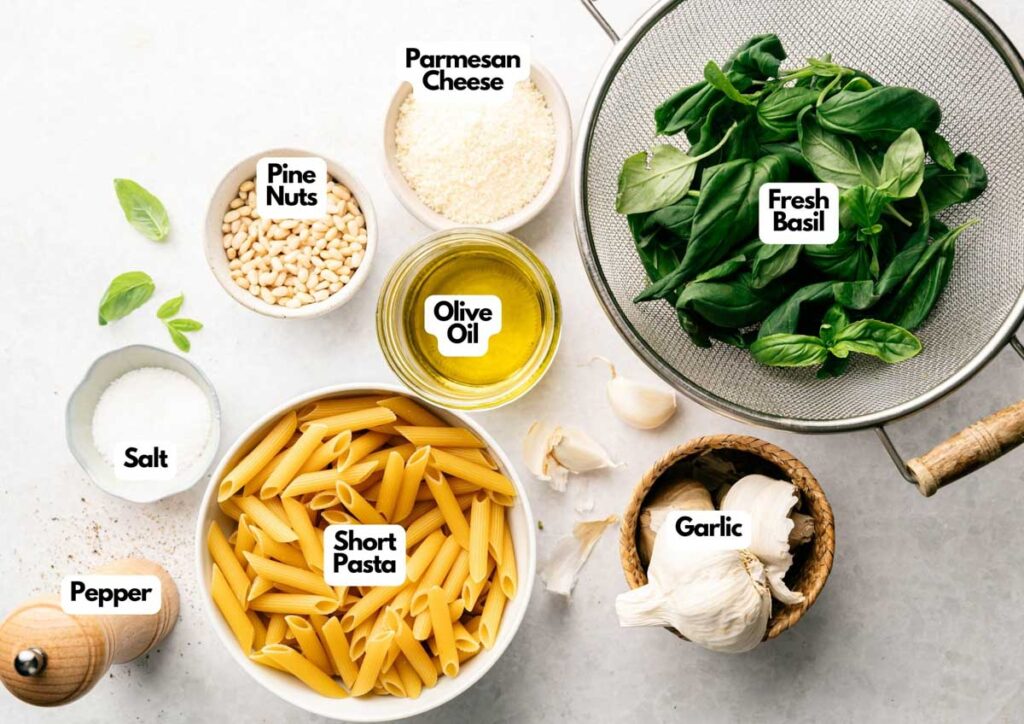
You’ll need all the ingredients shown in the photograph below.
Fresh basil, and a lot of it. The card asks for 2 cups of leaves, and it needs to be fresh, not dried. Basil is the entire flavor of the dish, so this is not the place to cut corners. Pick leaves that are deep green with no black spots, and if you grow it, the smaller young leaves are sweeter than the big older ones.
Pine nuts, toasted. The card calls for 2 tablespoons, toasted. Toasting is worth the extra couple of minutes: a dry skillet over medium heat until they’re golden and smell fragrant brings out a nutty depth that raw pine nuts do not have. If you’d rather skip the step, pre-toasted pine nuts are sold ready to go.
Parmesan, grated fresh. Half a cup, and grate it yourself from a block if you can. Pre-grated Parmesan is coated to stop it clumping, which stops it melting smoothly into the pesto too. Freshly grated dissolves into the sauce and gives you the salty, savory backbone.
Extra-virgin olive oil. The card uses half a cup, streamed in at the end. Since so few ingredients carry this sauce and the oil is a big part of the flavor rather than just lubrication, a good one you would happily taste on its own is worth using here.
Garlic, raw. Two cloves, blended in raw. Raw garlic keeps a punchy, slightly hot bite that stands up to the sweetness of the basil and the richness of the cheese, which is exactly what you want in a fresh pesto. Mince it or let the processor do it, and expect it to be assertive.
Short pasta. A pound of penne, fusilli, or rotini. Any short, ridged, or curled shape works; the ridges catch the sauce. I also use short-shape pasta for my vegetable pasta, so a bag of one covers both.
How to Make Pesto Pasta
A complete printable recipe and the measurements in both US customary and metric are available in the recipe card below.
Toast the Pine Nuts
Start by toasting the pine nuts in a dry skillet over medium heat, stirring often, for two to three minutes until they turn golden and smell fragrant. This is what gives homemade pesto its nutty depth.
They tip from golden to burnt in seconds, so keep them moving and take them off the heat the moment they color, then set them aside to cool. If you would rather skip it, pre-toasted pine nuts work here too.
Boil the Pasta
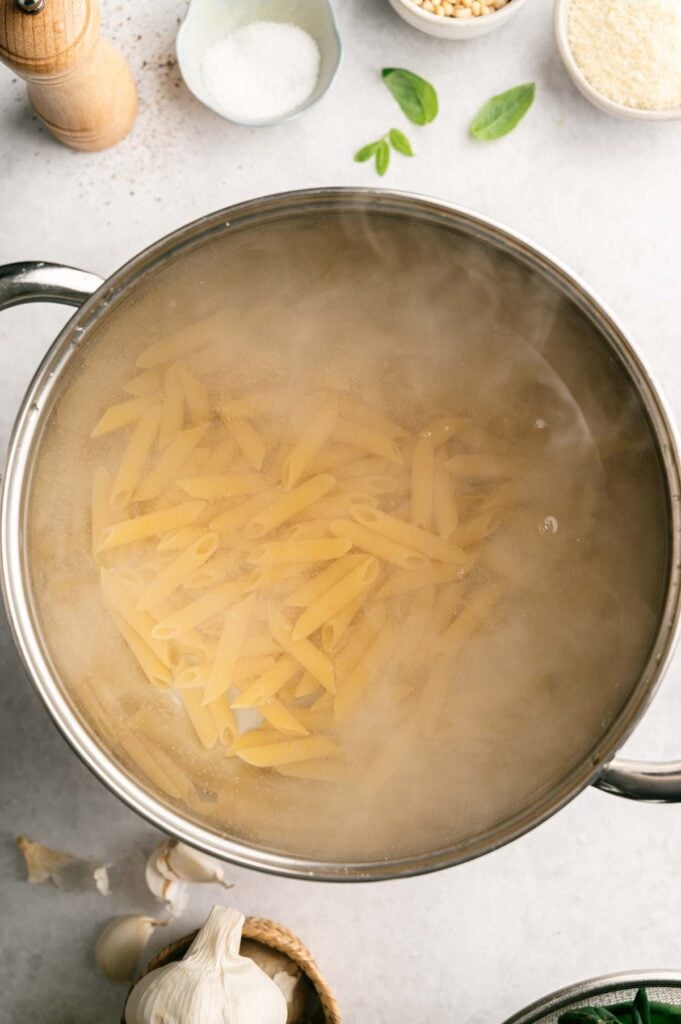
Bring a large pot of water to a boil and salt it well before the pasta goes in; it should taste like the sea, since this is your only chance to season the pasta itself.
Cook the pasta to al dente. Just before you drain it, scoop out a full cup of the cooking water and keep it nearby, because that starchy water is what makes the sauce silky later.

Make the Basil Pesto
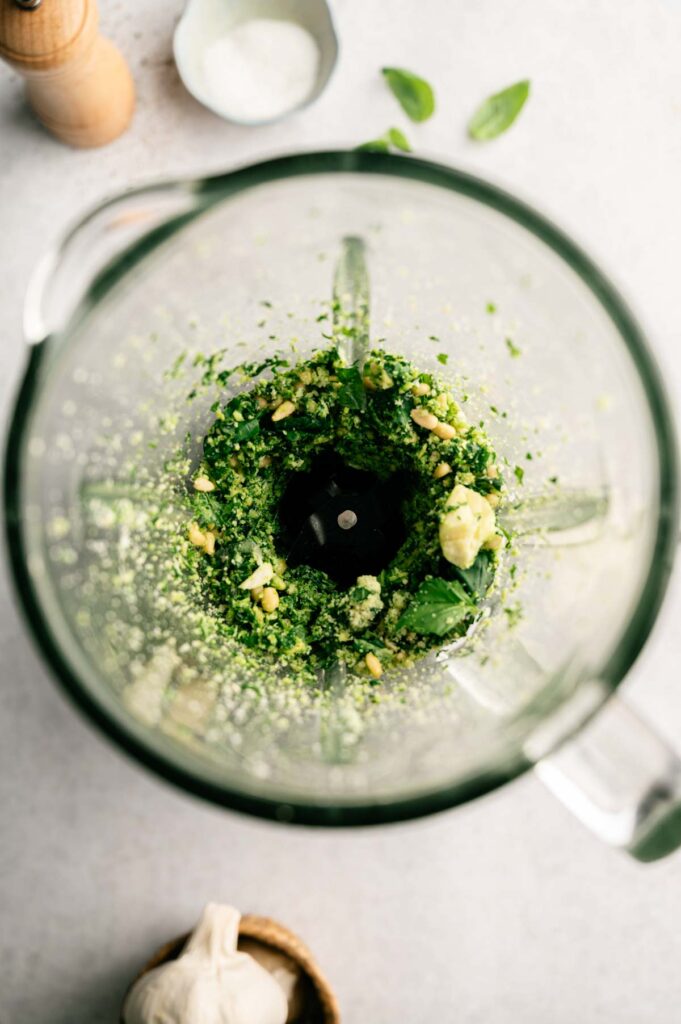
While the pasta cooks, put the basil, garlic, toasted pine nuts, and Parmesan into a food processor and pulse until everything is finely chopped into a rough, fragrant paste. Do not run it to a smooth purée at this stage; a little texture is what you’re after.
Blend in the Olive Oil
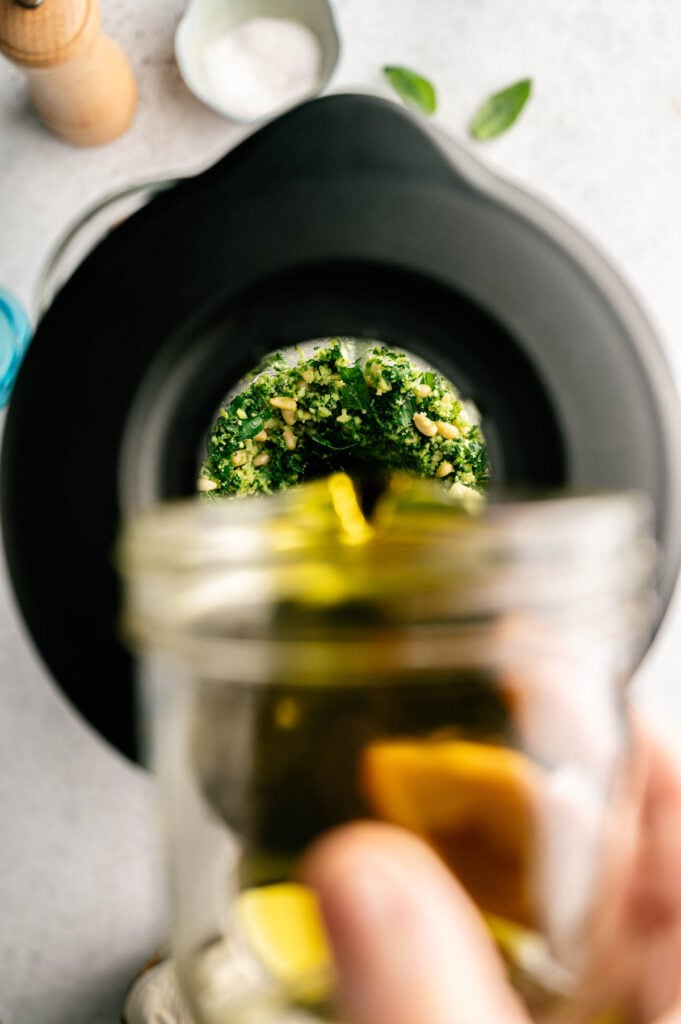
With the processor running, stream the olive oil in slowly and steadily until the pesto turns smooth and creamy. Streaming it in rather than dumping it all at once lets it emulsify, which is what gives you a silky sauce instead of a greasy, split one. Taste it and add salt as needed.
Coat the Pasta in Pesto
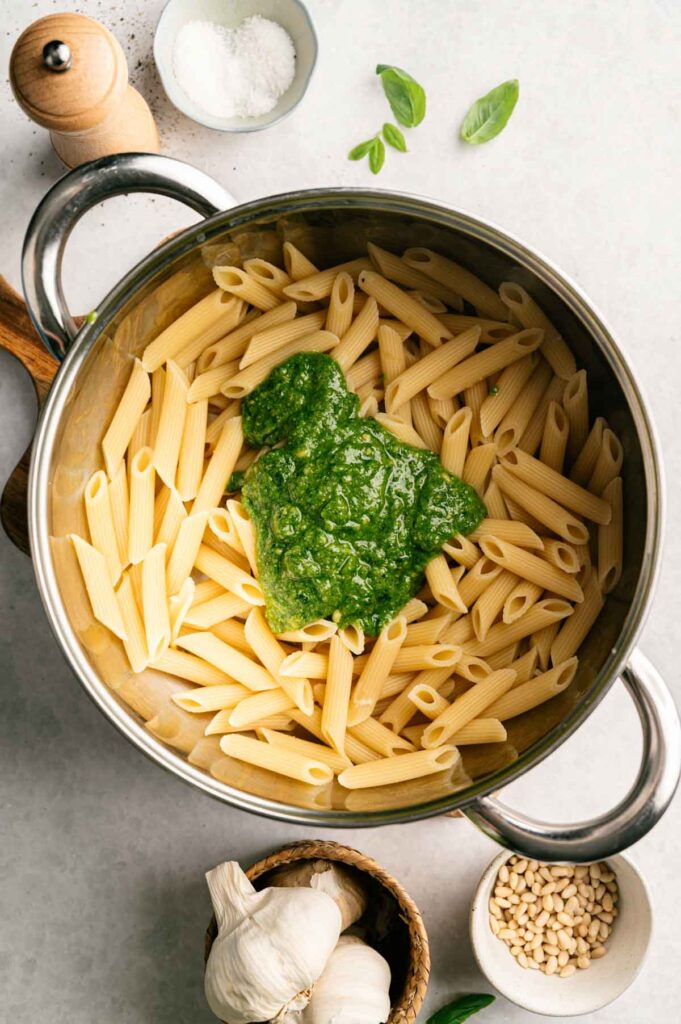
Toss the hot pasta with the pesto right away, adding the reserved pasta water a splash at a time until the sauce loosens and coats every piece evenly. Hot pasta takes on the sauce far better than cooled pasta does, so do this the moment it is drained, not after it has sat.
Serve the Pasta
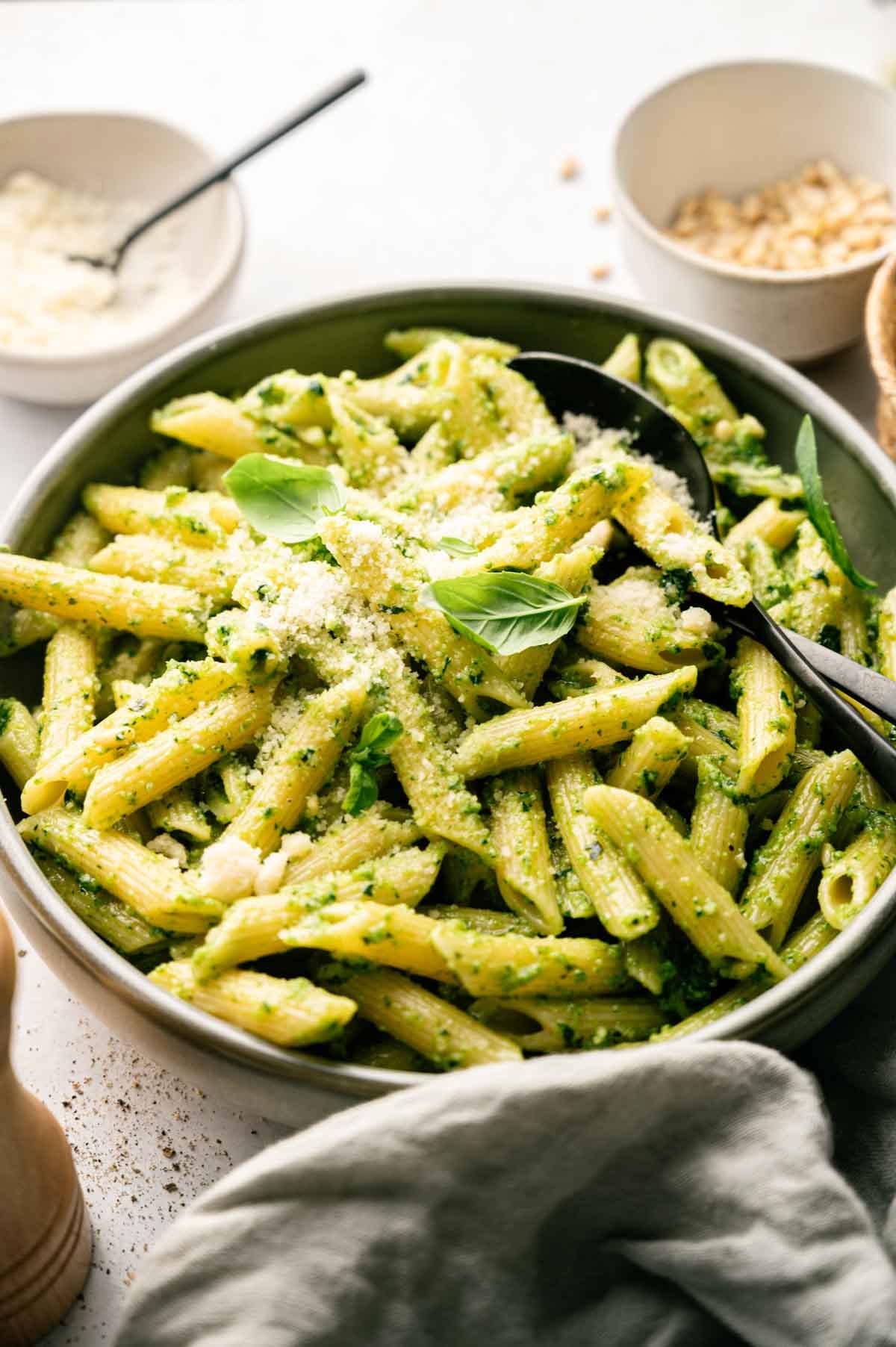
Serve it straight away, topped with extra Parmesan. Halved cherry tomatoes and a pinch of red pepper flakes are what I add when I want it to feel a little more finished, and a few whole basil leaves on top never hurt.
When I am after a deeper, more savory bowl on a cold night, I make my mushroom pasta instead, which trades the fresh herb sauce for a rich, earthy one.
Expert Tips for Pesto Pasta
Toast the pine nuts and watch them. A dry skillet over medium heat, stirring often for two to three minutes until golden and fragrant. It makes the whole dish noticeably nuttier and richer. They go from golden to burnt in about fifteen seconds, so don’t walk away.
Save more pasta water than you think you need. Reserve a full cup even though you will probably use less. The starchy water is what lets the pesto cling smoothly instead of turning dry and clumpy, and you cannot get it back once you have drained the pot.
Stream the oil in slowly. With the processor running, add the oil gradually rather than all at once. It emulsifies properly that way, which gives you a smooth, creamy pesto rather than one that looks oily and separated.
Toss while the pasta is still hot. Hot pasta absorbs pesto far better than pasta that has cooled and firmed up. Drain, then toss immediately for the best coating.
Ingredients
- 2 cups fresh basil leaves
- 2 cloves garlic minced
- ½ cup extra-virgin olive oil
- ½ cup grated Parmesan cheese
- 2 tablespoons pine nuts toasted
- Salt to taste
- 1 pound short pasta such as penne, fusilli, or rotini

Video
Instructions
- Bring a large pot of salted water to a boil. Cook the pasta according to package instructions until al dente. Reserve 1 cup of the pasta cooking water, then drain the pasta.1 pound short pasta
- In a food processor, add the basil, garlic, pine nuts, and Parmesan cheese. Pulse until finely chopped.2 cups fresh basil leaves, 2 cloves garlic, ½ cup grated Parmesan cheese, 2 tablespoons pine nuts
- With the food processor running, slowly pour in the olive oil until the pesto becomes smooth and creamy. Taste the pesto and add salt as needed.½ cup extra-virgin olive oil, Salt
- Toss the hot pasta with the prepared pesto. Add a small amount of the reserved pasta water, as needed, to loosen the sauce and evenly coat the pasta.
- Serve immediately, topped with extra grated Parmesan cheese if desired.
Notes
- Toast the pine nuts. Dry skillet, medium heat, 2 to 3 minutes until golden. They burn fast, so watch them.
- Salt the pasta water well. It should taste like the sea. It is your only chance to season the pasta itself.
- Save a full cup of pasta water. The starch is what makes the sauce cling instead of clumping.
- Stream the oil in slowly. With the processor running, so it emulsifies smoothly rather than greasy.
- Toss while hot. Hot pasta takes on the pesto far better than cooled.
- Storage. Leftover pesto pasta keeps 3 to 4 days in the fridge. Plain pesto on its own freezes for up to 3 months in an oil-topped ice cube tray.
Nutrition

Pesto Pasta Variations
Swap the pine nuts for walnuts. Walnuts are cheaper and easier to find, and they give the pesto a slightly earthier, more robust flavor. Toast them the same way. This is the first substitution I make if pine nuts are not in the cupboard.
Make it vegan. Leave out the Parmesan and add a couple of tablespoons of nutritional yeast plus an extra pinch of salt. You lose a little of the creamy richness the cheese brings, but the basil and garlic carry it, and the umami from the yeast holds the savory note.
Brighten it with lemon. A squeeze of fresh lemon juice stirred in at the end lifts the whole dish and cuts the richness of the oil and cheese. I do this most in high summer when I want it to taste lighter.
Add roasted cherry tomatoes. Blister a handful of cherry tomatoes in olive oil and fold them through at the end. The sweetness and the little bursts of acidity play against the herby, garlicky pesto, and they add color.
What to Serve With Pesto Pasta
I like something bright and acidic alongside this to balance the richness of the pesto. A Caprese pasta salad with fresh mozzarella and tomatoes is a natural match, or a simple arugula salad with a sharp lemon vinaigrette does the same job of cutting through.
For something more filling, warm crusty Italian bread or garlic bread on the side rounds it out into a full meal rather than a quick bowl. A few olives or a plate of marinated artichokes on the table make it feel like more of an occasion too.
How to Store Pesto Pasta
Leftover pesto pasta keeps in the fridge for 3 to 4 days in an airtight container. When you reheat it, add a small splash of water or olive oil to loosen the sauce, since the pasta drinks up the pesto as it sits. It is also good cold or at room temperature straight from the container, which is how I usually eat the leftovers.
Get it into the fridge within two hours of making it. Cooked pasta left sitting out at room temperature past that point isn’t worth the risk, and that window shrinks to one hour on a hot day.
The leftover pasta and plain pesto are two different storage clocks, so don’t confuse them. Cooked-and-dressed pesto pasta is the 3-to-4-day fridge item above. Plain pesto with no pasta is a separate thing: if you make extra sauce on its own, spoon it into an ice cube tray, smooth a thin layer of olive oil over the top of each well to keep the air off and stop it browning, and freeze until solid.
Transfer the cubes to a freezer bag, and they keep for up to 3 months. Each cube is about enough for a single serving, dropped straight into hot pasta whenever you want a fast meal.
If you are taking it to a potluck or an outdoor gathering, this one travels, but it’s a cooked, cheese-based dish, so keep an eye on the clock. Once it’s out on the table, it shouldn’t sit in the open for more than two hours, and only one hour if it is above 90°F outside.
For a warm dish, toss the pasta with the pesto right before you leave and carry it in an insulated container. If you’d rather serve it cool, chill it first and keep it cold in a cooler with ice until it goes out.
Pesto Pasta FAQs
Can I make pesto pasta ahead of time?
Yes. Fully dressed pesto pasta keeps 3 to 4 days in the fridge in an airtight container, so you can cook the whole dish ahead and loosen it with a splash of water when you reheat or serve it. To get further ahead, make a batch of the pesto on its own and freeze it; it keeps for up to 3 months, as in the storage section above. Then, boil the pasta and toss it fresh whenever you want.
Basil browns when it’s exposed to air, which is oxidation, not spoilage, so it is still safe to eat. Pressing a thin layer of olive oil over the surface before you store it keeps the air off and holds the green color. A squeeze of lemon helps a little too, though the oil layer does the most.
A short shape with ridges or curves, like penne, fusilli, or rotini. The grooves catch and hold the pesto, where a smooth strand lets it slide off. That’s why the recipe is built around a short pasta rather than long spaghetti.
You can, and it will work in a pinch, but this is the recipe where homemade genuinely tastes different. Jarred pesto is cooked and stabilized to last on a shelf, so it’s duller and less green than a batch you blend fresh. If you do use a jar, loosen it with some of the reserved pasta water the same way.
More Easy Pasta Recipes to Try
These are the pasta nights I turn to when I want a change from pesto.
For a creamy, comforting bowl on a night when I want something richer, a Boursin cheese pasta comes together almost as fast, with the cheese melting straight into a silky sauce.
My morel mushroom pasta is the one I save for when I can get hold of morels, and it turns a handful of them into a plate that tastes like a night out.
When I want the whole thing stripped back to almost nothing, cacio e pepe is pasta, cheese, and pepper, and a reminder that a few ingredients done right are often all you need.
And for the dish that takes me straight back to Sorrento, my pasta alla Sorrentina is worth the bit of extra effort, a warm, cooked sauce of ripe tomatoes and melting mozzarella that tastes like the coast it comes from.