
Healthy Fruit Salad with Honey Lime Dressing
 Add Preferred Source
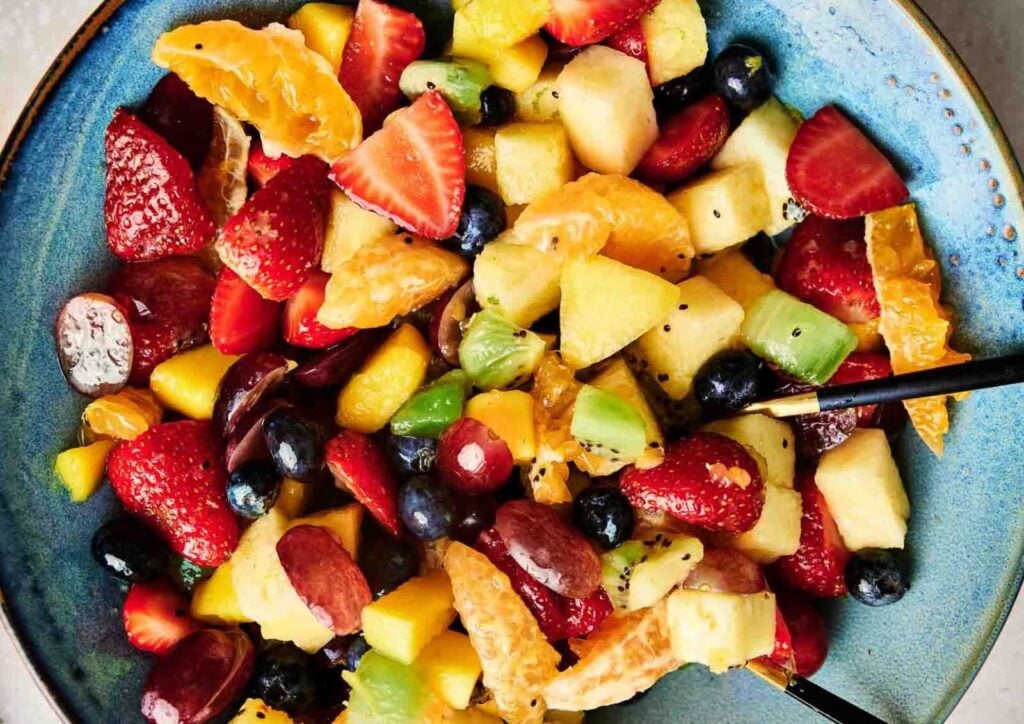
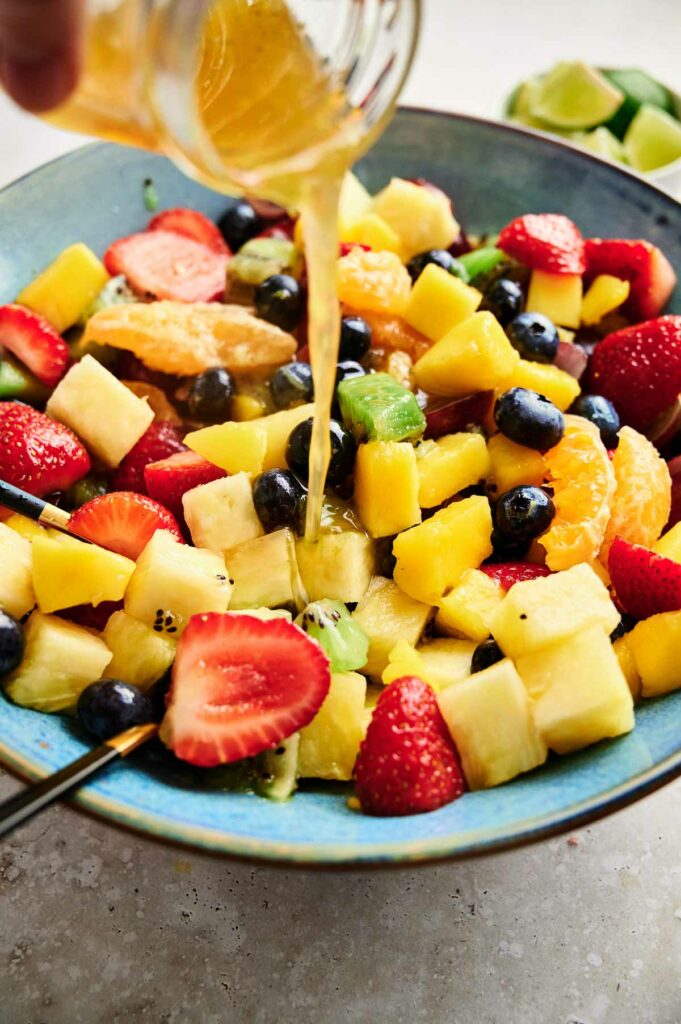
A good fruit salad lives or dies on two things: the fruit being ripe, and the dressing staying out of the way. This one is strawberries, fresh pineapple, blueberries, red grapes, kiwis, mangoes, and mandarin oranges, tossed in a honey lime dressing that is barely there on purpose. The lime keeps everything tasting bright instead of syrupy, and the honey rounds off the tart fruit without turning the bowl into dessert.
I make this the way I dress a green salad, which is to say lightly. Most fruit salads drown in juice or syrup and go slack within the hour. A couple of teaspoons of lime zest and a tablespoon and a half of juice is enough to wake up a whole bowl, and it means the fruit still tastes like fruit. It comes together in about ten minutes with nothing but a knife and a large mixing bowl.
This post contains affiliate links. As an Amazon Affiliate, if you purchase through those links, I earn a small commission. Thank you!
Why You’ll Love This Fruit Salad
- The honey lime dressing is the whole argument. Citrus does two jobs at once here: the acid keeps the cut fruit from going brown and dull, and the zest carries a floral note the juice alone doesn’t. It is the difference between a bowl that looks tired after an hour and one that still looks freshly made.
- It bends to whatever is ripe. I built this around summer fruit, but the method doesn’t care what you put in it. Whatever is best at the market that week goes in the bowl, which is why I come back to it across the year rather than only in July.
- And it earns its place at almost any table. I put it out for a light, healthy breakfast over yogurt, bring it to a summer barbecue as the one dish everyone can eat, and finish the leftovers from the fridge over the next day or two. Few things I make stretch that far.
Ingredients You’ll Need
You’ll find the full list with quantities in the recipe card below. These are the ones worth a word before you shop.
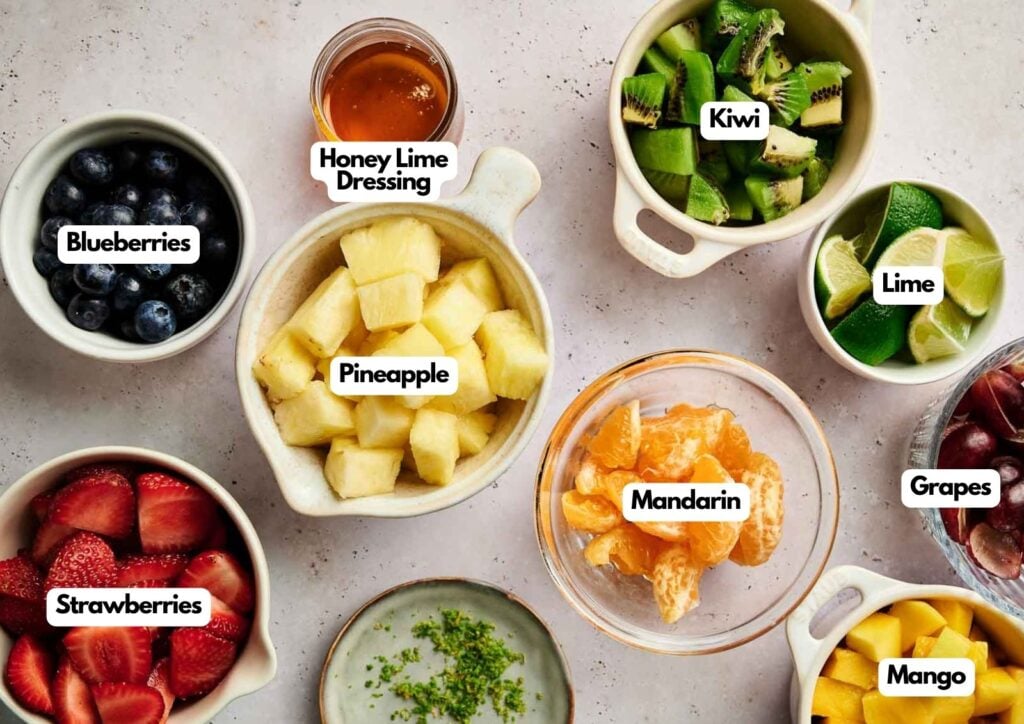
Strawberries. Hulled and quartered so every spoonful gets some. Look for berries that are red all the way to the shoulders, firm rather than soft. Overripe strawberries turn to mush the moment the dressing hits them.
Fresh pineapple. Worth the effort over canned pineapple here. Fresh pineapple has a brightness and a bit of bite that holds up in the bowl, where canned goes soft and floods everything with its own syrup. If you do use canned in a pinch, drain it well first.
Mango. Ripe but still holding its shape, so it dices cleanly instead of smearing. A mango that gives slightly to a gentle squeeze at the stem end is ready. Rock hard, and it won’t be sweet; too soft and it falls apart.
Kiwi and mandarin oranges. The kiwi brings a green tartness, and the mandarins bring natural sweetness with no prep beyond segmenting. Together they carry a lot of the “refreshing” in this salad, so don’t skip them for more of the softer fruits.
Honey and lime. The dressing is three ingredients: honey, lime zest, and fresh lime juice. Zest the limes before you juice them; it’s much harder the other way around, and the zest is where most of the lime flavor actually is.
How to Make the Best Fruit Salad
A complete printable recipe and the measurements in both US customary and metric are available in the recipe card below.
Prep the fruit to the same size
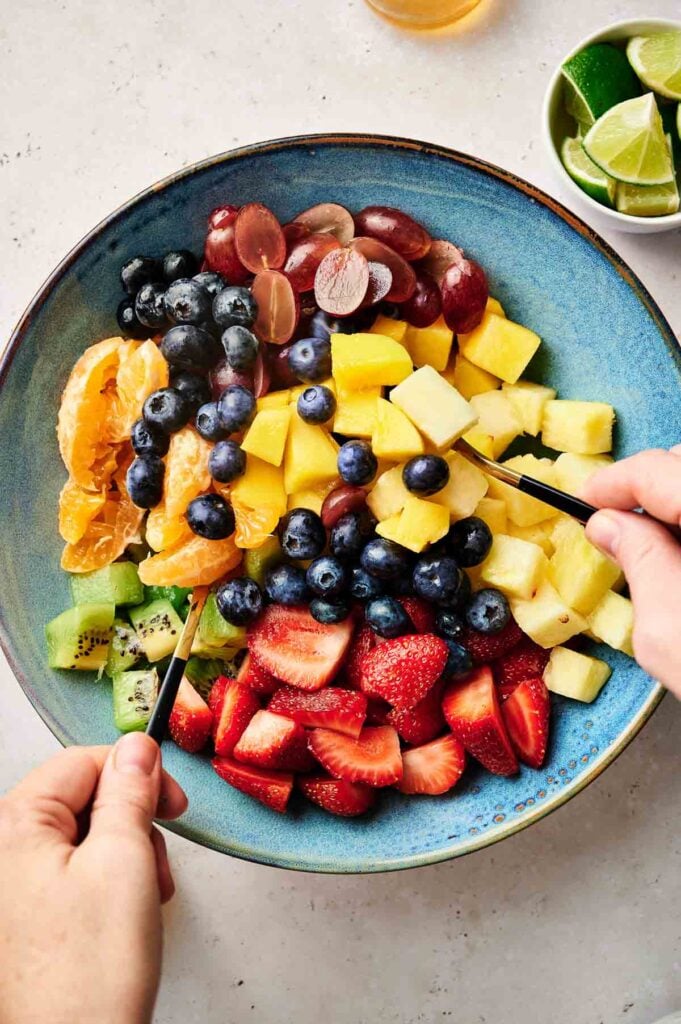
Hull and quarter the strawberries, chop the pineapple and kiwis, dice the mangoes, halve the grapes, and segment the mandarins. Aim for pieces roughly the same size so every forkful is a mix rather than one big, lonely chunk of pineapple. Add everything to a large mixing bowl.
Make the honey lime dressing
In a small bowl, whisk the honey, lime zest, and fresh lime juice together until the honey loosens and it pours easily. If your honey has gone thick or grainy, sit the closed jar in a bowl of warm water for a few minutes before you measure it, which softens it back to pourable without the uneven heating you get from a microwave.
Dress it gently, right before serving
Pour the dressing over the fruit and toss gently, lifting from the bottom rather than stirring hard. The goal is to coat everything without bruising the softer fruit. This salad is at its best within an hour or two of dressing, so if you’re prepping ahead, hold the dressing and toss just before it goes on the table.
Expert Tips for a Fruit Salad That Stays Fresh
Pick fruit that’s ripe but still firm. Soft, overripe fruit collapses under the dressing and turns the salad watery within the hour. Firm-ripe holds its shape and its texture for days.
Cut everything to a similar size. It’s not about looks. Uniform, bite-sized pieces mean the dressing coats evenly, and every spoonful is a proper mix rather than whichever fruit happened to sink.
Zest before you juice. A whole lime is nearly impossible to zest once it’s been cut and squeezed. Take the fresh lime zest off first, then juice, and you get both from the same fruit with no waste.
Dress lightly, and late. More dressing does not make a better fruit salad; it makes fruit soup. A thin coating is all you want, and adding it close to serving keeps the fruit from weeping into a puddle.

Ingredients
- 1 pound strawberries hulled and quartered
- 1 pound pineapple chopped
- 6 ounces blueberries
- 12 ounces red grapes sliced into halves
- 4 kiwis peeled and chopped
- 2 mangoes peeled and diced
- 3 mandarin oranges
For the Honey Lime Dressing
- ¼ cup honey
- 2 teaspoons lime zest
- 1 ½ tablespoon fresh lime juice

Video
Instructions
- Add the prepared fruit into a large bowl.1 pound strawberries, 1 pound pineapple, 6 ounces blueberries, 12 ounces red grapes, 4 kiwis, 2 mangoes, 3 mandarin oranges
- In a small bowl mix together honey, lime zest, and lime juice, then drizzle the dressing evenly over the fruit. Serve and enjoy.¼ cup honey, 2 teaspoons lime zest, 1 ½ tablespoon fresh lime juice
Notes
- Pick ripe fruit. Ripe but still firm holds its shape; overripe goes mushy under the dressing.
- Adjust to taste. Add a little more honey or lime juice to suit your fruit’s sweetness.
- Add variety. Peaches, plums, nectarines, raspberries, or blackberries all fold in well.
- Canned or frozen. Fresh is best; drain canned well, or use thawed frozen for a looser salad.
- Herbs. A little fresh mint or basil, stirred in just before serving, adds a lift.
- Apple or banana. Toss in lime or lemon juice and add just before serving so they don’t brown.
- Serve or store. Best fresh; keep leftovers in an airtight container in the fridge and use within two days.
Nutrition

SERIOUSLY GOOD
DESSERTS!

Dessert First is a collection of 61 RECIPES to show you that you can make beautiful, impressive desserts right in your own kitchen, no matter your skill level.
Immediate eBook download. No physical book available.
Includes ad-free recipes like:
∙ Lemon Pound Cake
∙ Key Lime Bars
∙ Boston Cream Pie
∙ No-Bake Chocolate Lasagna
∙ Raspberry Cheesecake
...and much more!

Variations
Add a soft herb. A little chopped fresh mint or basil, stirred in just before serving, turns this from a fruit bowl into something that tastes considered. Mint leans cooling and classic; basil is the more surprising choice against the pineapple and strawberry.
Swap in what’s in season. Peaches, plums, and nectarines all slot straight in through late summer, and raspberries or blackberries fold in for more berry flavor. The honey lime dressing works over almost any combination of sweet fruit.
Add sliced banana or apple, with a catch. Both are good in here for crunch and creaminess, but both brown fast. Toss them in a little extra lime or lemon juice and add them right before serving rather than ahead, or they’ll be grey by the time the bowl reaches the table. These aren’t in the base recipe, so treat them as an addition rather than a swap.
Make it fully vegan. Swap the honey for maple syrup in the same amount. You lose a little of honey’s floral note but gain a rounder sweetness, and the lime still does the heavy lifting.
What to Serve With Fresh Fruit Salad
This earns its keep across three completely different meals, so here is where I actually put it. For a light breakfast, I spoon it over plain yogurt or cottage cheese with a handful of granola on top, and the tart fruit against the creamy base is the whole appeal.
On a brunch table it does the opposite job, cutting through heavier plates, so I set it next to something like a black bean burger or an egg bake, where a bowl of fruit is what stops a rich spread from feeling like too much.
As a side at lunch or dinner, it stands in for a crisp green salad, just sweeter, alongside sandwiches, a loaded veggie burrito, or burgers off the grill.
And when I want it to lean dessert, a scoop of vanilla ice cream or a drizzle of warm hot fudge sauce over the top turns it into something closer to a treat.
How to Store Fruit Salad
There are two different timelines here. To get ahead before serving, chop the firmer fruit up to a day in advance and keep it covered in the fridge undressed, then dress it and fold in any delicate fruit just before it goes out.
Once it has been dressed and served, store leftovers in an airtight container and get them cold quickly; for the best texture, use them within two days. After that, the fruit softens and weeps, and the salad loses its freshness even if it is still safe to eat. Give it a gentle stir before serving to redistribute the dressing that has settled to the bottom.
If you’re taking this to a summer barbecue, picnic, or any spread that sits outdoors, keep the bowl on ice and don’t let cut fruit sit out longer than two hours, or one hour once it’s 90°F or hotter. Cut fruit is perishable, and warm air is where it goes from fine to risky faster than it looks.
I don’t freeze this one to eat as a salad; the fruit turns mushy on thaw. If you want to save it, freeze the pieces on a tray and keep them for smoothies instead.
Fruit Salad FAQs
Yes, with one adjustment. Chop the firmer fruit up to a day ahead and keep it covered in the fridge, but hold the dressing and any delicate fruit like berries until close to serving. Dressed too early, the salad weeps and softens; kept undressed, the cut fruit holds well overnight. Once it has been dressed and served, treat the rest as leftovers and use them within two days.
The lime juice in the dressing does most of this for you; the acid slows the browning that turns cut fruit dull. If you’re adding apple or banana, give them an extra toss in lime or lemon juice, since they brown fastest of all.
Two usual causes: overripe fruit that breaks down, and too much dressing or too long sitting in it. Use firm-ripe fruit, dress it lightly, and add the dressing close to serving rather than hours ahead.
Fresh gives the best texture, but in a pinch, canned works if you drain it well, and thawed frozen fruit works for flavor even though it softens. Expect a looser, juicier salad either way.
It’s naturally gluten-free. To make it vegan, swap the honey for maple syrup in the same amount. Beyond that, just watch for any specific fruit allergies.
More Salad Recipes You’ll Love
If this one hit the spot, these are the other salads I come back to, all no-cook and all easy to throw together.
When people want fruit but are expecting dessert, I bring the creamy grape salad instead.
For something crunchier and more savory, my Waldorf salad recipe puts apples, grapes, and walnuts in a light dressing.
The 7-layer salad recipe is the make-ahead one I build the day before a potluck, stacked in a clear glass bowl so the layers show, and it’s a fully vegetarian take on the classic with a creamy Parmesan dressing instead of the usual bacon.
And when I want a cool, sharp palate-cleanser next to richer food, the crisp celery salad is the one I put out.