
Soft and Fluffy Naan Bread
 Add Preferred Source
There is something deeply satisfying about pulling warm naan bread from a hot skillet and seeing those golden bubbles across the top. It is soft, fluffy, a little chewy, and exactly the kind of bread that makes dinner feel better without much extra effort.
This naan bread is easier to make than people think, and you don’t need a tandoor or any complicated technique to get great results. A simple dough, a hot pan, and a little patience give you naan that is perfect with curry, dips, or straight from the plate while it is still warm.

This post may contain affiliate links. As an Amazon Associate, I may earn from qualifying purchases.
Why you’ll love it
- Soft, fluffy, and properly chewy
- Cooked in a skillet, no special oven needed
- Simple ingredients and easy steps
- Great with curry, dips, soups, and mezze
- Best served warm, but still good later
What kind of naan is this?
This is a yeast naan cooked in a skillet, so it has that soft texture and those blistered golden spots you want from homemade naan. It is not a quick no-yeast flatbread, and it is not tandoor-baked, but it gets you very close to that restaurant-style result at home. If you’re after a sweeter Indian bread, our Peshwari naan is a good one to try next.
Ingredients You’ll Need
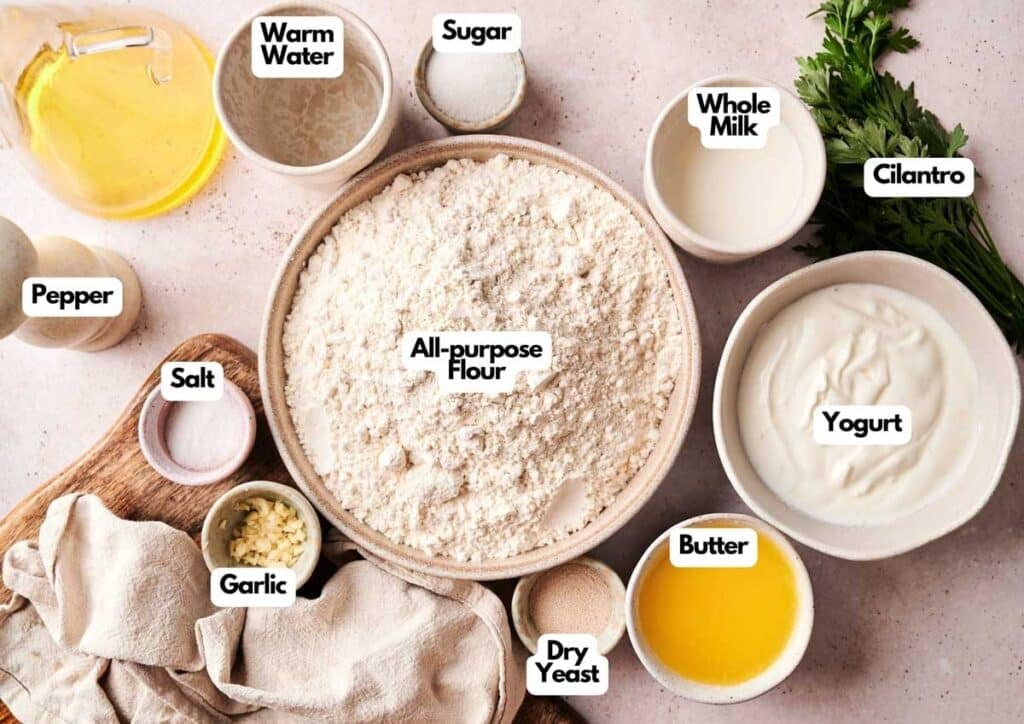
You’ll need all the ingredients shown in the photograph below.
How to Make Naan Bread with Step-By-Step Instructions
Scroll down for the full recipe card containing a full printable recipe and measurements in both US customary and metric units.
You’ll find making naan bread at home pretty simple if you follow my step-by-step instructions.
Activate the Yeast
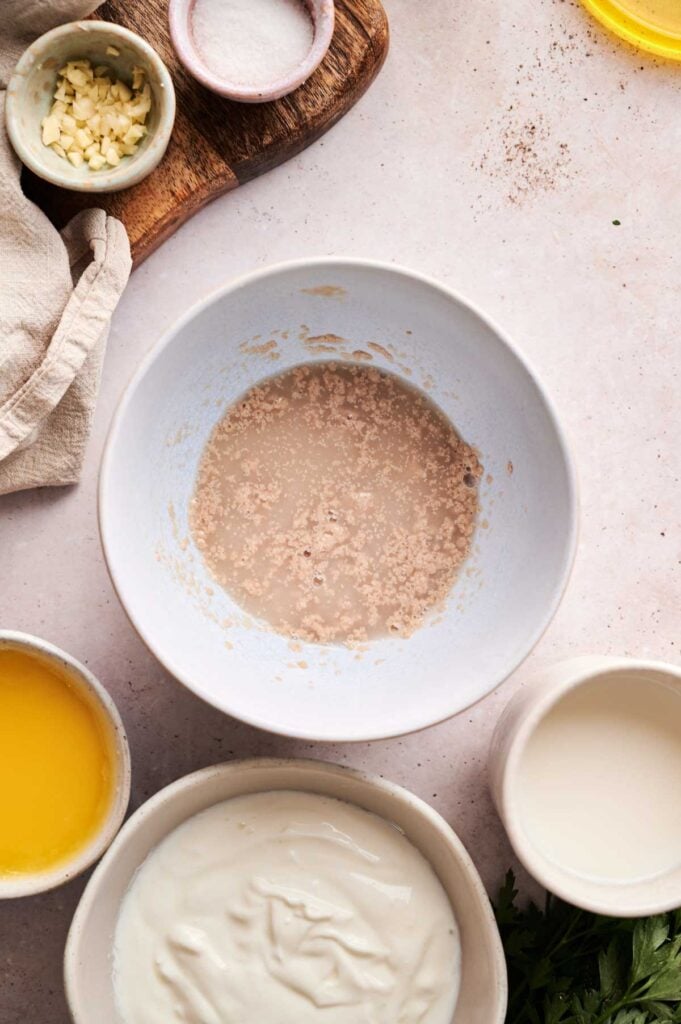
In a small bowl, dissolve the yeast in warm water. Make sure your water is just warm, not too hot or cold, so the yeast foams and stays alive.
Give it a quick stir, then let the mixture sit undisturbed for about 10 minutes, or until it turns foamy and bubbly on top. This step lets you know the yeast is active and ready to help the dough rise properly.
Combine Wet and Dry Ingredients
In a large bowl, combine the flour, sugar, and salt thoroughly so the base is well blended. Next, add the yogurt, then pour in the warm milk, and finally the foamy yeast mixture. The milk and yogurt add richness and softness to the dough, giving it the right chewy texture.
It helps to use a mixing bowl with a grippy bottom to keep everything steady as you mix. A sturdy wooden spoon is also great for mixing dough without tiring your hand.
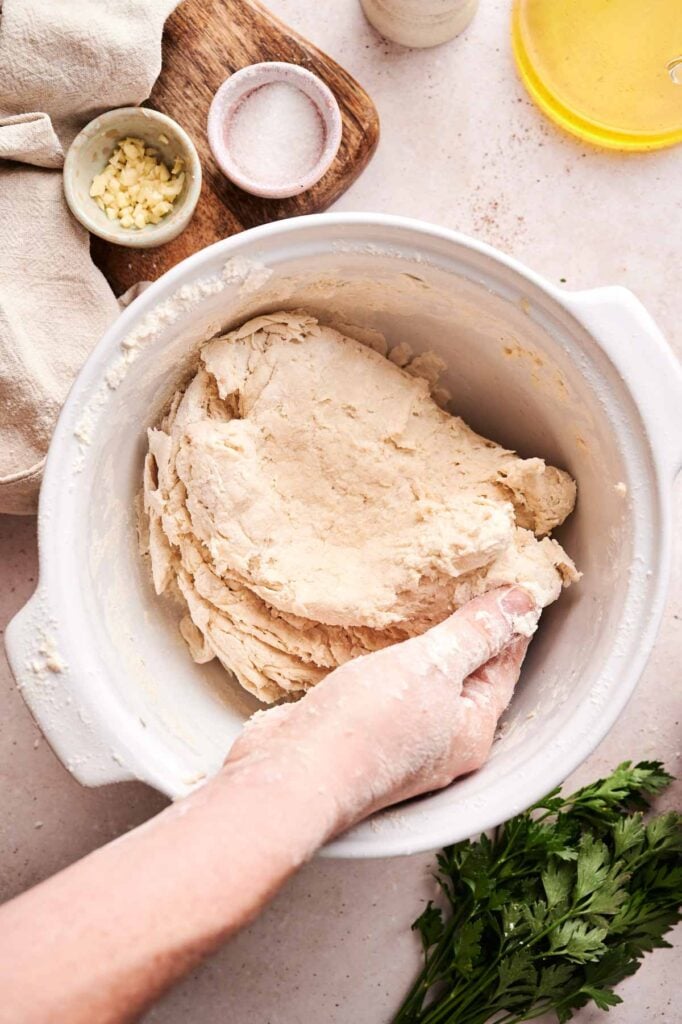
Stir everything together, scraping the sides of the bowl as you go, until the mixture comes together and a soft, slightly sticky dough starts to form. A silicone spatula is super handy for scraping down the sides cleanly.
Knead and Let the Dough Rise
Transfer the dough onto a light floured surface and knead for 4–5 minutes until smooth and elastic. If the dough feels too sticky, sprinkle on a little extra flour as you work. I like using this extra-large bamboo cutting board; it gives me a nice, even surface for kneading.
Place the dough in a lightly oiled bowl, turning it once so the top is coated and doesn’t dry out. Cover it with a towel to trap in moisture, and let it rise in a warm spot (yeast is most active in a cozy environment) for about an hour, or until it doubles in size.
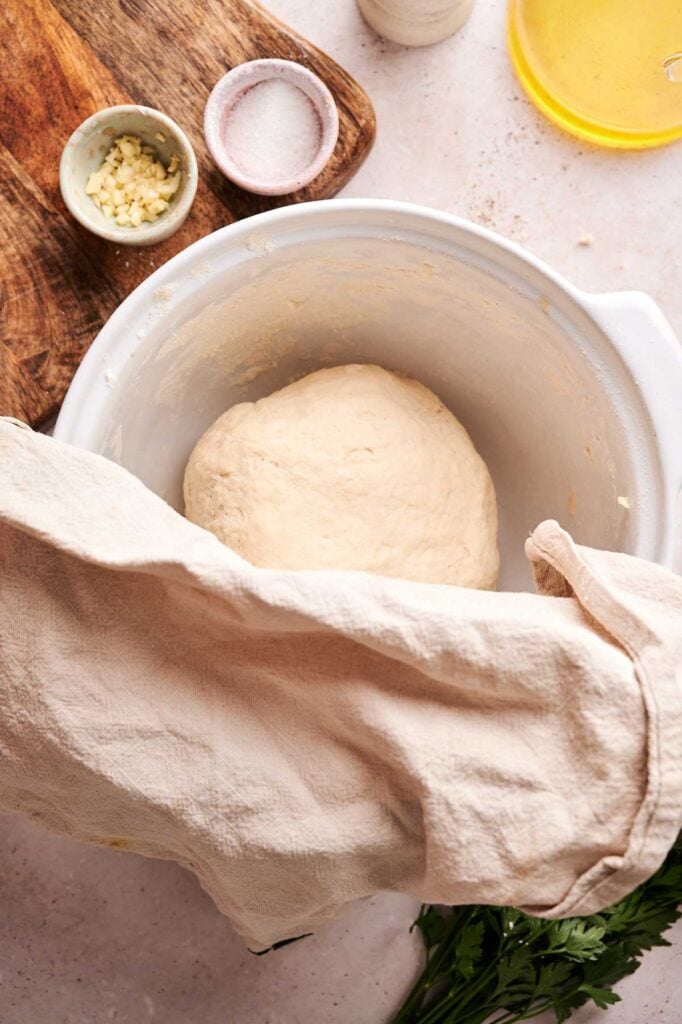
This microfiber kitchen towel is so generously sized that it can cover the entire bowl. A stretchable silicone lid like this also works well to seal in the moisture.
Divide and Shape the Naan
Once the dough has risen and doubled in size, gently punch it down to release some of the air. If you skip punching down the dough, the large air pockets created during rising will stay trapped inside, which can make the dough uneven and harder to shape into smooth portions.
Place it back on a lightly floured surface, and cut it into 8–10 equal portions so they bake at the same rate. I find using a bench scraper works perfectly in dividing the dough cleanly and easily.
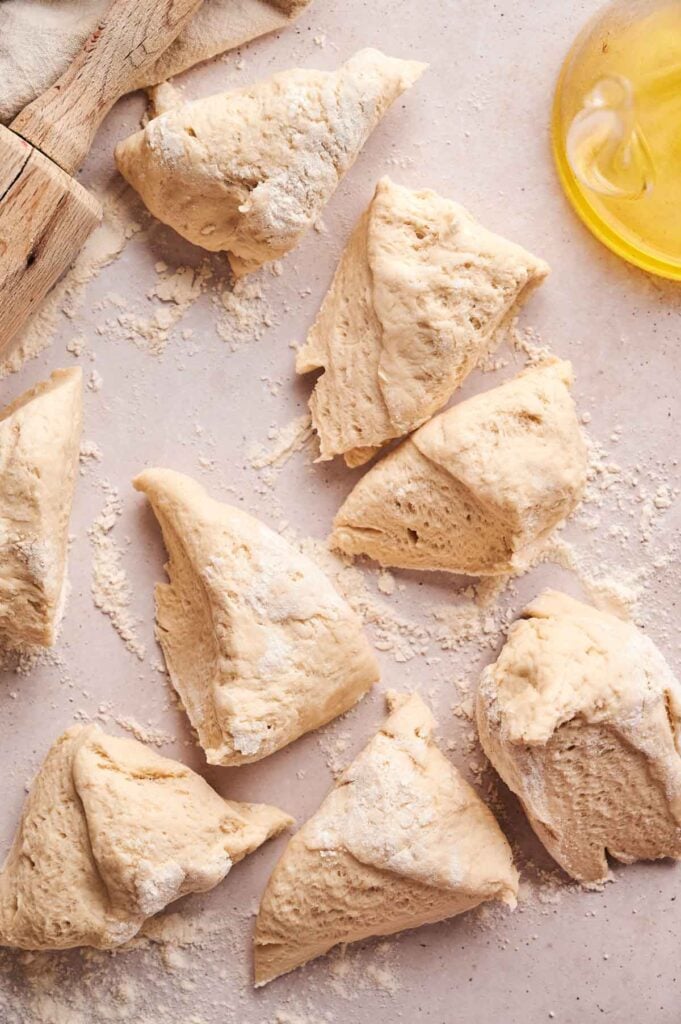
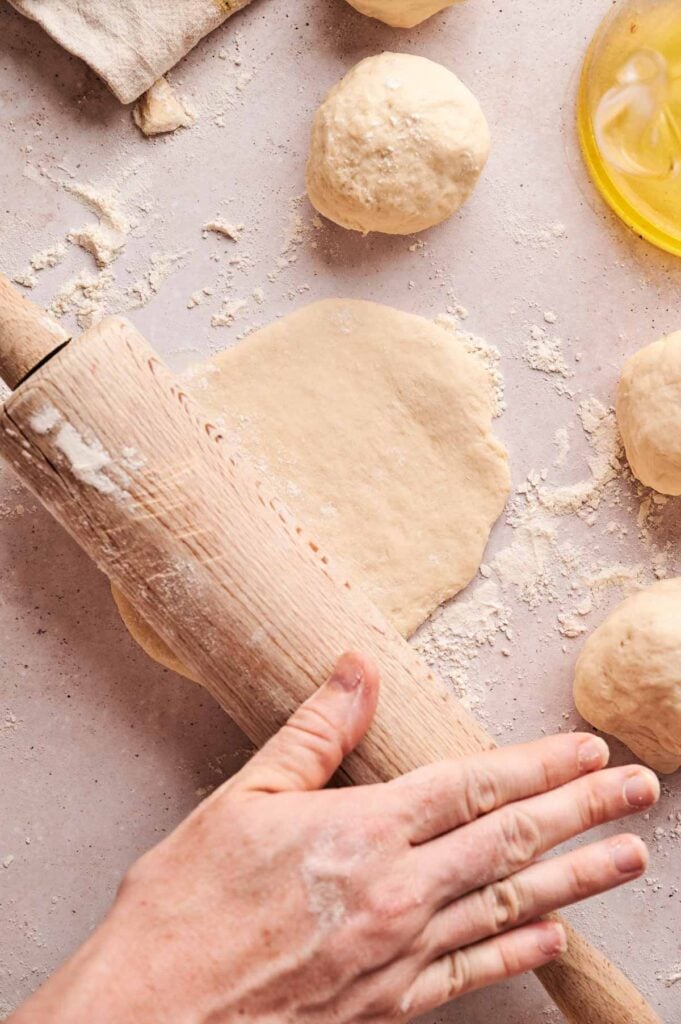
Then, roll each piece into a dough ball and use a rolling pin to flatten into an oval or teardrop shape about ¼ inch thick, so they cook quickly and stay soft. A nonstick wooden rolling pin makes it much easier to get even, smooth dough without it sticking or tearing.
Cook on the Stovetop
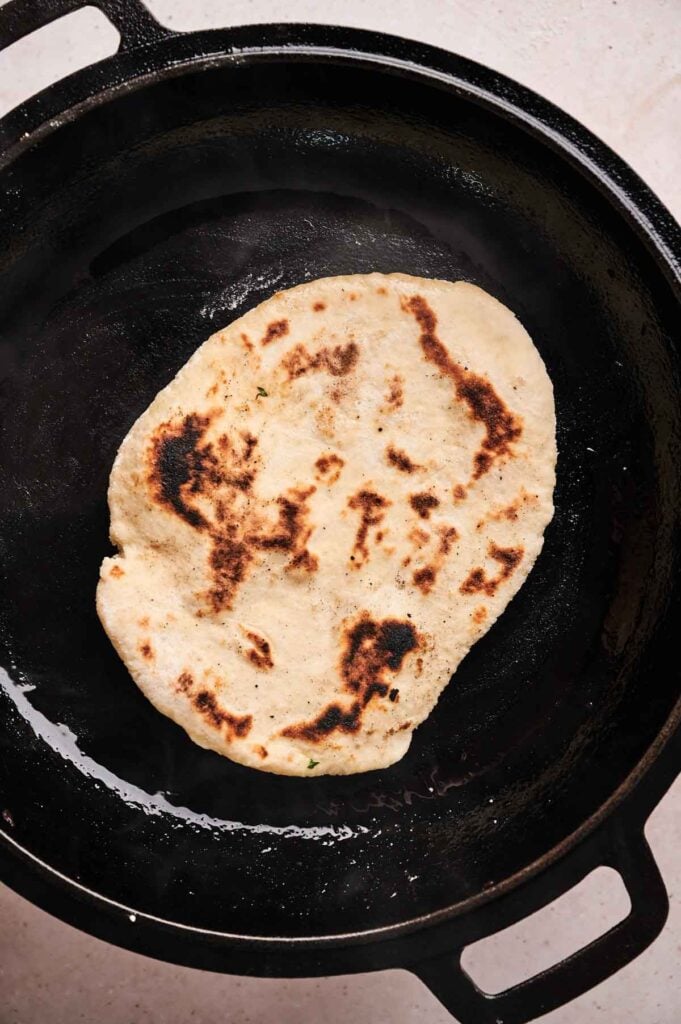
Heat a cast-iron skillet or heavy-bottomed pan over high heat; this is the closest you can get at home to the effect of a clay oven, which is traditionally used for this recipe, giving naan its signature bubbles and slight char spots.
I use this cast-iron skillet; it holds heat beautifully and helps me achieve that authentic texture. Brush one side of the naan dough with melted butter and place it butter-side down in the hot pan, so it sizzles nicely. A silicone pastry brush makes this part super simple and mess-free.
Cook for 1–2 minutes until bubbles form, then flip and cook for another 1–2 minutes. You can use kitchen tongs with silicone tips for easy flipping, or a wide silicone spatula like this one to carefully lift the dough without tearing.
Add a Few Finishing Touches
While the naan is still hot, drizzle or brush each piece with more melted butter and sprinkle with minced garlic and chopped fresh herbs for extra depth and fresher flavor.
Serve warm and enjoy!
If you’re bringing this naan bread to a potluck or gathering, a hard-sided container like this will keep the naan protected from getting squished during transport. To keep it warm, tuck the container into an insulated casserole carrier so it stays toasty until you’re ready to serve.
Recipe Tips
- Get your pan properly hot before the naan goes in. That’s what helps create the bubbles and those golden charred spots on top.
- Don’t roll the dough too thin or you’ll lose some of that soft, fluffy texture in the middle.
- If the dough keeps shrinking back, let it rest for a few minutes and then roll again.
- Brush with melted butter while the naan is still warm for a softer finish and extra flavor.
- Keep the cooked naan covered with a clean tea towel so it stays soft while you cook the rest.

Ingredients
- ¼ cup warm water
- 1 tablespoon sugar
- 2 ¼ teaspoons active dry yeast 1 packet
- ¾ cup warm whole milk
- ¾ cup plain yogurt
- 4 cups all-purpose flour
- 1 teaspoon salt
- ½ cup melted butter
- 4 cloves garlic minced
- Fresh cilantro or parsley chopped (for garnish)

Video
Instructions
- In a small bowl, mix warm water and yeast. Stir and let it sit for 10 minutes, until it gets foamy.¼ cup warm water, 2 ¼ teaspoons active dry yeast
- In a large bowl, mix the flour, sugar, and salt. Add the warm milk and yogurt, then stir in the foamy yeast mixture. Combine until a dough forms.¾ cup warm whole milk, ¾ cup plain yogurt, 4 cups all-purpose flour, 1 teaspoon salt, 1 tablespoon sugar
- Transfer the dough to a floured surface and knead for 4–5 minutes until smooth. Place it in a lightly oiled bowl, cover with a towel, and let it rise in a warm place for 1 hour, or until doubled in size.
- Once risen, turn the dough out onto a floured surface. Cut into 8–10 equal pieces and roll each into a ball. Use a rolling pin to flatten each ball into an oval or teardrop shape about ¼-inch thick.
- Heat a dry cast iron skillet or heavy-bottomed pan over high heat. Brush one side of the naan with melted butter, then place butter-side down in the hot pan. Cook for about 1–2 minutes, until bubbles form, then flip and cook another 1–2 minutes.½ cup melted butter
- While hot, brush each naan with more melted butter and sprinkle with minced garlic and chopped herbs.4 cloves garlic, Fresh cilantro or parsley
Notes
- Try a gluten-free flour blend: Replace all-purpose flour with a gluten-free mix if you need to adapt the recipe. This is a big change since the texture won’t be as soft and stretchy, but it still gives you a version of naan bread to enjoy.
- Make proofing faster: Yeast loves sugar; stirring sugar early into the warm water and yeast helps it foam more quickly and lets you know easily that the yeast is active.
- Let the dough rise fully: Give it time to double in size so the naan comes out light and fluffy. Otherwise, the bread will be dense and heavy, which isn’t exactly what you’re looking for here.
- Add cheese inside or on top: Sprinkle cheese over the rolled dough or stuff it inside before cooking if you like cheesy naan.
- Top with nigella seeds: Add a sprinkle of nigella seeds over the dough before cooking to add a traditional, earthy note. This is a small, authentic touch that subtly deepens flavor.
- Use garlic butter: Swap plain melted butter for garlic butter to give your naan a rich, savory flavor. This is a small but delicious flavor boost that works perfectly when serving with Indian dishes.
- Brush with butter right away: Add butter as soon as it comes off the pan so it soaks in while warm. If you wait too long, the naan will cool down and the butter will just sit on top instead of absorbing, leaving it less soft and flavorful.
- Finish with garlic and herbs: Fresh garlic and cilantro give the cooked naan a restaurant-style flavor boost.
Nutrition
Naan Bread FAQs
Yes, absolutely. A hot skillet does the job well and gives you the bubbles and charred spots that make homemade naan feel special.
Usually it comes down to one of three things: the pan was not hot enough, the dough needed a bit more proofing time, or it was rolled too flat.
Yes. You can make the dough in advance and keep it chilled, then bring it back to room temperature before cooking.
Yes. Let it cool fully, then freeze it well wrapped. Reheat in a pan or warm oven until soft again.
How to Store Leftovers
Store cooled naan in an airtight container or wrap it in foil or plastic wrap at room temperature for 1–2 days. This glass container with locking lids helps keep the naan soft and prevents it from drying out.
A cling wrap is also handy for wrapping individual naan pieces, which prevents them from sticking together. You can also wrap each one with aluminum foil to help with locking in freshness and moisture.
For longer storage, refrigerate it for up to 3–5 days or freeze it in a freezer bag for up to 2–3 months. These freezer bags can hold a full batch in one go. Thaw overnight in the fridge and reheat in the oven or microwave to bring back the soft texture before serving.
What to Serve With Naan Bread
Naan is one of those breads that disappears quickly once it hits the table. It is perfect with an easy chickpea curry, spooned through dal, or served alongside a bowl of cooling cucumber raita. If you want to turn it into more of a spread, it also works beautifully with dips, pickles, and small plates.
More Easy Recipes for You to Try at Home
I always think naan goes even better when you round out your table with a few other homemade favorites, so here are more recipes you might like: