
Cauliflower Rice
 Add Preferred Source
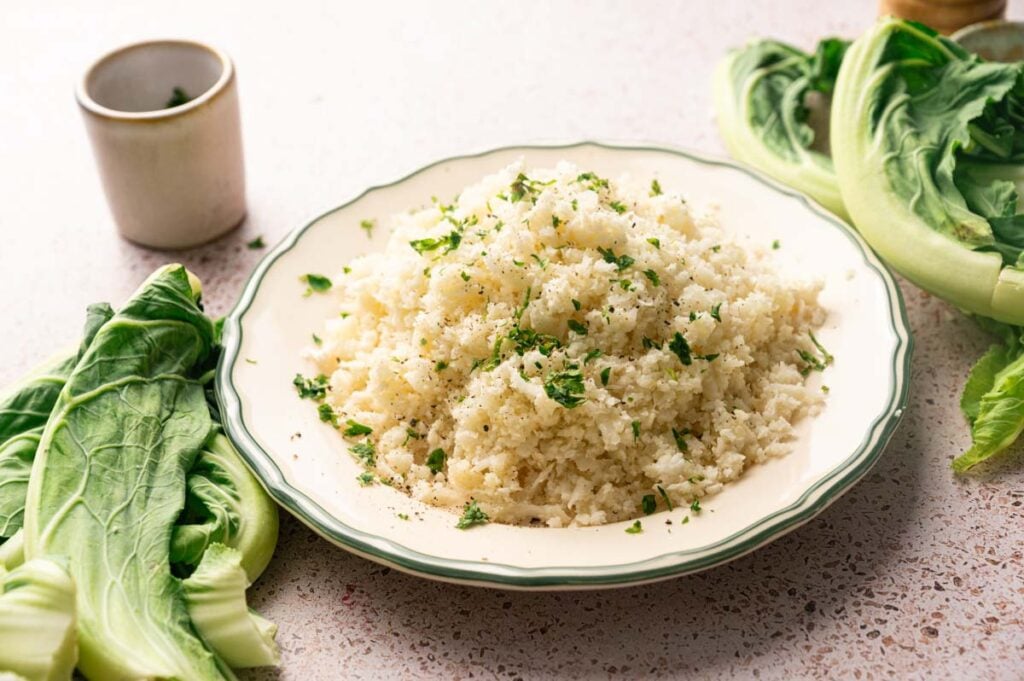
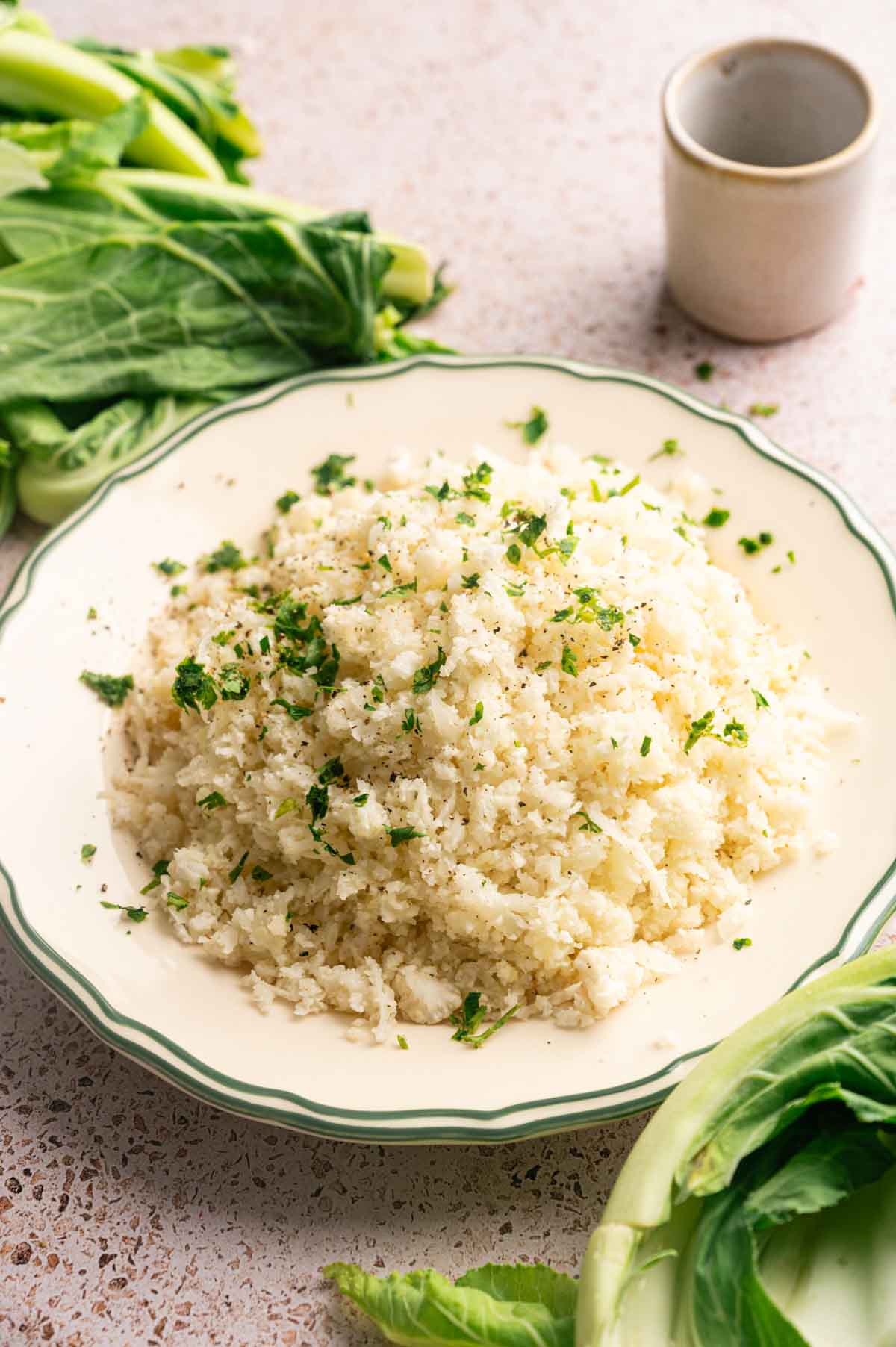
Cauliflower Rice is one of those recipes I keep coming back to every single week because it is so versatile and comes together faster than regular rice ever could. It is light, tender, and seasoned with just olive oil, salt, and fresh parsley, making it the perfect base for almost anything. It’s simple, tasty, and honestly way better than it has any right to be.
This post contains affiliate links. As an Amazon Affiliate, if you purchase through those links, I earn a commission. Thank you!
I make this for weeknight dinners, meal prep, and whenever I need a quick low-carb side that pairs well with almost anything on the table. It’s versatile enough to work with any protein, sauce, or stir-fry you already love. Store leftovers in the fridge for up to 4 days or freeze for up to one month.
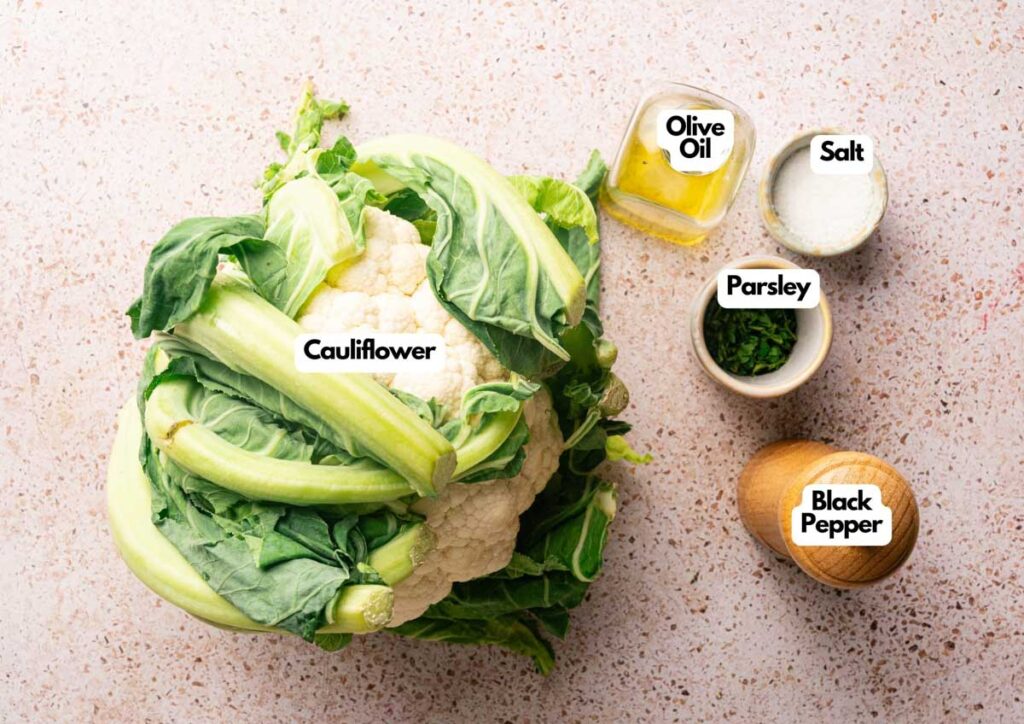
Ingredients You’ll Need
You’ll need all the ingredients shown in the photograph below.
How to Make Cauliflower Rice with Step-By-Step Instructions
Scroll down for the full recipe card containing a full printable recipe and measurements in both US customary and metric units.
Making cauliflower rice at home is so much easier than most people think, and once you see how quickly it comes together, you’ll wonder why you ever bought the pre-riced bags.
Break Down the Cauliflower
Start with one fresh cauliflower head and cut it into quarters, removing the thick core and stems. Don’t worry about being too precise here; you just want manageable, large chunks that will fit into your food processor.
Break them apart and add them in batches if needed.
Rice the Cauliflower
Add the florets to a food processor and pulse until they’re broken down into rice-sized pieces, giving you raw cauliflower rice ready for the skillet. You’re looking for a fairly even texture, so don’t over-process or it’ll turn mushy.
If you don’t have a food processor, a box grater with the medium-sized holes works beautifully, whether you use the grater blade on a standard grater or a grater attachment on a stand mixer. I like using this food processor because it pulses down a whole head of cauliflower in seconds and cleans up fast.
Making your own cauliflower rice from scratch gives you the freshest result, but if you want to save time, you can use pre-riced cauliflower from the produce section or swap in frozen cauliflower rice straight from the bag.
Frozen riced cauliflower is a great shortcut on busy nights; just thaw and squeeze out any excess moisture before cooking so it doesn’t steam instead of sauté.
Heat the Skillet
Heat olive oil in a large skillet over medium-high heat, or swap in avocado oil for a more neutral flavor. A large frying pan (skillet) like this one works just as well if that’s what you have on hand.
You want the pan hot enough that the cauliflower sizzles when it hits the surface.
Cook Cauliflower Rice
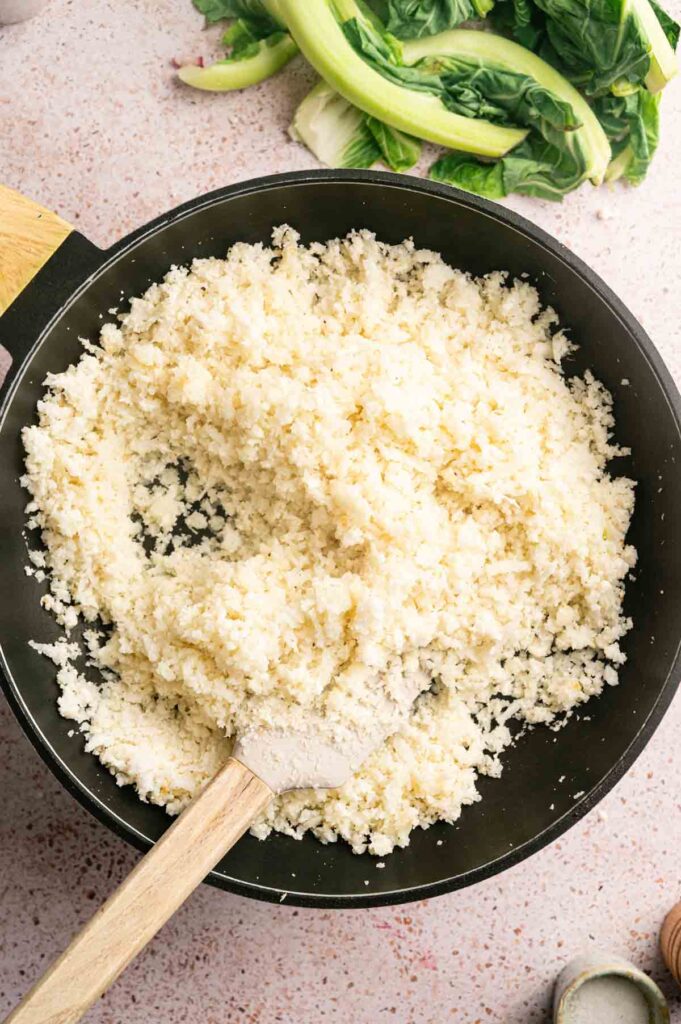
Add the uncooked cauliflower rice to the hot skillet and sauté for about 5 minutes until tender, stirring occasionally so the cauliflower cooks evenly without burning. The technique is similar to a stir fry: spread it out in an even layer, let it sit for a moment, then stir and repeat.
Skipping the drying step earlier is what leads to a soggy mess, so if yours is releasing a lot of liquid, turn up the heat slightly and keep stirring. It only takes a few minutes for the cauliflower to go from raw to perfectly tender.
Season and Finish
Season with salt and black pepper, then cook for 1 more minute, stirring to distribute the seasoning evenly. For extra flavor, garlic salt is a great substitute for plain salt, or add a pinch of onion powder and red pepper flakes for a little heat.
A squeeze of fresh lemon juice or lime juice stirred in at the end brightens everything up. I use my citrus squeezer to make it much easier to extract every last drop from a lemon or lime.
A splash of soy sauce is a delicious swap if you’re going for a more savory, Asian-inspired flavor. Taste and adjust as needed.
Serve
Remove from heat, scatter fresh parsley or cilantro over the top if you’re using it, and serve warm. A set of herb scissors makes quick work of fresh herb garnishes.
Cauliflower rice travels reasonably well when kept warm in a thermos jug or transferred to a container inside an insulated casserole carrier for a potluck or gathering. Let it cool slightly before sealing so condensation doesn’t make it soggy, and give it a quick stir when you arrive to fluff it back up before serving.
Equipment
Ingredients
- 1 large head cauliflower washed and thoroughly dried
- 1 tablespoon olive oil
- ½ teaspoon salt
- ¼ teaspoon freshly ground black pepper optional
- 2 tablespoons chopped parsley or cilantro optional

Video
Instructions
- Cut the cauliflower into quarters and remove the thick core and stems.1 large head cauliflower
- Break the cauliflower into florets and pulse in a food processor (or grate with a box grater) until rice-sized.
- Heat olive oil in a large skillet over medium-high heat.1 tablespoon olive oil
- Add the riced cauliflower and sauté for about 5 minutes until tender.
- Season with salt and pepper and cook for 1 more minute.½ teaspoon salt, ¼ teaspoon freshly ground black pepper
- Remove from heat, garnish with fresh herbs if desired, and serve warm.2 tablespoons chopped parsley or cilantro
Notes
- Dry the cauliflower well: After washing, pat the cauliflower thoroughly dry before ricing it. Excess moisture steams rather than sautés, resulting in soggy, watery cauliflower rice rather than tender, lightly golden pieces.
- Pulse, don’t blend: Use short pulses in the food processor rather than running it continuously. Over-processing turns the cauliflower into a paste; you want distinct, rice-sized pieces with some texture.
- Don’t crowd the pan: Spread the riced cauliflower in a single, even layer when it hits the skillet. Crowding traps steam and prevents browning, so use the largest skillet you have or work in batches if needed.
- Sauté, don’t stir constantly: Let the cauliflower sit for a moment before stirring during those 5 minutes of cooking. This gives it a chance to develop a little color and texture rather than just going limp.
- Add herbs at the end: Stir in the fresh parsley or cilantro after removing the skillet from heat. Adding them too early causes them to wilt and lose their fresh, bright flavor.
- Flash-freeze for meal prep: Spread cooled cauliflower rice in a single layer on a baking sheet and freeze for about 1 hour, then transfer to a freezer bag or container. This keeps the pieces from clumping and makes it much easier to portion out what you need.
Nutrition
How to Store Leftovers
Let the cauliflower rice cool completely before storing. Transfer it to an airtight container and refrigerate for up to 4 days. It reheats well in a skillet over medium heat with a small splash of water or oil to loosen it, or in the microwave in 30-second intervals until warmed through.
For longer storage, spread the cooled cauliflower rice in a single layer on a baking sheet and freeze until solid, then transfer to a freezer-safe container for up to 1 month. Freezer-safe glass containers are great for this because they go straight from the freezer to the microwave without any fuss.
Thaw overnight in the fridge before reheating.
What to Serve With Cauliflower Rice
It plays well with almost everything, so pairing it is never a challenge. It’s a brilliant rice substitute when you want more vegetables on your plate, and it works anywhere you’d normally reach for white or brown rice, from veggie bowls to curries to stir-fries.
I love serving it alongside roasted vegetables like zucchini, bell peppers, or eggplant, where the mild, tender cauliflower soaks up savory juices beautifully. It also works as a base for a simple grain-free veggie bowl topped with roasted chickpeas, avocado, and a drizzle of tahini.
For something heartier, try it under a scoop of lentil dal or a thick vegetable curry. It’s also wonderful alongside stuffed bell peppers or as a filling inside lettuce wraps with your favorite sauce and toppings.
More Easy Recipes for You to Try at Home
If you love this, here are more easy, light side dishes I make on repeat that pair well with almost anything.