
Cauliflower Rice
 Add Preferred Source
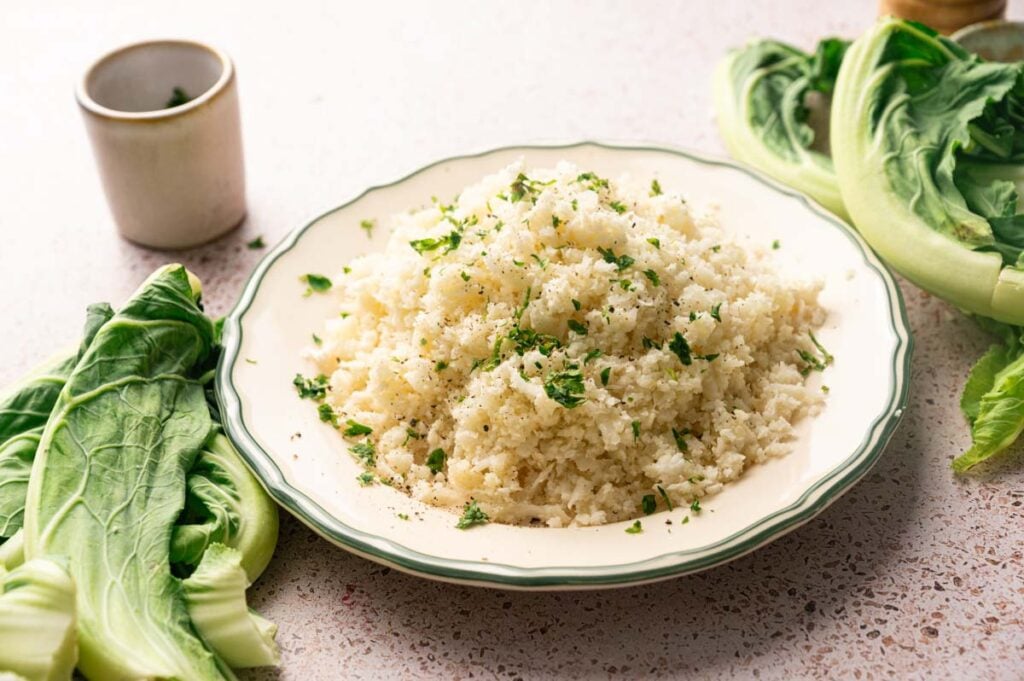
Most cauliflower rice lets people down, coming out wet and bland and still tasting like plain cauliflower on the plate. This one works because of two things most recipes skip: drying the cauliflower before it hits the pan, and sautéing it hot instead of letting it steam.
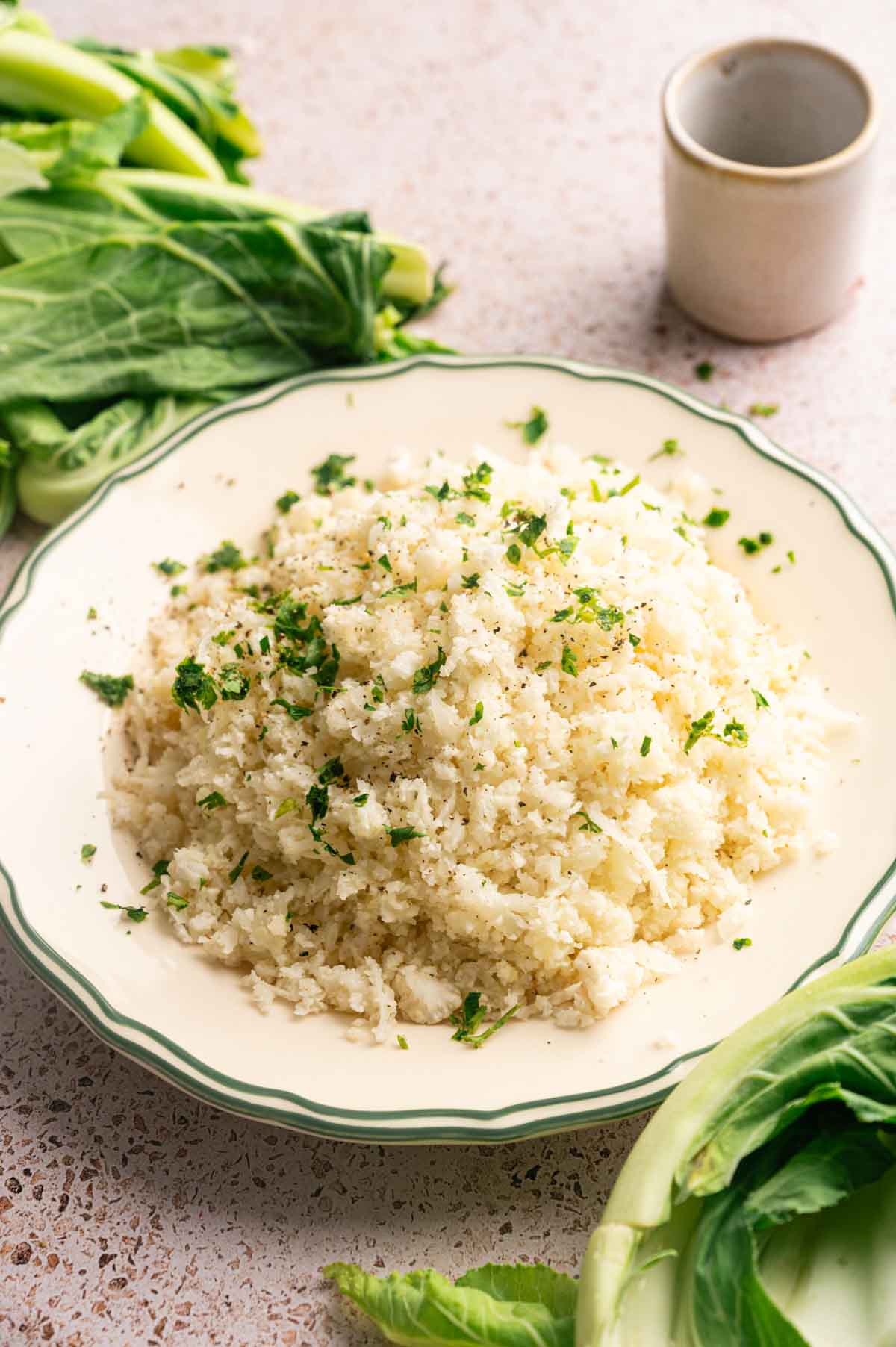
From a whole head to a skillet of light, fluffy grains, it’s about fifteen minutes of work, seasoned with olive oil, salt, and fresh parsley. I keep coming back to it on weeknights because it goes under almost anything and holds up better in the fridge than cooked rice does.
This post contains affiliate links. As an Amazon Affiliate, if you purchase through those links, I earn a commission. Thank you!
Why You’ll Love This Recipe
- It comes out light and fluffy instead of the wet mush most versions turn into, because you dry the cauliflower and sauté it rather than steam it.
- A whole head rices and is ready in around fifteen minutes, which is faster than boiling a pot of rice.
- It’s naturally low-carb and gluten-free at around 68 calories per serving, so it swaps straight in anywhere you’d use white rice.
- One cheap vegetable becomes the base of a whole plant-based plate, from curry night to a quick veggie bowl.
- It freezes in loose portions, so a single head gives you several weeknight sides.
Ingredients You’ll Need
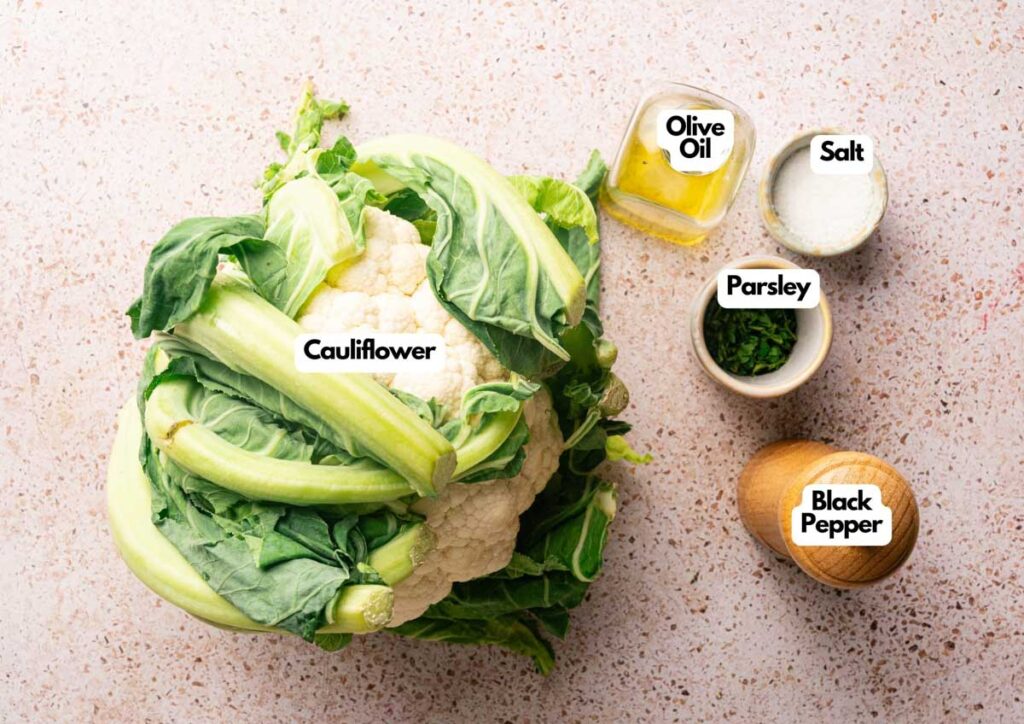
You’ll need all the ingredients shown in the photograph below.
- Cauliflower. One large head, washed and dried well. A fresh head rices into drier, more separate grains than a pre-riced bag, so it browns better in the pan. Frozen riced cauliflower works too, with one handling tip in the FAQs.
- Olive oil. It carries the flavor and helps the edges turn golden. Avocado oil is a more neutral swap here.
- Salt and black pepper. Add them near the end so you can taste as the cauliflower loses its raw edge. Garlic salt, or a pinch of onion powder, gives you more than plain if you want it.
- Fresh parsley or cilantro. The herbs are what turn plain riced cauliflower into something worth putting on the plate, so this isn’t the place to economize.
How to Make Cauliflower Rice
A complete printable recipe and the measurements in both US customary and metric are available in the recipe card below.
Rice the cauliflower
Once washed and thoroughly dried, quarter the head, cut out the thick core, and break it into florets. Pulse them in a food processor in short bursts until the pieces are the size of rice grains.
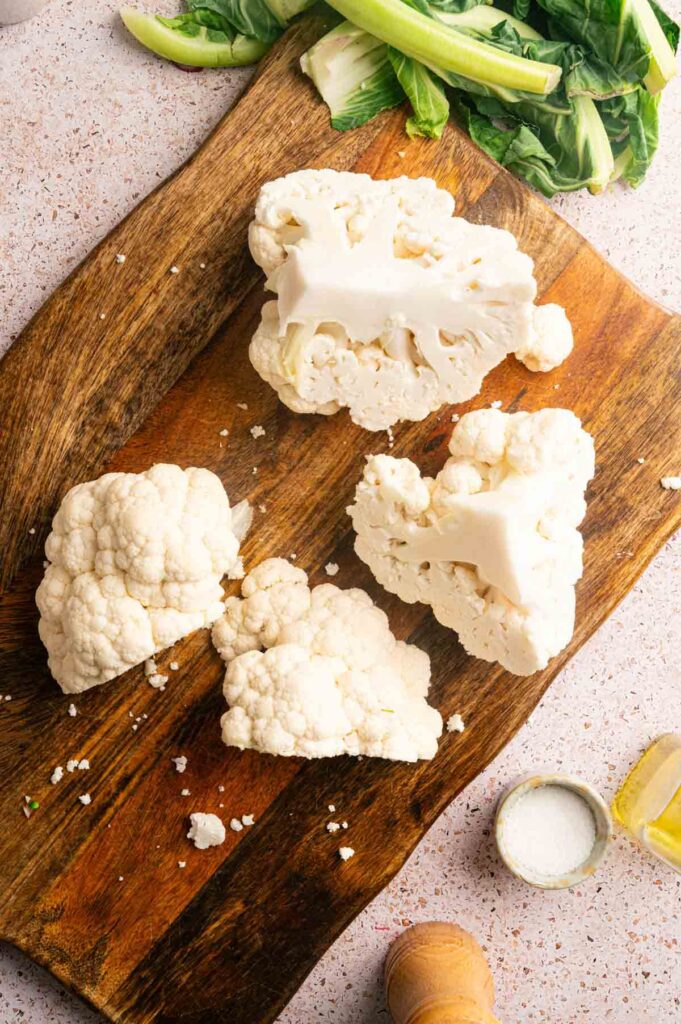
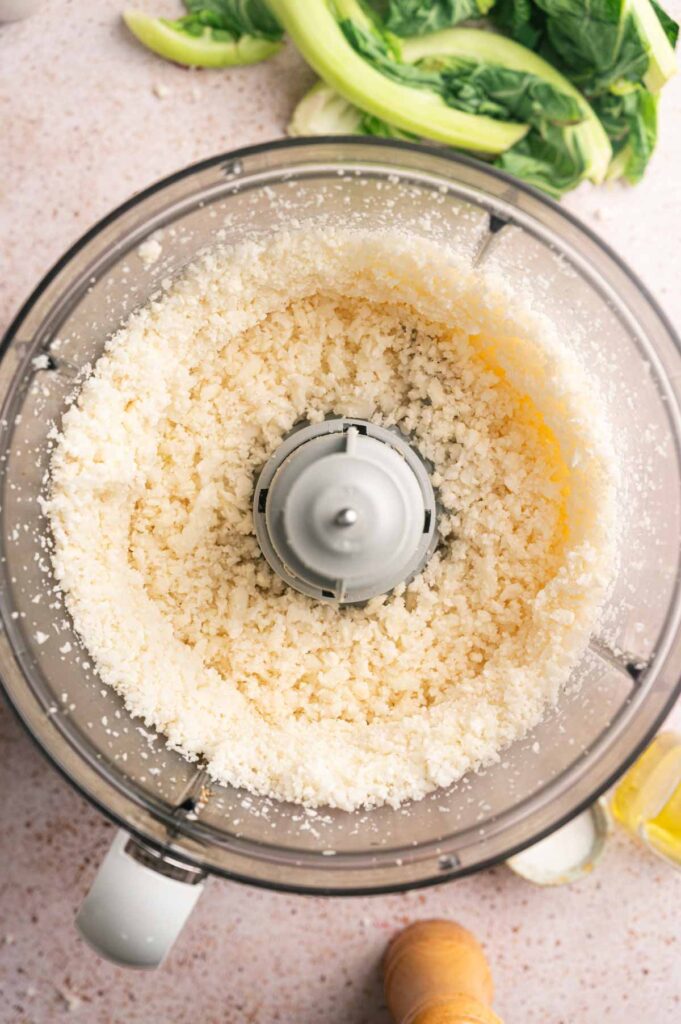
Short pulses are the whole game: hold the button down, and you’ll get paste instead of grains. If you don’t have a food processor, a box grater on the medium holes does the same job.
Sauté and season
Heat the olive oil in a large skillet over medium-high heat until it shimmers, then spread the riced cauliflower in as even a layer as you can. Let it sit for a moment before stirring, so it browns rather than steams, and sauté for about 5 minutes until tender.
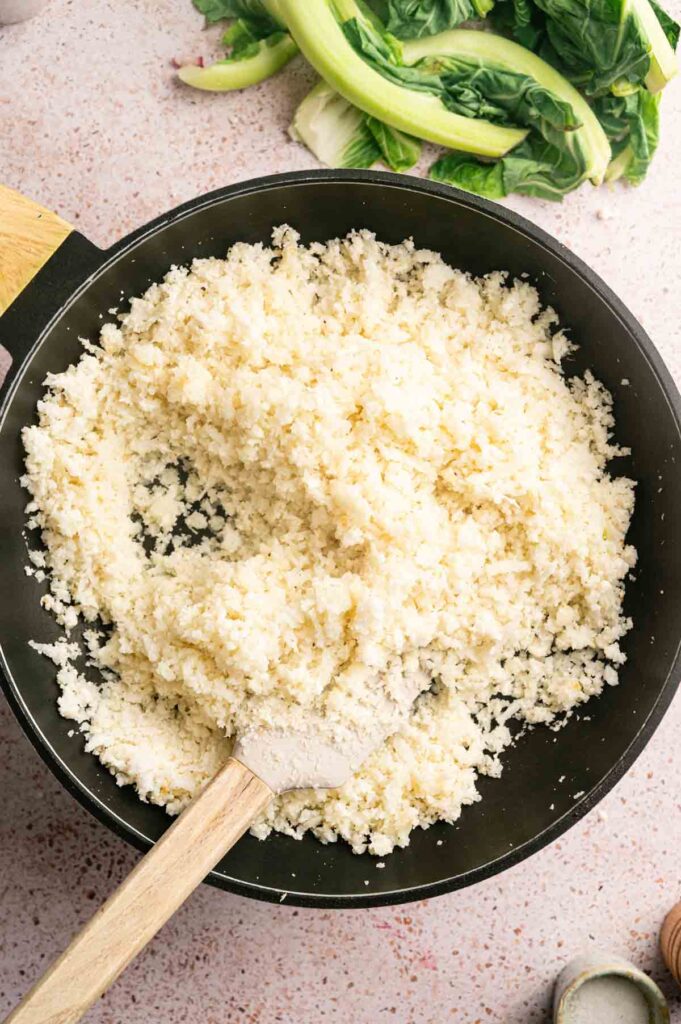
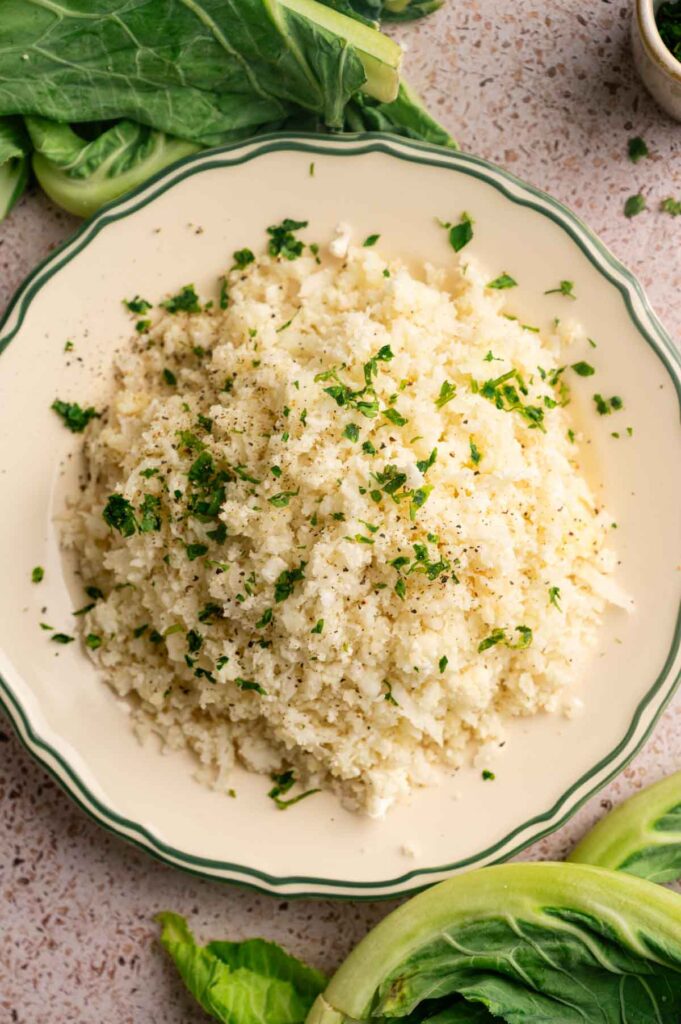
Season with salt and pepper, cook one more minute, then take it off the heat and stir in the herbs. I fluff it with a fork before serving so the grains stay separate.
Recipe Notes and Expert Tips
- Dry the cauliflower before it cooks. Pat it dry after washing, and if you use frozen, wring it out in a towel. Wet cauliflower steams and goes soggy instead of browning, which is the main reason it comes out watery.
- Pulse, don’t run the processor. A few short bursts give you distinct grains, while holding the button down cooks the cauliflower into mush.
- Give it room in the pan. Spread it thin in your largest skillet, or cook it in two batches. A crowded pan traps steam, and a thin layer is what lets the edges turn golden.
- Rice it just before you cook it. Raw riced cauliflower starts to smell sulfury if it sits, so process it when you’re ready to cook rather than hours ahead.
- Herbs go in at the end. Stir the parsley or cilantro in off the heat; added early, the herbs wilt out, and the brightness cooks away.
Recipe Variations
- Stretch it with real rice by stirring together equal parts cauliflower rice and cooked jasmine rice. You get something between the two, lighter than a full bowl of rice but with more bite than cauliflower alone, and that half-and-half swap is well-supported when you want the texture of real rice without the full carb load.
- For a zestier, Mexican-leaning side, I finish it the way my cilantro lime rice goes, with a big squeeze of lime and a handful of cilantro in place of the parsley. I’ve tested it this way plenty and prefer it when the plate needs waking up.
- Soften a little minced garlic or shallot in the oil before the cauliflower goes in. It’s backed by the way aromatics bloom in hot oil before anything else joins them, and it’s the change I make most often when plain starts to feel too plain.
How to Store Leftovers
How to Store Leftovers
Let the cauliflower rice cool first. Store leftovers in an airtight container in the fridge for up to 4 days, or freeze them spread in a single layer for up to a month. Freezing it loose keeps the grains from clumping, so you can pour out just what you need and thaw it overnight in the fridge.
Reheat in a skillet over medium heat with a splash of water or oil to loosen it, or microwave in 30-second bursts.
If you’ve mixed in cooked jasmine rice, treat it like any cooked-rice leftover and get it into the fridge within two hours, since cooked rice left out at room temperature is where problems start.
What to Serve With Cauliflower Rice
Cauliflower rice is a base more than a dish, so it slips under almost anything you’d usually serve over rice. I spoon it beneath a thick chickpea curry or a lentil dal, where it soaks up the sauce the way grains would while keeping the plate lighter. It also holds up under a quick vegetable stir-fry, with the soy and sesame carrying flavor down into the cauliflower.
For a simpler plate, build a grain-free bowl on it: roasted chickpeas, avocado, and a drizzle of tahini, or whatever roasted vegetables you’ve got going. It travels well too, so it earns a spot next to the heavier sides at a potluck.
FAQs
Too much moisture is almost always the cause. Dry the cauliflower well before ricing, keep the skillet from getting crowded, and cook it hot enough to sauté rather than steam. If it’s still releasing water in the pan, turn the heat up and keep stirring until it cooks off.
Yes. Frozen is a real time-saver; just thaw it and squeeze out the water first, or it’ll steam. Pre-riced fresh cauliflower from the produce section works straight away.
Use a box grater on the medium holes, or the grating attachment on a stand mixer. You’re after rice-sized pieces, so stop before it turns to paste.
No, and it helps to know that going in. It’s milder and a little nuttier than rice, and it works best as a base for sauces and bold flavors rather than something you eat plain.
More Cauliflower Recipes to Try
If cauliflower is earning a regular spot on your table, here are four more I come back to.
- Roasted Whole Cauliflower. For when you want cauliflower to be the centerpiece instead of the base, this one’s roasted whole until golden and crisp at the edges.
- Roasted Cauliflower. It breaks a head into florets with rosemary and pine nuts.
- Cauliflower Cheese. The one I make when the night wants something rich and cheesy rather than light.
- Cauliflower Dhal. For a dish that eats like a main, this is the one I make, with lentils, ginger, and turmeric.
Equipment
Ingredients
- 1 large head cauliflower washed and thoroughly dried
- 1 tablespoon olive oil
- ½ teaspoon salt
- ¼ teaspoon freshly ground black pepper optional
- 2 tablespoons chopped parsley or cilantro optional

Video
Instructions
- Cut the cauliflower into quarters and remove the thick core and stems.1 large head cauliflower
- Break the cauliflower into florets and pulse in a food processor (or grate with a box grater) until rice-sized.
- Heat olive oil in a large skillet over medium-high heat.1 tablespoon olive oil
- Add the riced cauliflower and sauté for about 5 minutes until tender.
- Season with salt and pepper and cook for 1 more minute.½ teaspoon salt, ¼ teaspoon freshly ground black pepper
- Remove from heat, garnish with fresh herbs if desired, and serve warm.2 tablespoons chopped parsley or cilantro
Notes
Nutrition
