
Spicy Udon Noodles Recipe
 Add Preferred Source
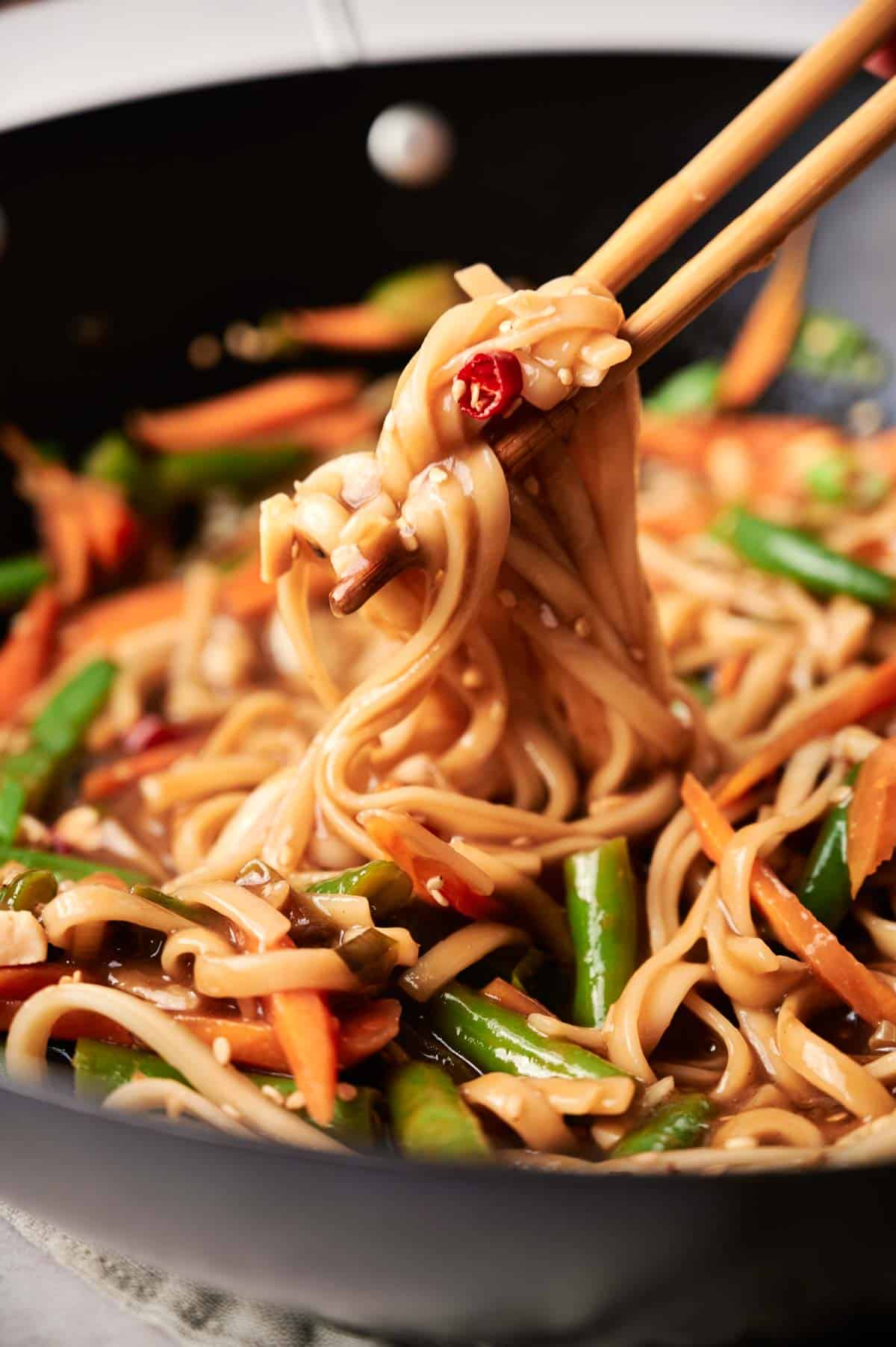
Spicy udon noodles are what I make when I want dinner to taste like it took effort and I have twenty-five minutes to prove otherwise. The chewy udon, the fresh chilies, the sauce that clings to every strand: it lands somewhere between takeout and a fridge-clearing stir fry, and it settles both at once.
What makes this bowl work is the noodle itself. Thick udon has a bounce that thin noodles never manage, and it holds the sauce instead of going slack under it. Get the chew right, and everything else is chopping and tossing.

This post contains affiliate links. As an Amazon Affiliate, if you purchase through those links, I earn a small commission. Thank you!
Why You’ll Love This Recipe
- It comes together in one wok in about twenty-five minutes, most of which is slicing vegetables while the noodles boil.
- The sauce is built from things that keep: soy, hoisin, garlic, ginger, a little sugar, and cornstarch. No specialty shopping trip.
- Udon gives you a chewy, satisfying noodle, so the bowl feels like a meal rather than a light side.
- Heat is entirely in your hands. Two red chilies for a warm hum, or push it with chili flakes or gochujang if you want it to bite back.
- The green beans and carrot go in raw and come out crisp-tender, so there’s real texture against the soft noodles.
Ingredients You’ll Need
You’ll need all the ingredients in the photograph below.
- Udon noodles. Thick udon is the point of this dish, about half a pound for four bowls. It has a chew nothing else replicates. Fresh or vacuum-packed udon cooks in minutes; dried takes a little longer, so follow the package. If you can’t find it, ramen, soba, or even spaghetti will carry the sauce, but you lose the signature bounce.
- Sesame oil. Use toasted sesame oil, not the pale untoasted kind. It’s doing double duty here, as the fat you stir-fry in and as the aroma that runs through the whole bowl. The untoasted version is nearly flavorless, and the dish goes flat without it.
- Red chilies. Two thinly sliced fresh red chilies set the baseline heat. Slice them thin so the warmth spreads evenly instead of ambushing one forkful. This is where you dial the whole dish up or down.
- Hoisin. A quarter cup gives the sauce its dark, slightly sweet backbone. Use hoisin, or a vegetarian oyster-style sauce if you keep one, so the bowl stays fully vegetarian. Check the label, since some hoisin brands aren’t vegan if that matters to you.
- Green beans and carrot. Sliced thin, they go into the hot wok raw and stay crisp-tender in the few minutes they cook. They’re what keeps the bowl from being all softness.
- Toasted peanuts. A quarter cup, chopped, scattered on at the end. They’re not a garnish you can skip. The crunch against the chewy noodles is half the reason to make this.

How to Make Spicy Udon Noodles
A complete printable recipe and the measurements in both US customary and metric are available in the recipe card below.
Cook the Noodles and Stop Them Short
Boil the udon by the package directions, then drop it straight into cold water to stop the cooking. Pull it just short of fully soft. It gets a second hit of heat in the wok, and undercooking slightly now is what keeps the chew later.
Mix the Sauce
Stir the soy sauce, water, hoisin, garlic, ginger, sugar, and cornstarch together in a small bowl before anything hits the heat. Once the wok is going, you won’t have a spare hand, and the cornstarch needs to be evenly dispersed so the sauce thickens smoothly rather than lumpy.
Stir-Fry the Aromatics and Vegetables
Heat the wok to medium-high and add the sesame oil. Once it’s sizzling, add the green onions, red chilies, green beans, and carrot, and toss everything for about five minutes. You want the vegetables hot and bright, not soft.

Add Noodles and Sauce
Drain the udon, add it with the sauce, and toss for about five more minutes until every strand is coated and the sauce thickens. If it tightens too far, loosen it with a splash of water. Serve with sesame seeds and the toasted peanuts on top.
Recipe Notes and Expert Tips
- Undercook the udon on purpose. It finishes cooking in the wok, so noodles pulled just shy of soft keep their bite instead of turning mushy in the sauce.
- Mix the sauce first. The cornstarch has to be whisked in cold and evenly, or it seizes into lumps when it hits the hot wok. Two minutes now saves the sauce.
- Watch the sauce thicken, then stop. Cornstarch keeps tightening off the heat. Take it off when it just coats the noodles, and keep a little water nearby to loosen it back if it goes too far.
- Peanuts go on last. Stir them in early, and they soften. Scattered on at the table, they stay crisp, which is the contrast the bowl is built around.
Recipe Variations
- Adding tofu, pressed and pan-crisped first so it holds up in the toss, turns this into a more filling main. I make it this way often, and the cook time doesn’t change since the tofu just joins at the end. Tested.
- A spoonful of gochujang or a splash of chili oil stirred into the sauce deepens the heat rather than just sharpening it. This is my regular move when I want it fierier, so it’s tested and reliable.
- Mushrooms, cabbage, broccoli, or bell peppers all stand in for the green beans and carrot. These are dependable stir-fry vegetables and are supported swaps, so as long as you keep the total volume similar, the timing holds.
- Ramen, soba, or rice noodles will carry the sauce if udon is out of reach, though swapping the noodle hasn’t been tested here and you trade away the thick chew that defines the dish. Cook whichever you use until just soft before it meets the wok.
How to Store Leftovers
These noodles keep well, which makes them a good candidate for lunch the next day. Let them cool for a short while, then move them to an airtight container and into the fridge within two hours of cooking rather than leaving them out to come all the way down to room temperature. Eat leftovers within three to four days.
To reheat, add a splash of water or a little sesame oil to loosen the noodles, then warm them through on the stovetop over medium heat or in the microwave, heating until steaming hot throughout. A dry reheat leaves them clumped, so the splash of liquid matters more than it sounds.
What to Serve With Spicy Udon Noodles
I like to give this bowl something cool and fresh alongside it, so I’ll often set out these fresh avocado spring rolls to start. Their crisp, cold crunch is a deliberate contrast to the hot, saucy noodles.
For a bigger, hungrier table, I’ll add a second sharing dish rather than doubling the noodles, and keep everything in the same soy and sesame family so nothing on the table fights.
FAQs
Almost always overcooked udon. Boil it just shy of soft and shock it in cold water, because it cooks again in the wok. Fully softening it at the boil leaves nowhere for the second round of heat to go but to mush.
For a milder bowl, use one chili or seed them before slicing. For more heat, add red chili flakes, a splash of chili oil, or a spoonful of gochujang stirred into the sauce.
Yes. A large, wide skillet works. You want a hot pan with room to toss, so the vegetables sear rather than steam. A crowded pan is the usual reason a home stir fry goes watery.
Yes, when you use hoisin or a vegetarian oyster-style sauce rather than traditional oyster sauce. For a fully vegan bowl, check that your hoisin and soy sauce are both vegan-friendly.
More Quick Asian Dinners to Cook This Week
If this bowl earned a spot in your weeknight rotation, here are a few more from the site I turn to on the same kind of night:
- Egg Fried Rice. Jasmine rice, egg, and green onion, my default when the fridge is nearly bare, and I want something fast.
- Easy Vegetable Stir Fry. Broccolini, peppers, and mushrooms in a soy-sesame sauce, for when I want the vegetables to be the whole point.
- Cilantro Lime Rice. Bright with lime and fresh cilantro, an easy side that pairs with almost anything spicy.
- Crispy Rice. Crunchy, golden squares of seasoned sushi rice, good for scooping up a saucy bowl like this one.
Ingredients
- 1 package Udon noodles thick ones, about ½ pound
- 2 tablespoons sesame oil
- 2 green onions thinly sliced
- 2 red chilis thinly sliced
- 1 cup green beans sliced
- 1 carrot thinly sliced
- ¼ cup toasted peanuts chopped
- Sesame seeds
For the sauce:
- ¼ cup soy sauce
- ¼ cup water
- ¼ cup hoisin or Oyster sauce
- 2 garlic cloves minced
- 2 tablespoons ginger minced
- 1 tablespoon sugar
- 1 tablespoon cornstarch

Video
Instructions
- Make the Udon noodles according to package directions and reserve in cold water to stop the cooking process.1 package Udon noodles
- Mix all the sauce ingredients in a small bowl.¼ cup soy sauce, ¼ cup water, ¼ cup hoisin or Oyster sauce, 2 garlic cloves, 2 tablespoons ginger, 1 tablespoon sugar, 1 tablespoon cornstarch
- Heat a wok to medium high and add the sesame oil, once it’s sizzling add the green onions, red chilis, green beans and carrots and toss everything around for about 5 minutes.2 tablespoons sesame oil, 2 green onions, 2 red chilis, 1 cup green beans, 1 carrot
- Add noodles and sauce and mix everything together, until all the noodles are coated in the sauce and it starts to thicken – about 5 more minutes.
- Serve with sesame seeds and toasted peanuts.Sesame seeds, ¼ cup toasted peanuts
Notes
Nutrition
