
Aglio e Olio Recipe
 Add Preferred Source
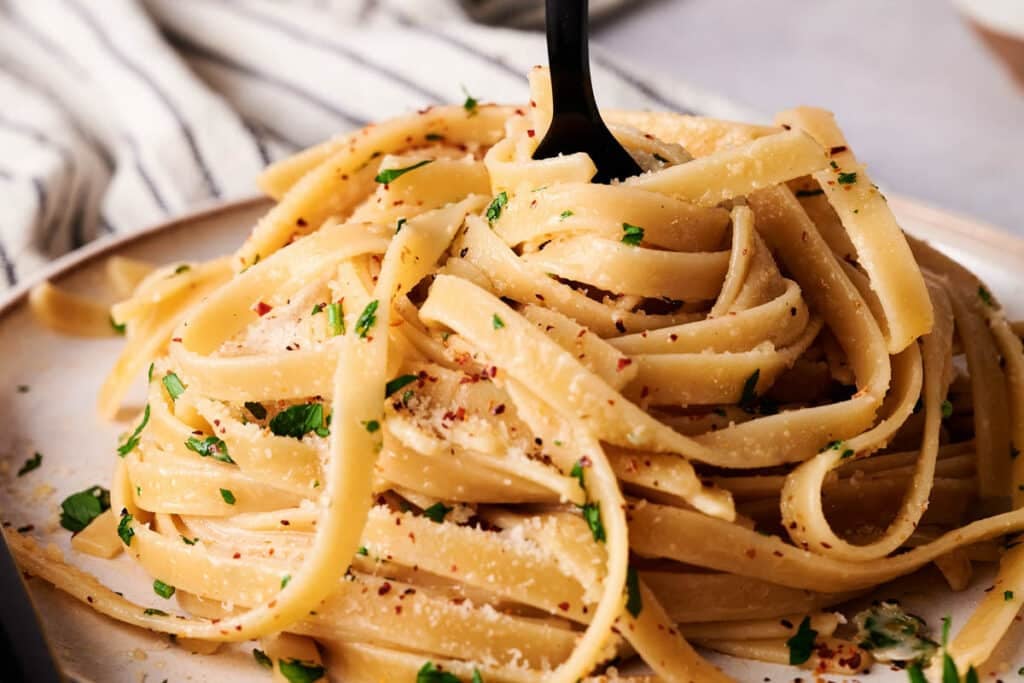
Aglio e Olio is a classic Italian pasta dish that proves you don’t need a long list of ingredients to make something delicious. This version uses linguini, which holds the garlic oil beautifully and gives every bite a silky, flavorful coating. With just garlic, olive oil, Parmesan, parsley, and a hint of heat from red pepper flakes, it’s simple, satisfying, and full of bold flavor.
This post contains affiliate links. As an Amazon Affiliate, if you purchase through those links, I earn a commission. Thank you!
I make aglio e olio when I want something quick but full of flavor. It’s especially good on a weeknight when I’m too tired to cook anything complicated but still craving real food. The garlic gets just golden enough to add depth without overpowering, and the parsley keeps things fresh. I love how the linguini soaks up all that garlicky olive oil—it’s comfort food without the fuss.
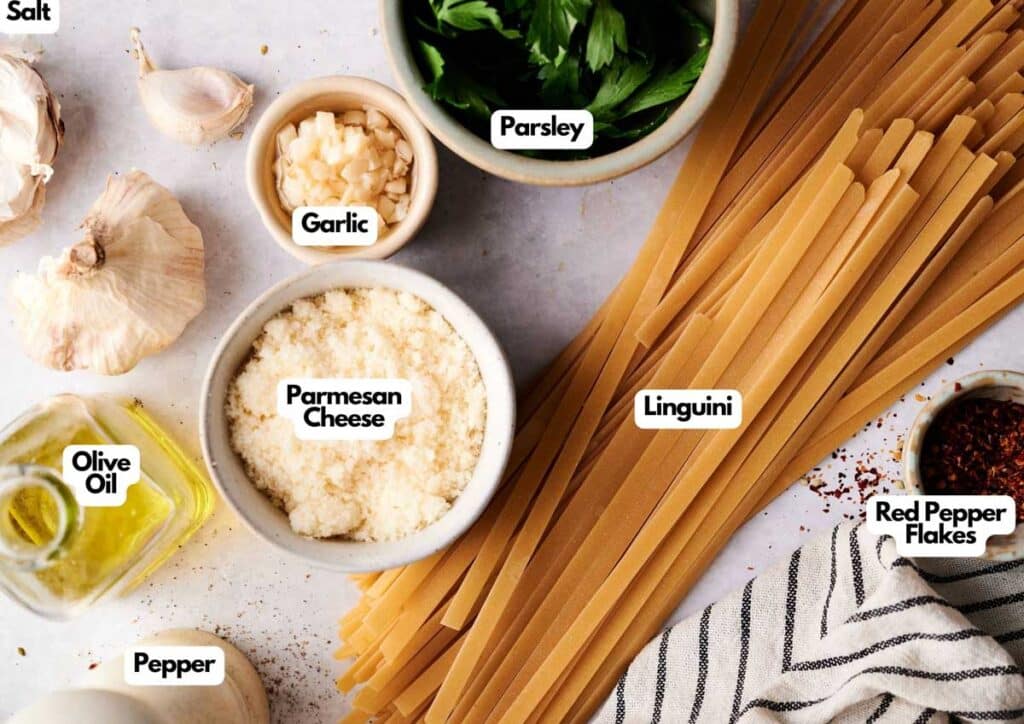
Ingredients You’ll Need
You’ll need all the ingredients shown in the photograph below.
How to Make Aglio e Olio
Scroll down for the full recipe card containing a full printable recipe and measurements in both US customary and metric units.
I keep this recipe super simple and quick, perfect for when you want a warm plate of pasta fast. Here’s how I bring this garlicky favorite together at home.
Boil the pasta
Start by bringing a large pot of salted water to a boil. Add the linguini and cook until it’s just al dente. Don’t forget to reserve about half a cup of the pasta water before draining—it’s key for the sauce.
If your pot always seems to bubble over while you’re waiting for it to boil, I’ve been using this oversized stainless steel stockpot, and it makes pasta night way easier. No mess, and I love the built-in straining lid.
Sauté the garlic
While the pasta’s cooking, heat the olive oil in a large skillet over medium heat. Add the sliced garlic and red pepper flakes. Stir often and keep a close eye so the garlic turns golden but not brown (burnt garlic = bitter pasta). Once the garlic is fragrant and lightly golden, season it with salt and pepper to taste.
Toss the pasta
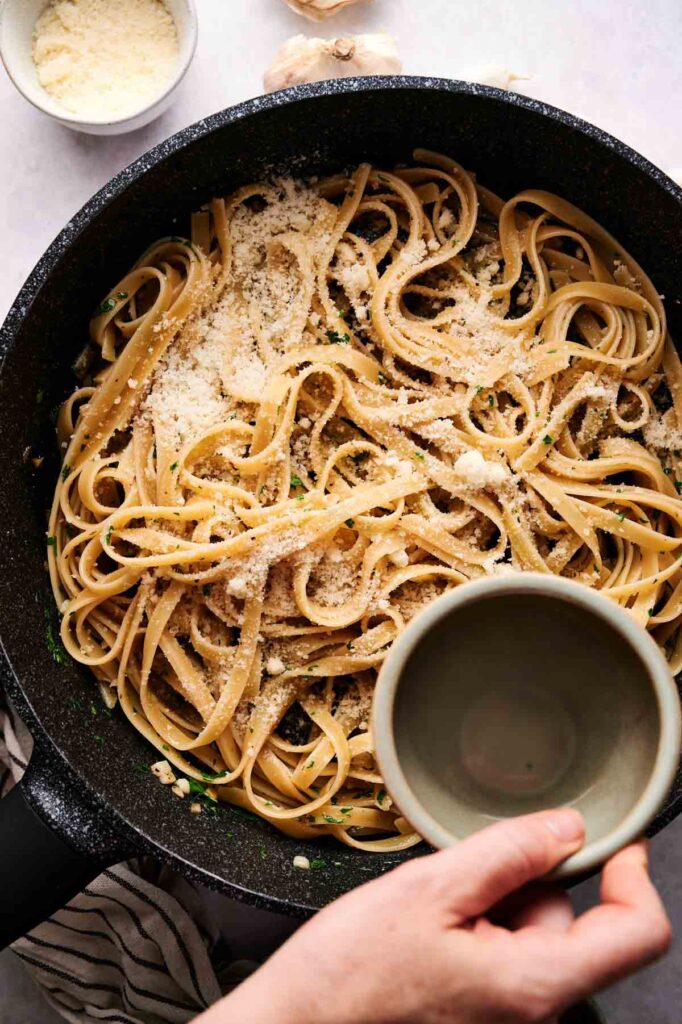
Lower the heat to medium-low. Add the drained linguini right into the skillet. Toss it well in the garlic oil, making sure every strand is coated.
If tossing hot pasta in a regular pan tends to make a mess all over your stove, I’d recommend using a deep-sided nonstick sauté pan like this one. It gives you tons of room to move the noodles around without spilling oil everywhere.
Add cheese and herbs
Sprinkle in the grated Parmesan and chopped parsley. Keep tossing so the cheese melts and the parsley gets evenly mixed in. I like using a microplane zester here; it grates Parmesan so finely that it melts almost instantly into the warm pasta.
Adjust with pasta water
If the sauce looks too dry, just splash in a bit of that reserved pasta water. A little goes a long way and helps the sauce cling to the noodles. I usually keep the reserved water in a small glass measuring cup with a spout so it’s easy to pour in just the right amount.
Serve it up
Plate it hot with a little extra Parmesan and parsley if you want, and enjoy.

Equipment
Ingredients
- 1 pound linguini uncooked
- ¾ cup olive oil
- 1 head garlic peeled and sliced
- 2 teaspoons red pepper flakes
- Salt and black pepper to taste
- ½ cup fresh parsley chopped
- ½ cup Parmesan cheese grated
Video
Instructions
- Bring a large pot of salted water to a boil. Cook the linguine until al dente. Reserve ½ cup of pasta water, then drain the pasta.1 pound linguini
- While the pasta cooks, heat the olive oil in a large skillet over medium heat. Add the sliced garlic and red pepper flakes. Cook, stirring frequently, until the garlic is lightly golden and fragrant—be careful not to burn it. Season with salt and pepper.¾ cup olive oil, 1 head garlic, 2 teaspoons red pepper flakes, Salt and black pepper
- Reduce the heat to medium-low. Add the drained pasta to the skillet along with the grated Parmesan and chopped parsley. Toss well to coat everything evenly in the garlic oil.½ cup fresh parsley, ½ cup Parmesan cheese
- If the pasta looks too dry, stir in a splash of the reserved pasta water until the sauce reaches your desired consistency.
- Serve hot, optionally with extra Parmesan and parsley on top.
Notes
- Garlic timing: Slice it thin and cook it slow—rushing this step can burn it fast.
- Chili flakes: Red pepper flakes add a nice kick, but a little goes a long way. Start small—you can always sprinkle more on top.
- Cheese is optional: Traditional aglio e olio doesn’t always use Parmesan, but I think it makes it extra tasty.
- Try a squeeze of lemon: A little lemon juice at the end adds brightness.
- Add veggies: Broccoli or mushrooms are ideal to toss into this dish if you have some hiding in the fridge. Just sauté them with the garlic.
- Switch up the pasta: I love linguini here, but it also works with fettuccine or even spaghetti if that’s what you have on hand.
Storage and Reheating Instructions
- Fridge: If you’ve got leftovers, let the pasta cool before transferring it to an airtight container. Pop it in the fridge, and it’ll stay good for up to 3 days.
- Reheat: When you’re ready to reheat, warm it gently in a skillet over medium-low heat with a splash of water or olive oil to loosen things up.
Nutrition
Recipe Notes and Tips
I’ve made aglio e olio more times than I can count, and here are a few tips that make it even better:
- Garlic timing: Slice it thin and cook it slow—rushing this step can burn it fast.
- Chili flakes: Red pepper flakes add a nice kick, but a little goes a long way. Start small—you can always sprinkle more on top.
- Cheese is optional: Traditional aglio e olio doesn’t always use Parmesan, but I think it makes it extra tasty.
- Try a squeeze of lemon: A little lemon juice at the end adds brightness.
- Add veggies: Broccoli or mushrooms are ideal to toss into this dish if you have some hiding in the fridge. Just sauté them with the garlic.
- Switch up the pasta: I love linguini here, but it also works with fettuccine or even spaghetti if that’s what you have on hand.
How to Store Leftover Aglio e Olio
If you’ve got leftovers, let the pasta cool before transferring it to an airtight container. Pop it in the fridge, and it’ll stay good for up to 3 days.
When you’re ready to reheat, warm it gently in a skillet over medium-low heat with a splash of water or olive oil to loosen things up. The flavor holds up well, especially that garlicky kick!
What to Serve With Aglio e Olio
Aglio e olio is a meal on its own, but it plays well with others too. I like pairing it with a green salad or caprese salad to keep things light.
Add crusty French bread or some garlic knots (you can never have too much garlic!) for soaking up any extra garlic oil.
More Pasta Recipes You Will Love
If you liked Aglio e Olio, I’ve got a few more pasta favorites you’ll want to try next:


I love how easy this fabulous pasta dish comes together. It’s comfort in a bowl.
It is, isn’t it! Always my ‘go-to’ easy dish when I need quick comfort food!
Growing up my brother and I called it white spaghetti. We didn’t always have sauce or even parm cheese. I never knew it was an actual Italian dish!
It’s simple but delicious isn’t it!