
Authentic Cacio e Pepe Recipe
 Add Preferred Source
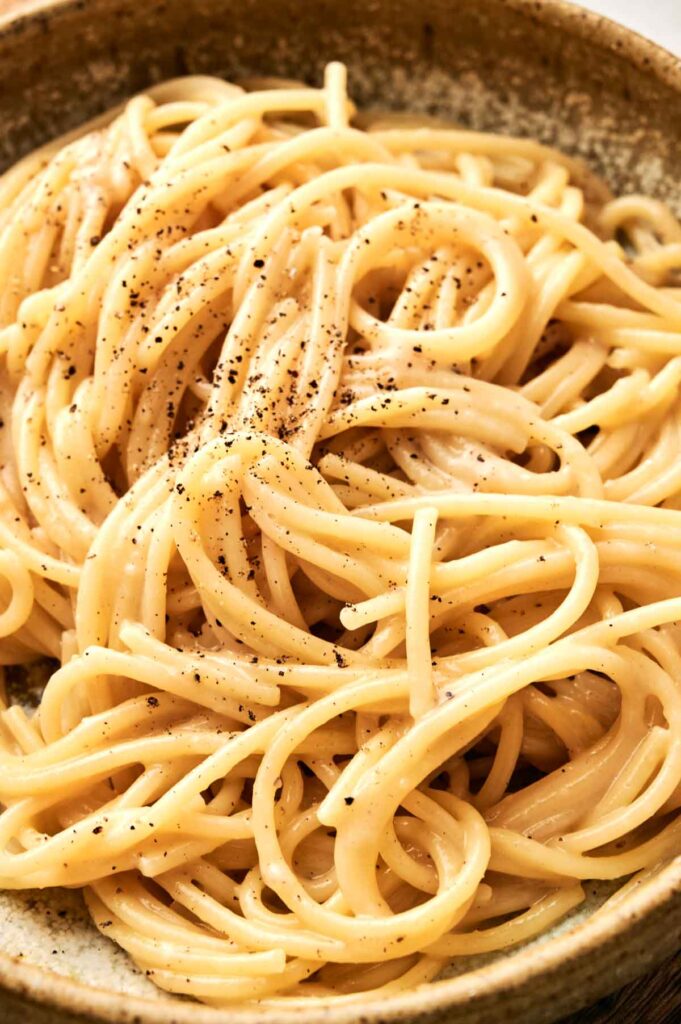
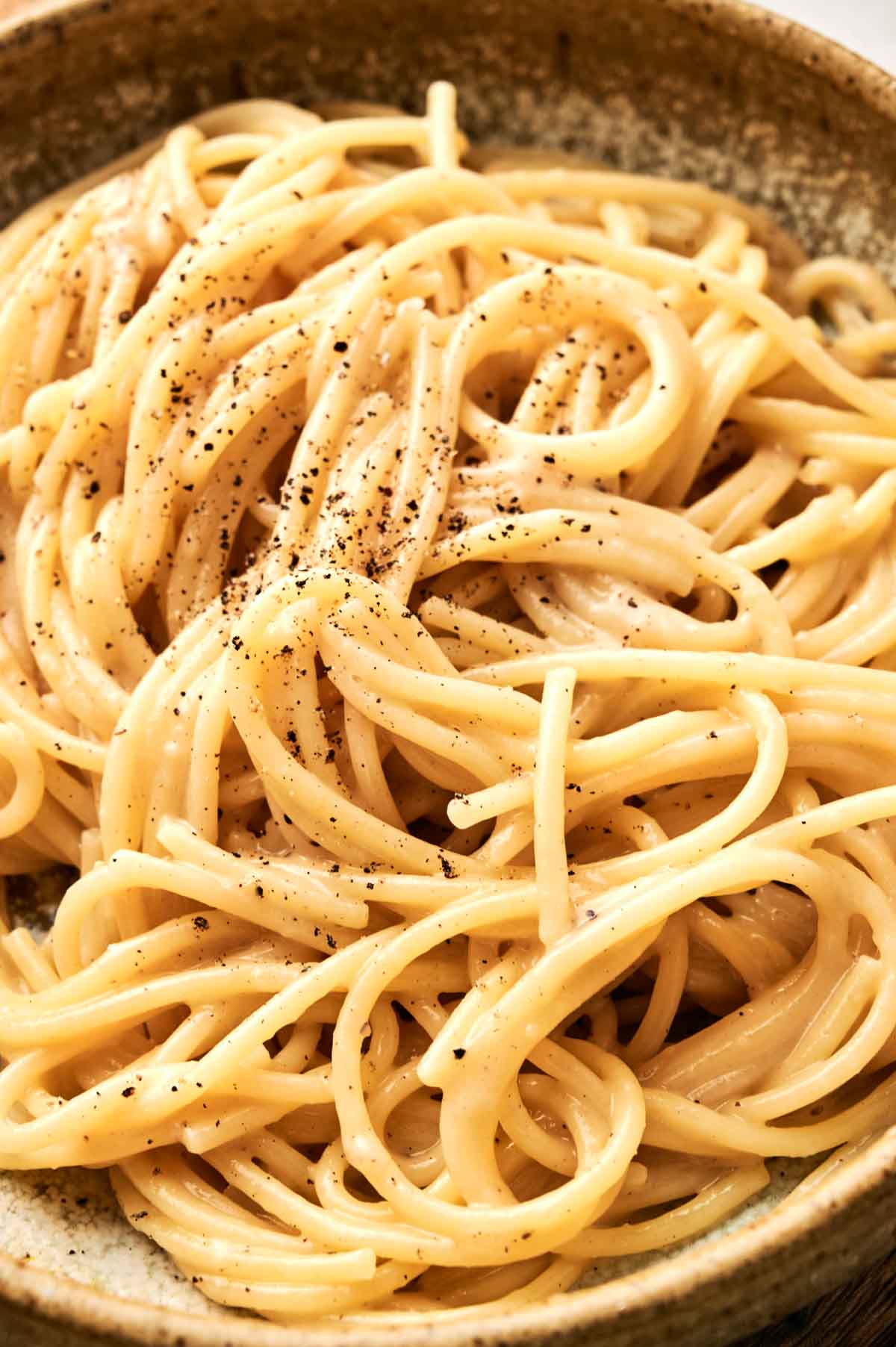
Cacio e pepe is what I make when I want a proper plate of pasta, and I’ve got almost nothing in the house. It’s spaghetti, black pepper, and hard cheese, and the whole thing rests on turning those three into a sauce that clings to every strand.
The name is Roman for cheese and pepper, and that’s the whole ingredient list. What makes it work is technique, not a long shop, so it earns its place on a Tuesday.
This post contains affiliate links. As an Amazon Affiliate, if you purchase through those links, I earn a commission. Thank you!
Why You’ll Love This Recipe
- Three staples become dinner. Pasta, pepper, and cheese are things I nearly always have, so this is a no-shopping meal.
- It’s fast, coming together in about the time the pasta takes to cook plus a few minutes of stirring.
- The sauce is built on starchy pasta water, not cream, so it stays light while still coating the spaghetti.
- One pot and one skillet is the whole cleanup.
- Toasting the pepper in the pan first gives the dish a warmth you don’t get from pepper stirred in cold.
Ingredients You’ll Need
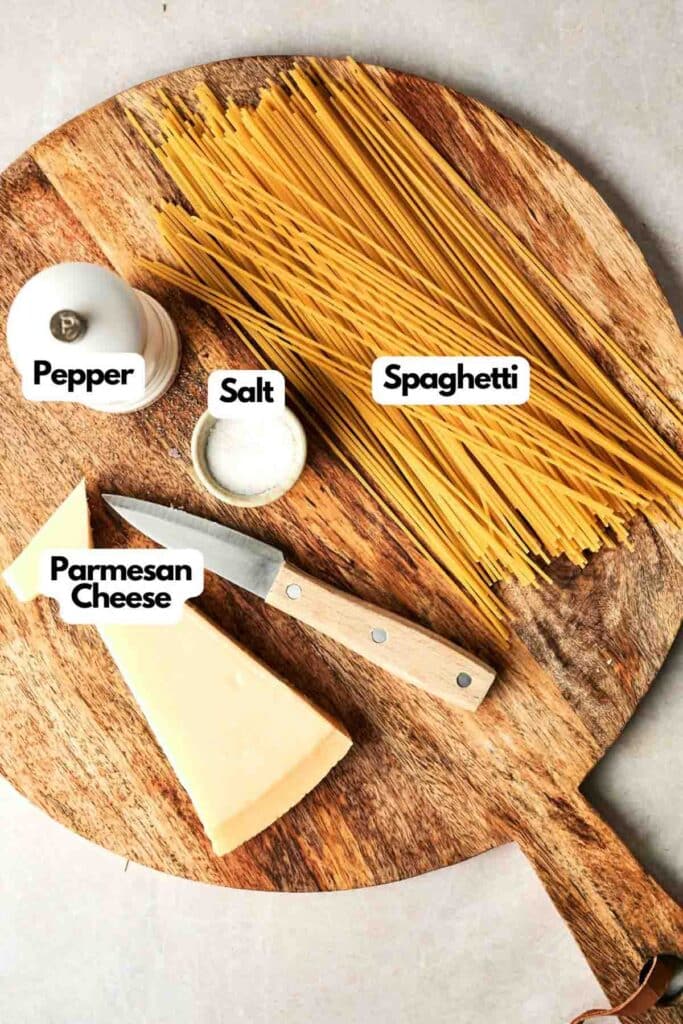
You’ll need all the ingredients shown in the photograph below.
- Spaghetti. The classic shape for this, and it holds the sauce well. Bucatini works too if you like a little more chew.
- Hard cheese. This is where a vegetarian cook has to pay attention. Authentic Parmigiano-Reggiano and Pecorino Romano are both made with animal rennet under their protected-origin rules, so neither is vegetarian even though the recipe name points at them. I use a hard cheese labeled suitable for vegetarians, which is made with microbial or fermentation-produced rennet and grates and melts the same way. It is worth checking the packet, because the label is the only reliable tell. This is the same cheese I use in my bright and simple lemon pasta.
- Black pepper. Grind it coarse and grind it fresh. Pre-ground pepper has lost most of the oils that give the dish its backbone, and coarse grinding gives you the little bursts of heat that define cacio e pepe.
- Pasta water. Not an ingredient you buy, but the one that matters most. The starch it carries is what emulsifies the cheese into a sauce, so salt the water well and save more than you expect to use.
How to Make Cacio e Pepe
A complete printable recipe and the measurements in both US customary and metric are available in the recipe card below.
Cook the Spaghetti and Save the Water
Boil a large pot of well-salted water and cook the spaghetti until it is about two minutes short of tender, since it finishes in the skillet. Before you drain it, scoop out a full cup of the pasta water and keep it close.
Make the Cheese Paste
Stir half of the reserved pasta water into the grated cheese until you have a smooth paste with no lumps. Doing this in a bowl first, away from direct heat, is the single best insurance against the cheese seizing later.
Toast the Pepper
Warm a large skillet over medium heat, add the coarse black pepper and 2 tablespoons of water, and let it come to a boil so the pepper blooms. You’ll smell it wake up. That aroma is exactly why the pepper goes in the pan instead of onto the plate at the end.
Bring It Together
Add the drained spaghetti to the skillet, pour in the cheese paste, and stir hard for a good five minutes until every strand is coated and glossy.
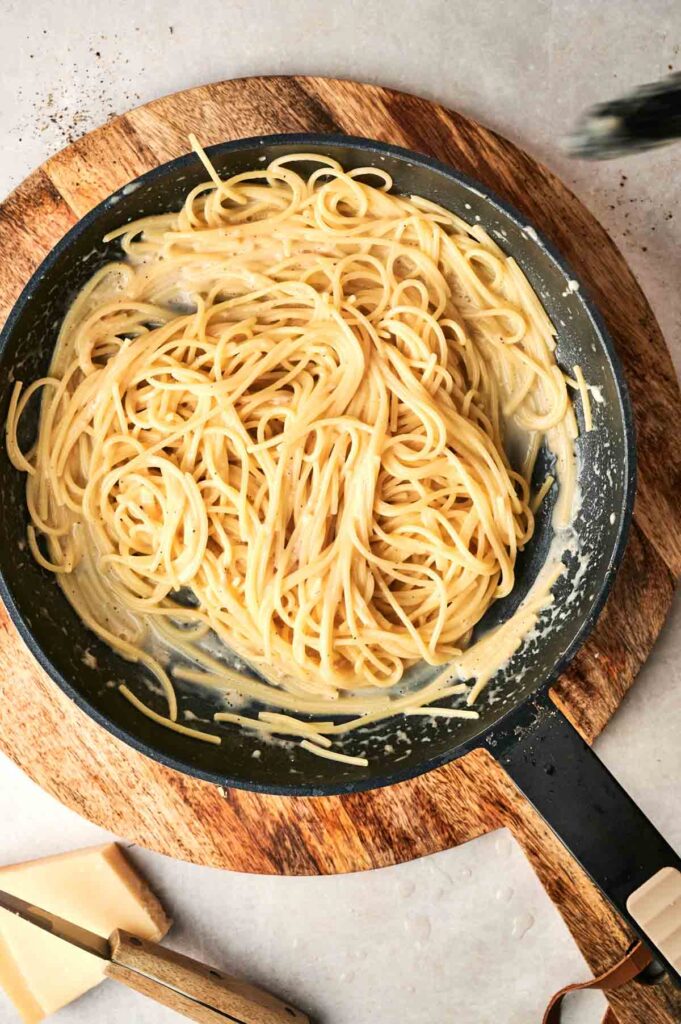
If it looks thick, loosen it with a splash more pasta water at a time until it’s silky. You’re looking for a sauce that pools and coats, not one that beads up and slides off.
Recipe Notes and Expert Tips
- Keep the pan off high heat once the cheese is in. Direct high heat makes the cheese clump into knots instead of melting into a sauce. Medium and steady is what you want.
- Grate the cheese fine and fresh. A fine grate melts evenly, and freshly grated cheese has none of the anti-caking coating that stops pre-shredded cheese from going smooth.
- Reserve more water than the recipe asks for. You can always tip the extra away, but you cannot loosen a stiff sauce without it, and the difference between clumpy and silky is usually a spoonful more water.
- Stir with intent. The vigorous stirring is not busywork; it is what emulsifies the water and cheese into a coating rather than leaving them as two separate things in the pan.
Recipe Variations
- Bump up the pepper. I’ve tested this plenty with a heavier hand on the coarse black pepper, and it holds up, pushing the dish toward its sharper Roman side. Pepper is already the backbone here, so more of it just does more of what the recipe’s about.
- Bucatini or tonnarelli in place of spaghetti give you a chewier bite that grips the sauce a little differently. This one only changes texture, not method, so it’s a supported swap that won’t throw off your timing.
- A little grated lemon over the finished bowl lifts the richness. I haven’t tested it stirred into the sauce itself, so I’d keep it as a finishing touch rather than adding it to the pan.
How to Store Leftovers
Cacio e pepe is best eaten the moment it is made, since the sauce firms up as it cools, but if you do have some left, keep it in a covered container in the fridge and use it within two days.
To warm it through, add a good splash of water to a pan over low heat and stir gently to bring the sauce back together, rather than microwaving it, which tends to make the cheese greasy. Make it fresh whenever you can; this is not a dish built for planning ahead.
What to Serve With Cacio e Pepe
This is a rich, cheesy plate, so I keep everything around it light. A sharp green salad with lemon and olive oil is all it needs, plus some bread for the last of the pepper on the plate.
If I’m making a bigger Italian spread, I’ll put out my homemade spaghetti marinara from scratch alongside it so there’s a tomato option on the table too. For something with a bit more of a kick against the plain cheese and pepper, a bowl of creamy penne alla vodka works well.
FAQs
The pan was too hot when the cheese went in. Make the cheese paste with pasta water off the heat first, keep the skillet on medium, and stir hard. Starchy pasta water and gentle heat are what hold the sauce together.
It is best avoided. Pre-grated cheese is coated with anti-caking agents that stop it melting smoothly, which is the most common reason the sauce refuses to come together. Grate it yourself from a block.
Not by default. Authentic Parmigiano-Reggiano and Pecorino Romano are made with animal rennet, so look for a hard cheese labeled suitable for vegetarians. It behaves the same in the pan.
More Easy Pasta Dinners to Try
If cacio e pepe has you in the mood for more simple pasta, here are a few I come back to on different kinds of nights.
- Boursin cheese pasta. It’s where I go when I want the same easy, cheesy comfort but with roasted tomatoes and mushrooms doing some of the work.
- Pasta alla Norma. My pick for a more substantial night, with silky eggplant in a proper tomato sauce.
- Pasta alla Sorrentina. The one I go to when I want cubes of fresh mozzarella stirred through a stovetop tomato sauce until they turn it stringy and soft, no oven needed.
- Mushroom pasta. This is what I make when I want something savory and earthy without much fuss.
Ingredients
- 6 ounces pasta spaghetti
- 1 teaspoon coarsely ground black pepper plus more
- 1 ½ cup Parmesan cheese finely grated (or Pecorino romano)
- 1 teaspoon kosher salt

Video
Instructions
- Bring a large pot of water to a boil over high heat. Add kosher salt to the water and cook the spaghetti, stirring occasionally, until it’s about two minutes shy of being fully tender. Before draining, reserve 1 cup of the pasta water.6 ounces pasta spaghetti, 1 teaspoon kosher salt
- In a bowl, mix half of the reserved pasta water with the grated Parmesan cheese, stirring until smooth.
- Heat a large skillet over medium heat and add the coarsely ground black pepper along with 2 tablespoons of water. Bring to a boil to release the pepper’s flavor.1 teaspoon coarsely ground black pepper
- Add the drained spaghetti to the skillet and pour in the cheese mixture. Stir vigorously for at least 5 minutes, ensuring the pasta is evenly coated in the sauce. If the mixture seems too thick, add more reserved pasta water, a little at a time, until the sauce reaches your desired consistency.1 ½ cup Parmesan cheese
- Serve immediately, topped with an extra sprinkle of black pepper if desired.
Notes
Nutrition
