
Pesto Pasta
 Add Preferred Source
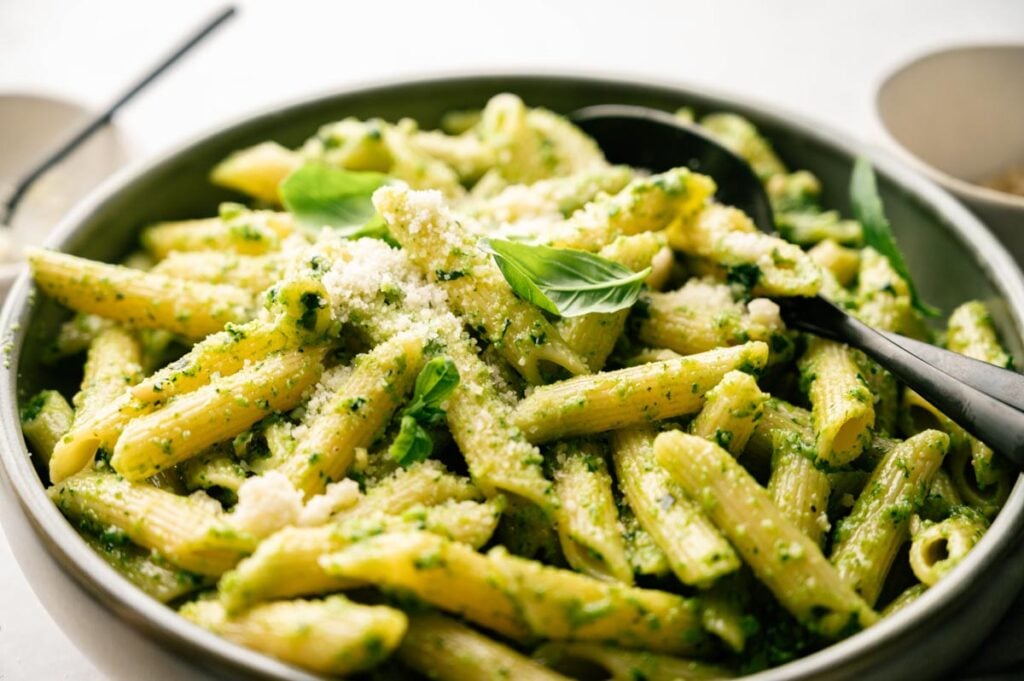
Pesto Pasta is my answer to every busy weeknight when I want something fresh, vibrant, and completely homemade without a lot of effort. Bright fresh basil, toasted pine nuts, garlic, and parmesan make the most gorgeous green pesto that coats every piece of pasta in rich, bold, herby flavor. It’s so good you’ll make it again before the week is over.
This post contains affiliate links. As an Amazon Affiliate, if you purchase through those links, I earn a commission. Thank you!
I make this for weeknight dinners, summer potlucks, and anytime I need a fresh and vibrant pasta dish that the whole table loves without spending much time at all. It’s kid-friendly and comes together so fast it’s my most reliable dinner on a busy night. Store leftovers in the fridge for up to 5 days and toss with a little olive oil before serving.
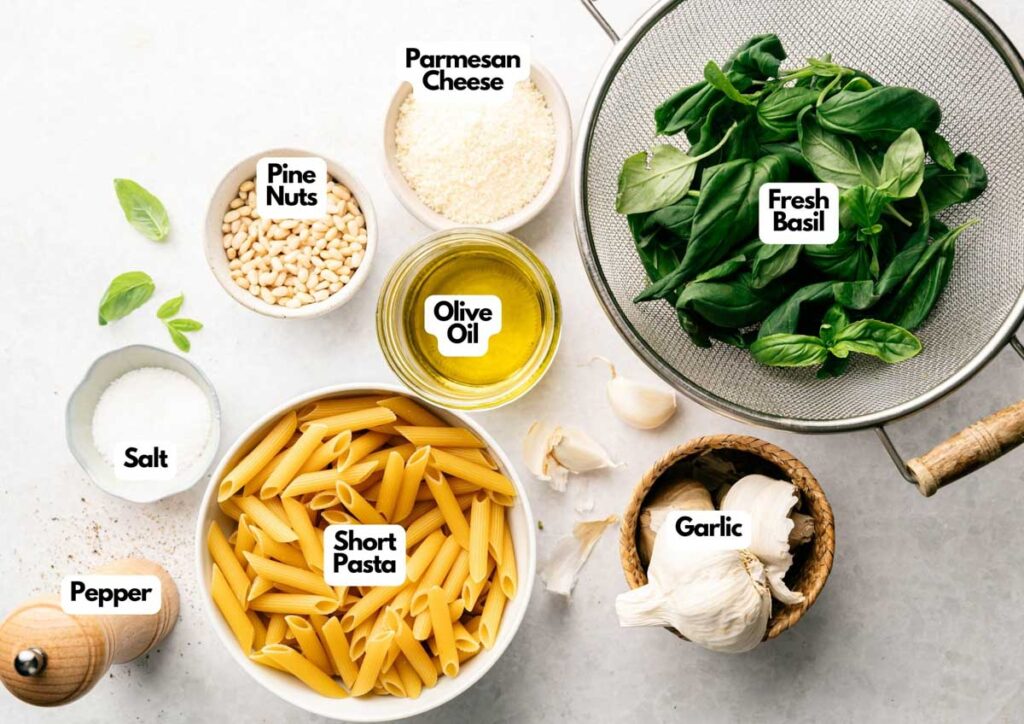
Ingredients You’ll Need
You’ll need all the ingredients shown in the photograph below.
How to Make Pesto Pasta with Step-By-Step Instructions
Scroll down for the full recipe card containing a full printable recipe and measurements in both US customary and metric units.
Making a homemade pesto recipe from scratch is so much easier than most people expect, and the flavor difference is honestly night and day compared to store-bought pesto.
Boil the Pasta
Bring a large pot of salted water to a boil. I use a stainless steel pasta pot with a built-in strainer lid that lets you drain the pasta quickly without needing a separate colander.
Cook the pasta according to package instructions until al dente. Before draining, reserve 1 cup of the pasta cooking water, then drain the pasta.
That starchy pasta water is the secret to a silky, well-coated sauce, so don’t skip saving it. Short pasta shapes like penne, fusilli, or rotini work best here because they catch the pesto in every ridge and curve.

Make the Basil Pesto
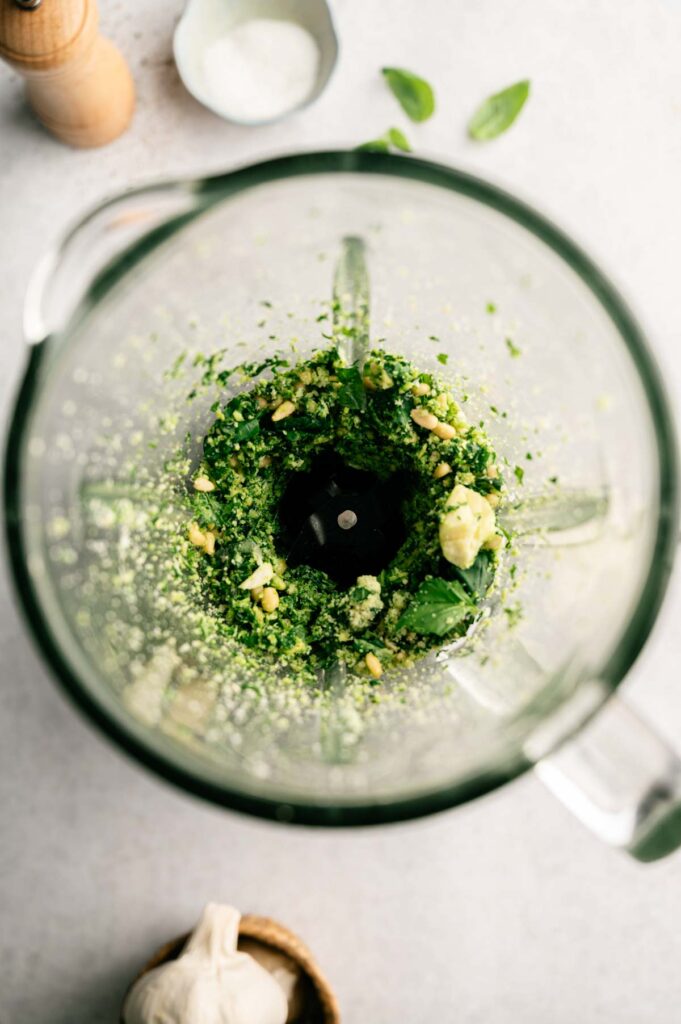
Add the fresh basil leaves, garlic, toasted pine nuts, and Parmesan cheese to a food processor. Pulse until everything is finely chopped and you’ve got a rough, fragrant paste.
A high-powered food processor with a 2-in-1 feed tube delivers smooth, even results without overprocessing your pesto.
Blend in the Olive Oil
With the food processor running, slowly drizzle in the extra-virgin olive oil in a steady stream until the pesto is smooth and creamy. Taste it and add salt and pepper as needed to bring all the flavors together.
A squeeze of lemon juice brightens everything up if you want a little extra freshness.
Toss the Pasta in Pesto Sauce
Toss the hot pasta with the prepared pesto right away. Add a small amount of the reserved pasta water as needed to loosen the sauce and help it coat every piece of your favorite pasta shape evenly.
I use this large glass mixing bowl to keep everything from sliding around while you toss.
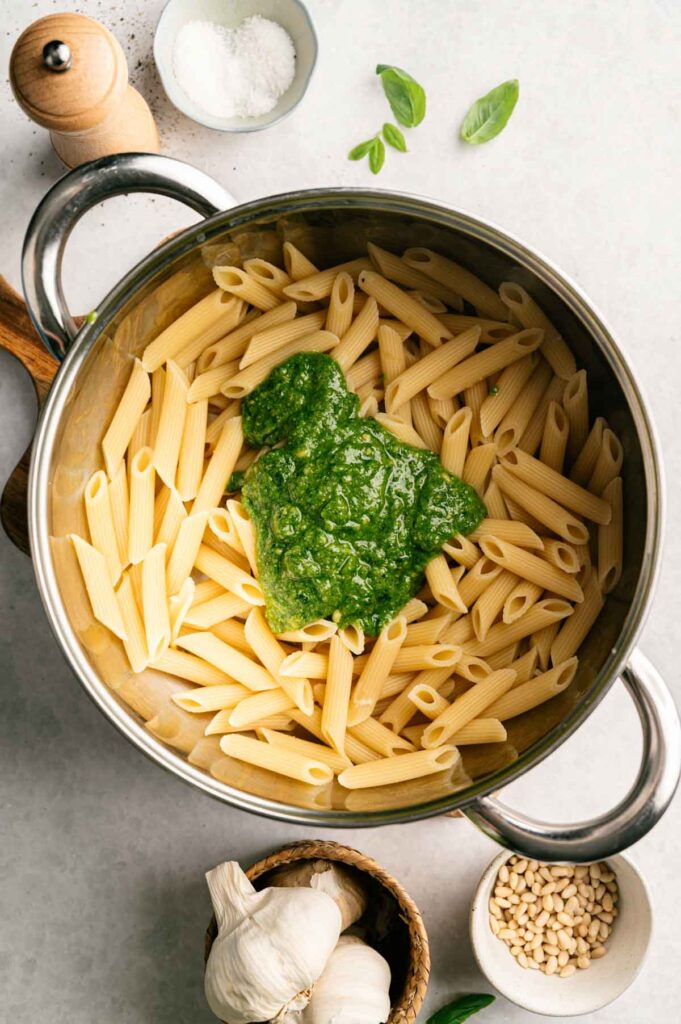
Serve the Pasta
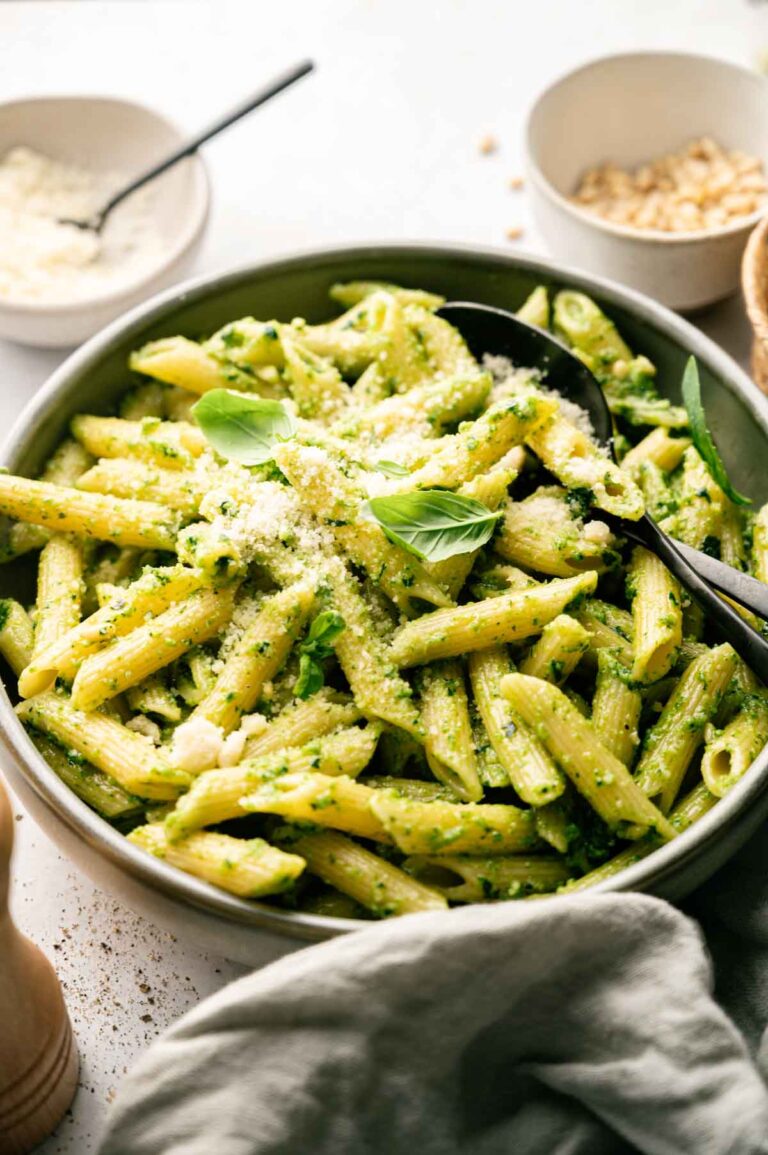
Serve immediately, topped with additional Parmesan cheese, halved cherry tomatoes, and a sprinkle of red pepper flakes for a little heat. A handheld grater lets you add a fine, fluffy layer of grated Parmesan cheese directly at the table for optimal presentation and flavor.
Fresh basil leaves make a beautiful garnish as well. Enjoy!
Pesto pasta travels really well to potlucks, picnics, and outdoor gatherings. Let it cool to room temperature first, then pack it in a portable pasta carrier with a secure lid. For warm service, toss the pasta with pesto right before leaving and use an insulated casserole carrier like this one.
Ingredients
- 2 cups fresh basil leaves
- 2 cloves garlic minced
- ½ cup extra-virgin olive oil
- ½ cup grated Parmesan cheese
- 2 tablespoons pine nuts toasted
- Salt to taste
- 1 pound short pasta such as penne, fusilli, or rotini
Video
Instructions
- Bring a large pot of salted water to a boil. Cook the pasta according to package instructions until al dente. Reserve 1 cup of the pasta cooking water, then drain the pasta.1 pound short pasta
- In a food processor, add the basil, garlic, pine nuts, and Parmesan cheese. Pulse until finely chopped.2 cups fresh basil leaves, 2 cloves garlic, ½ cup grated Parmesan cheese, 2 tablespoons pine nuts
- With the food processor running, slowly pour in the olive oil until the pesto becomes smooth and creamy. Taste the pesto and add salt as needed.½ cup extra-virgin olive oil, Salt
- Toss the hot pasta with the prepared pesto. Add a small amount of the reserved pasta water, as needed, to loosen the sauce and evenly coat the pasta.
- Serve immediately, topped with extra grated Parmesan cheese if desired.
Notes
- Toast your pine nuts first: Add them to a dry skillet over medium heat and stir frequently for 2 to 3 minutes until golden and fragrant. It makes the flavor noticeably richer and nuttier.
- Salt your pasta water generously: The water should taste like the sea. This is your only real chance to season the pasta itself, and it makes a big difference in the finished dish’s overall flavor.
- Save more pasta water than you think you need: Reserve at least 1 full cup before draining. The starchy water helps the pesto cling smoothly to the pasta without becoming dry or clumpy.
- Stream the olive oil in slowly: With the food processor running, pour the oil in gradually rather than all at once. It emulsifies properly, giving you a silky, smooth texture rather than a greasy, separated pesto.
- Toss the pasta while it’s still hot: Hot pasta absorbs the pesto more effectively than cooled pasta. Toss it right after draining for the best coating and flavor.
- Freeze extra pesto in ice cube trays: Spoon leftover pesto into an ice cube tray and freeze until solid, then transfer to a freezer bag. Each cube is just the right amount to toss with a single serving of fresh pasta whenever you want a quick meal.
Nutrition
How to Store Leftovers
Leftover pesto pasta keeps well in the fridge for up to 3 days. Store it in an airtight container and add a small splash of water or olive oil when reheating to loosen the sauce. A glass meal-prep container with a tight-fitting lid is ideal for keeping food fresh without plastic taste.
If you want to freeze the pesto separately, it keeps beautifully for up to 3 months. Spoon it into an ice cube tray, freeze until solid, then transfer the cubes to a freezer bag so you can thaw just as much as you need.
What to Serve With Pesto Pasta
It pairs really well with a simple side salad, especially something with bright, acidic flavors to balance the richness of the pesto. A classic Caprese salad with fresh mozzarella, tomatoes, and basil drizzled with balsamic is a natural match, or a crisp arugula salad with lemon vinaigrette works just as well. A spinach salad with sun-dried tomatoes also makes a delicious pairing.
For something heartier, crusty Italian bread or garlic bread on the side makes this feel like a proper sit-down meal. Roasted or blistered cherry tomatoes, tossed in olive oil, also make a beautiful, colorful topping that adds a pop of sweetness to the herby, garlicky flavor. It’s an incredibly flavorful weeknight dinner that feels special without any fuss.
More Easy Recipes for You to Try at Home
I think you’ll enjoy these other easy pasta recipes.

