
Authentic Cacio e Pepe Recipe
 Add Preferred Source
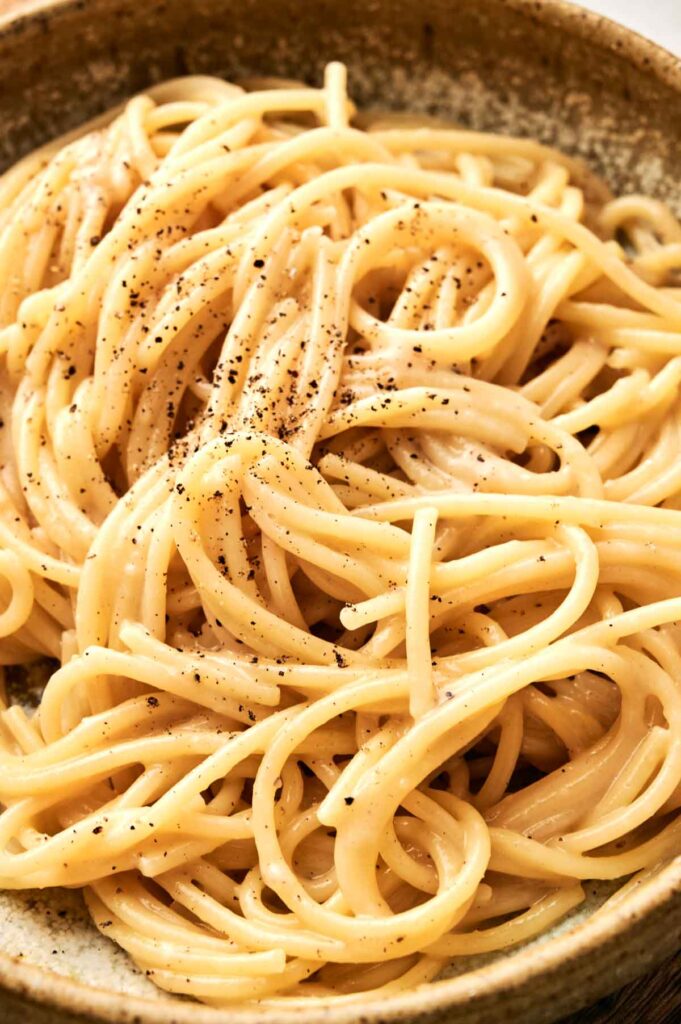
Cacio e Pepe is a pasta dish that’s all about simplicity and bold flavors. It’s made with just a handful of ingredients, but when you combine perfectly cooked pasta, freshly grated cheese, and a generous sprinkle of black pepper, something magical happens.
This post contains affiliate links. As an Amazon Affiliate, if you purchase through those links, I earn a commission. Thank you!
For me, Cacio e Pepe is a go-to dish for casual family dinners or when friends drop by unexpectedly. It’s quick to make, uses ingredients you probably already have, and always gets rave reviews. Plus, it’s best served fresh, so there’s no need to worry about leftovers or reheating—it’s all about enjoying a comforting meal in the moment.
Ingredients You’ll Need
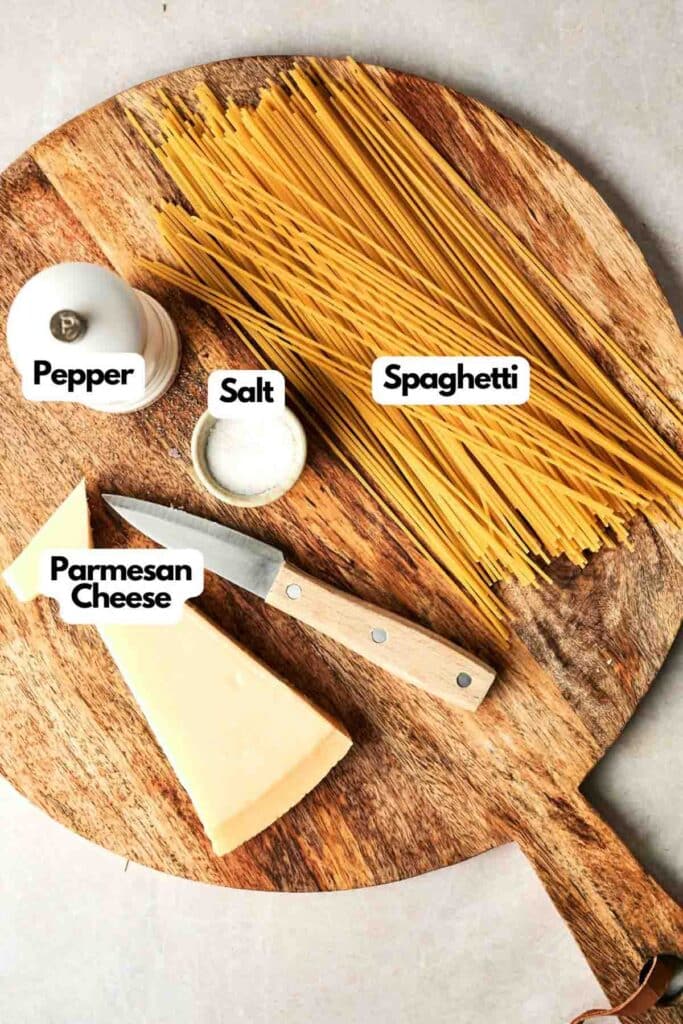
You’ll need all the ingredients shown in the photograph below.
How to Make Cacio e Pepe with Step-By-Step Instructions
Scroll down for the full recipe card containing a full printable recipe and measurements in both US customary and metric units.
You’ll be amazed at how simple and satisfying this recipe is when you follow my steps.
Cook the pasta
Start by bringing a large pot of water to a boil and seasoning it with kosher salt—this is your chance to flavor the pasta itself.
Add the spaghetti and cook it until it’s just shy of al dente. This should take about two minutes less than the package instructions suggest.
Before draining, save at least one cup of the pasta water—this starchy liquid is key to the sauce.
Prepare the cheese mixture
Combine half of the reserved pasta water with the grated Parmesan cheese in a bowl. Stir well until it forms a smooth, paste-like consistency. This ensures the cheese melts evenly when mixed with the pasta.
Toast the black pepper
In a large skillet or saucepan, add the coarsely ground black pepper with a splash of water—about two tablespoons. Heat this mixture until it simmers. Toasting the pepper enhances its flavor and gives the dish its signature kick.
Mix everything together
Add the drained pasta to the skillet with the toasted pepper. Pour in the cheese mixture and start stirring like your life depends on it—this is the step that makes the magic happen.
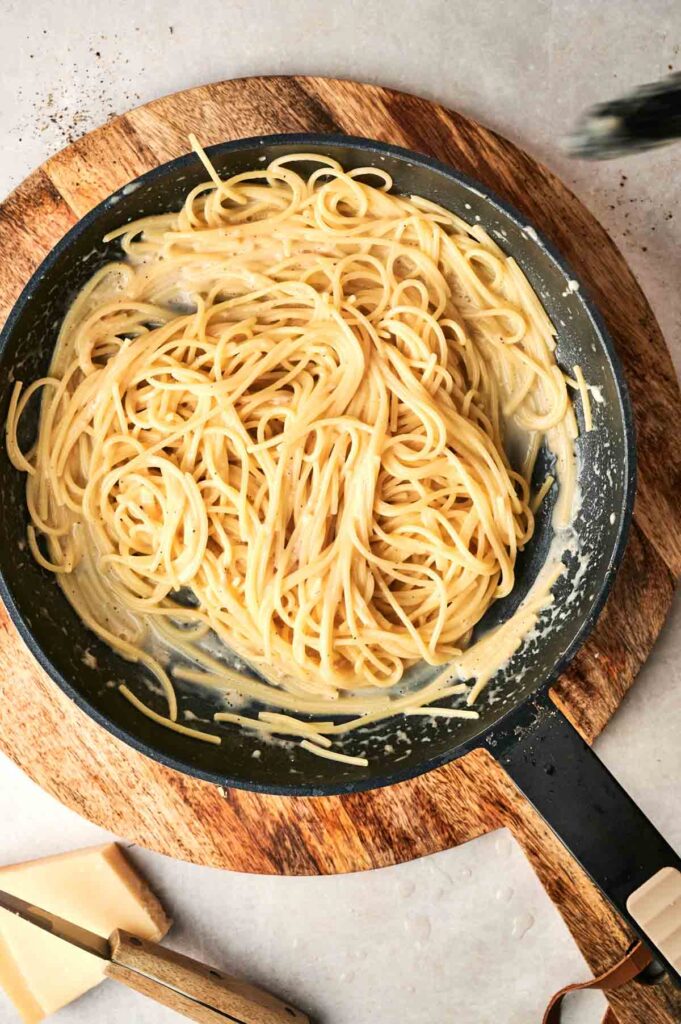
Stir vigorously for about five minutes, making sure every strand of pasta is coated in the creamy, cheesy sauce. If the mixture looks too thick, add more of the reserved pasta water a little at a time until the consistency is just right.
Serve and enjoy
Transfer the pasta to plates or bowls, top with an extra sprinkle of black pepper, and serve immediately and enjoy!

Ingredients
- 6 ounces pasta spaghetti
- 1 teaspoon coarsely ground black pepper plus more
- 1 ½ cup Parmesan cheese finely grated (or Pecorino romano)
- 1 teaspoon salt
Instructions
- Bring a large pot of water to a boil over high heat. Add a generous amount of salt to the water and cook the spaghetti, stirring occasionally, until it’s about two minutes shy of being fully tender. Before draining, reserve 1 cup of the pasta water.6 ounces pasta spaghetti, 1 teaspoon salt
- In a bowl, mix half of the reserved pasta water with the grated Parmesan cheese, stirring until smooth.
- Heat a large skillet over medium heat and add the coarsely ground black pepper along with 2 tablespoons of water. Let it simmer briefly to release the pepper’s flavor.1 teaspoon coarsely ground black pepper
- Add the drained spaghetti to the skillet and pour in the cheese mixture. Stir vigorously for about 5 minutes, ensuring the pasta is evenly coated in the sauce. If the mixture seems too thick, add more reserved pasta water, a little at a time, until the sauce reaches your desired consistency.1 ½ cup Parmesan cheese
- Serve immediately, topped with an extra sprinkle of black pepper if desired.
Notes
- Salt the Water Generously: A well-salted pot of water adds depth to the pasta and helps balance the dish.
- Use Freshly Grated Cheese: Pre-grated cheese won’t melt as smoothly, so stick to fresh Parmesan or Pecorino Romano.
- Reserve More Water Than You Think You Need: The starchy pasta water is essential for creating a silky sauce, so don’t skimp on saving it.
- Vigorously Stir: Stirring is what emulsifies the cheese and water into a creamy sauce—don’t rush this step.
- Adjust the Sauce Consistency: If the sauce seems too thick, add a bit more pasta water; if it’s too thin, keep stirring to thicken.
- Serve Hot: This dish is best enjoyed immediately before the sauce begins to set.
Nutrition
Recipe Notes and Expert Tips
I’ve gathered a few handy tips to make your Cacio e Pepe a success:
- Salt the Water Generously: A well-salted pot of water adds depth to the pasta and helps balance the dish.
- Use Freshly Grated Cheese: Pre-grated cheese won’t melt as smoothly, so stick to fresh Parmesan or Pecorino Romano.
- Reserve More Water Than You Think You Need: The starchy pasta water is essential for creating a silky sauce, so don’t skimp on saving it.
- Vigorously Stir: Stirring is what emulsifies the cheese and water into a creamy sauce—don’t rush this step.
- Adjust the Sauce Consistency: If the sauce seems too thick, add a bit more pasta water; if it’s too thin, keep stirring to thicken.
- Serve Hot: This dish is best enjoyed immediately before the sauce begins to set.
How to Store Leftover Cacio e Pepe
Cacio e Pepe is one of those dishes that truly shines when fresh, but if you have leftovers, store them in an airtight container in the fridge for up to two days.
Reheat gently in a skillet over low heat, adding a splash of water to loosen the sauce as it warms.
What to Serve With Cacio e Pepe
Pair your Cacio e Pepe with a crisp green salad for freshness or some roasted vegetables like asparagus or zucchini. Garlic bread or a simple bruschetta can also round out the meal.
More Easy Italian Recipes for You to Try at Home
If you love Italian food, then check out some of my favorites.

