
Homemade Pesto Pasta Recipe (Ready in Under 30 Minutes)
 Add Preferred Source
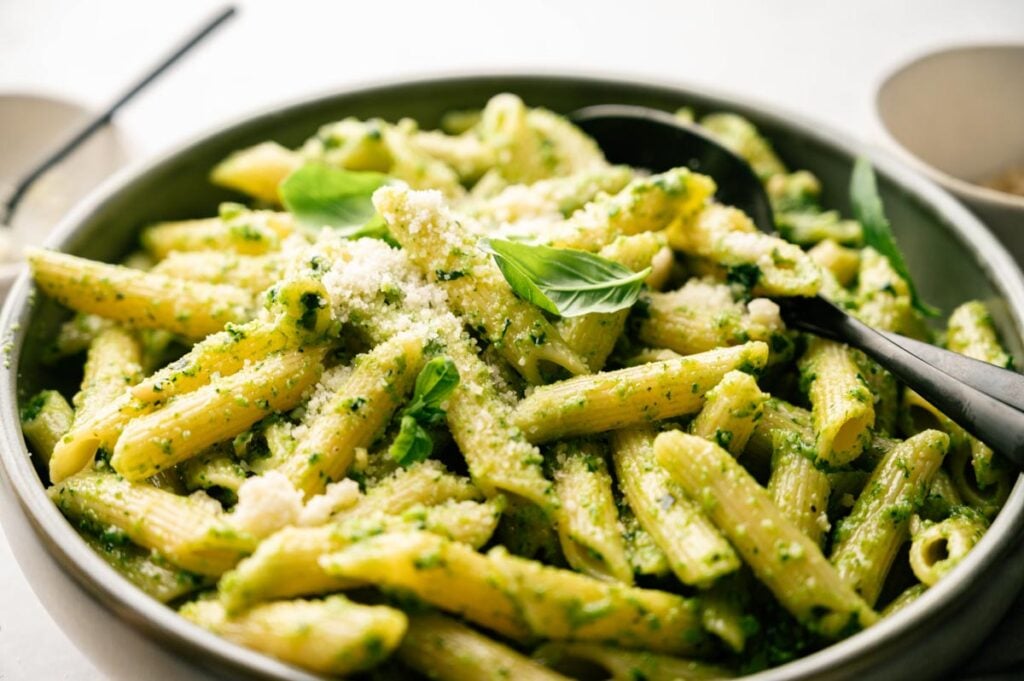
A jar of pesto always promises more than it gives, and it turns dull and gray the moment it meets hot pasta. This pesto pasta fixes that: fresh basil, good olive oil, and Parmesan blended into a bright green sauce and tossed straight through the pasta.
Years of cooking pasta the Italian way taught me the sauce belongs tossed through with a spoonful of the starchy cooking water, never poured over the top, and that is what carries this dish. You blend the pesto in one go while the pasta boils, so it comes together in just about twenty minutes.
This post contains affiliate links. As an Amazon Affiliate, if you purchase through those links, I earn a commission. Thank you!
Why You’ll Love This Recipe
- The basil tastes greener and brighter than anything from a jar. Jarred pesto is cooked to keep on a shelf, so it turns muddy and flat; blended fresh, the basil stays grassy, and the garlic keeps its edge.
- The sauce comes out silky instead of greasy. A spoonful of the starchy pasta water does that, where an extra glug of oil would only make it heavier.
- There’s nothing to simmer, reduce, or stir. You blend the pesto while the pasta boils, and it’s done and waiting before the pasta is even drained.
- Every bite holds the sauce, because the recipe is built on short, ridged shapes. Penne, fusilli, and rotini catch the pesto in their grooves where a smooth strand would let it slide off.
Ingredients You’ll Need
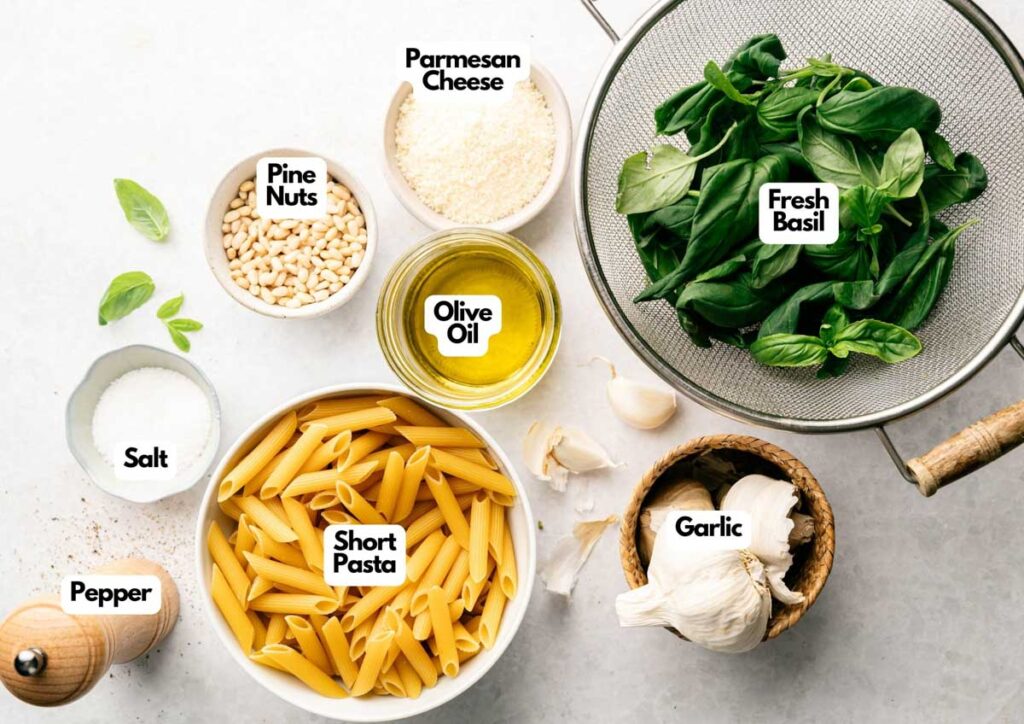
You’ll need all the ingredients shown in the photograph below.
- Fresh basil, and plenty of it. Two packed cups of leaves, fresh, not dried. Pick deep green leaves with no black spots, and if you grow your own, the smaller young leaves are sweeter than the big older ones.
- Pine nuts, toasted. Two tablespoons, toasted in a dry skillet until golden. The couple of minutes of toasting brings out a nutty depth that raw pine nuts don’t have, and pre-toasted pine nuts work if you’d rather skip the step.
- Parmesan, grated from a block. Half a cup, grated fresh if you can. Pre-grated Parmesan is coated to stop it clumping, which also stops it melting smoothly into the sauce, and freshly grated dissolves easily to give you the salty, savory backbone.
- Extra-virgin olive oil. Half a cup, streamed in at the end. So few ingredients carry this sauce that the oil is a real part of the flavor rather than just lubrication, so use one you’d happily taste on its own.
- Garlic, raw. Two cloves, blended raw so they keep a punchy, slightly hot bite that stands up to the sweet basil and rich cheese. Expect it to be assertive.
- Short pasta. A pound of penne, fusilli, or rotini; any short, ridged, or curled shape catches the sauce. I keep a bag of one for this and for my easy vegetable pasta, so it covers both.
How to Make Pesto Pasta
A complete printable recipe and the measurements in both US customary and metric are available in the recipe card below.
Toast the Pine Nuts
Toast the pine nuts first, in a dry skillet over medium heat, stirring often for two to three minutes until they turn golden and smell fragrant. They tip from golden to burnt in seconds, so keep them moving and pull them off the moment they color, then let them cool.
Boil the Pasta
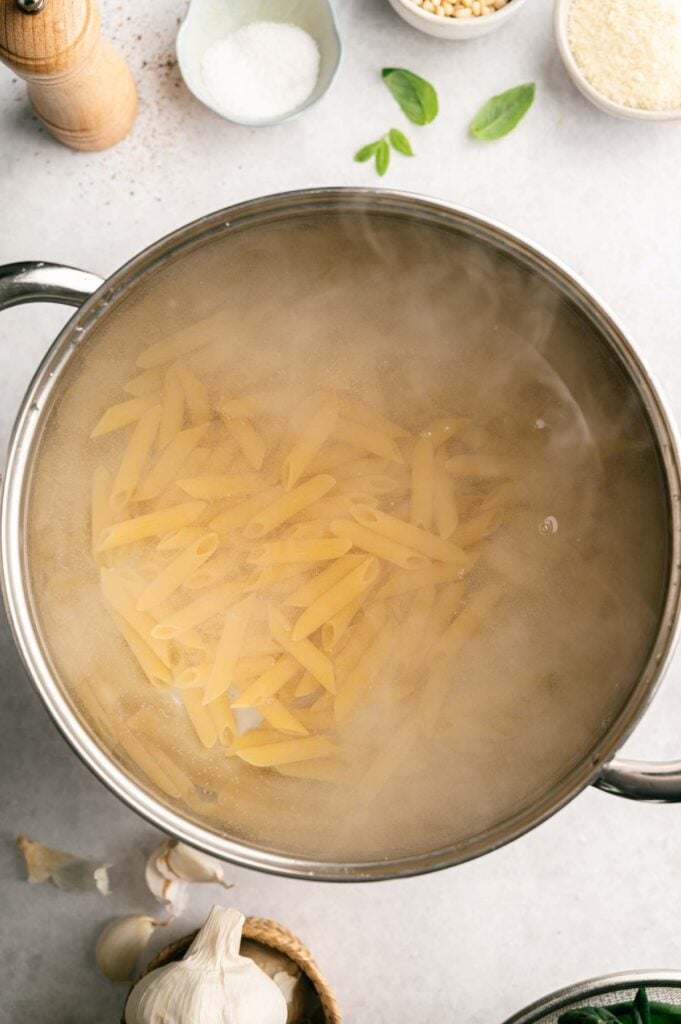
Bring a large pot of water to a boil and salt it well before the pasta goes in; it should taste like the sea, since this is your only chance to season the pasta itself. Cook to al dente, and just before you drain, scoop out a full cup of the starchy cooking water. That water is what makes the sauce silky later, and you can’t get it back once the pot is empty.

Make the Basil Pesto
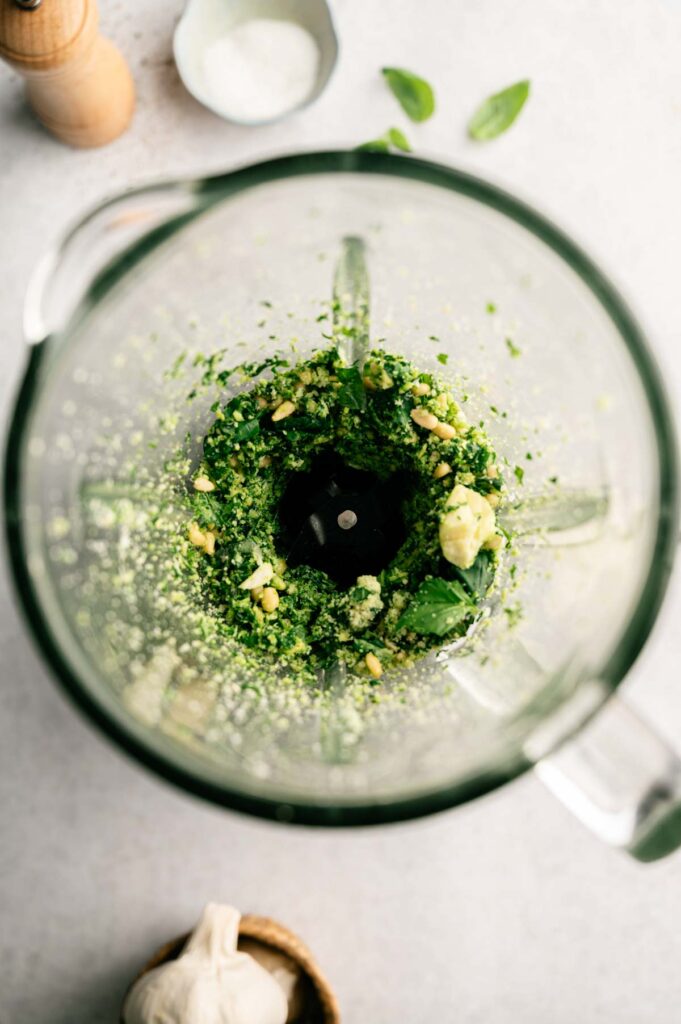
While the pasta cooks, put the basil, garlic, toasted pine nuts, and Parmesan in a food processor and pulse to a rough, fragrant paste. Don’t run it to a smooth purée yet, since a little texture is what you want.
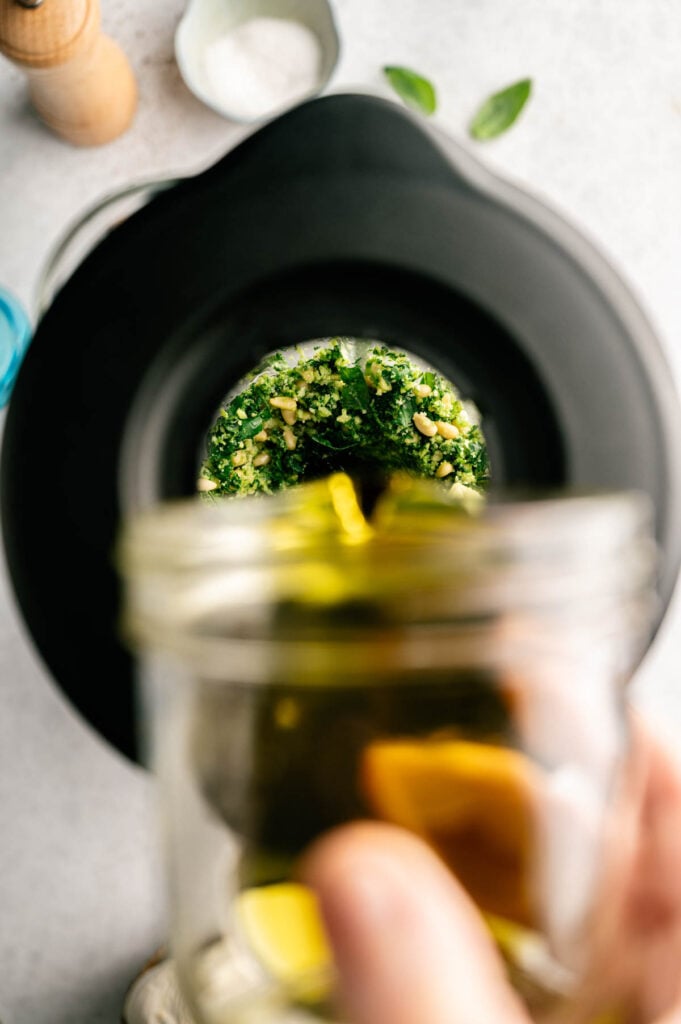
With the processor running, stream the olive oil in slowly until the pesto turns smooth and creamy, then taste and add salt as needed. Streaming the oil in rather than dumping it lets it emulsify, which is the difference between a silky sauce and a greasy, split one.
Toss and Serve
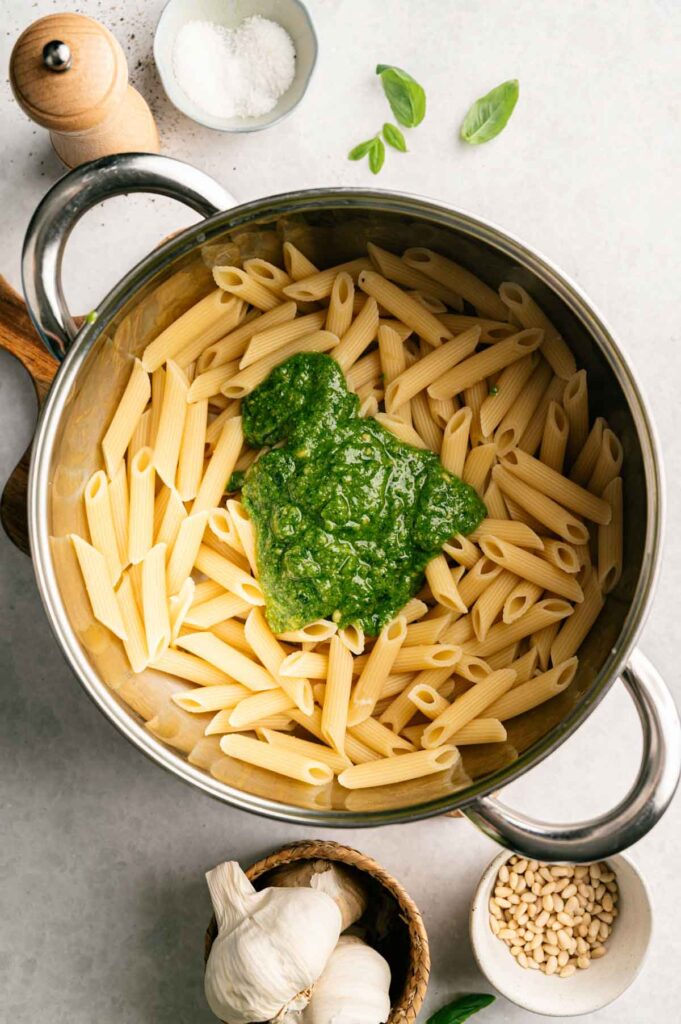
Toss the hot pasta with the pesto right away, adding the reserved pasta water a splash at a time until the sauce loosens and coats every piece. Hot pasta takes on the sauce far better than cooled pasta, so do this the moment it’s drained.
I serve straight away with extra Parmesan, and when I want a deeper, more savory bowl on a cold night, I make my creamy mushroom pasta instead, which trades the fresh herb sauce for a rich, earthy one.
Recipe Notes and Expert Tips
- Toast the pine nuts, and don’t look away. They tip from golden to burnt in about fifteen seconds, so this is the one step where watching the pan beats trusting the timer.
- Save more pasta water than you think you’ll need. Reserve a full cup even though you’ll likely use less. The starch is what lets the pesto cling smoothly instead of turning dry and clumpy, and once you’ve drained the pot, it’s gone. This is the fix for the oily-versus-dry problem most pesto pasta runs into: add the starchy water, not more oil.
- Stream the oil in slowly. With the processor running, add the oil gradually rather than all at once so it emulsifies. That’s what gives you a smooth, creamy pesto instead of one that looks oily and separated.
- Toss while the pasta is hot. Hot pasta absorbs pesto far better than pasta that’s cooled and firmed up. Drain, then toss immediately for the best coating.
Recipe Variations
- Walnuts instead of pine nuts. They’re cheaper and easier to find, and they give the pesto an earthier, more robust edge. Toast them the same way; it’s the swap I’ve tested most often when pine nuts aren’t in the pantry.
- Make it vegan by leaving out the Parmesan and blending in a couple of tablespoons of nutritional yeast with an extra pinch of salt. It’s a well-supported swap: you lose a little of the creamy richness the cheese brings, but the basil, garlic, and yeast keep the savory note, and it’s how I make it when I want the dish fully plant-based.
- Stirred in at the end, a squeeze of fresh lemon juice lifts the whole dish and cuts the richness of the oil and cheese. I’ve tested this most in high summer, when I want it to taste lighter.
- Add roasted cherry tomatoes. Blister a handful in olive oil and fold them through at the end. I’ve tested this when I want more color and little bursts of sweet-sharp acidity against the herby, garlicky pesto.
How to Store Leftovers
Leftover pesto pasta keeps in the fridge for 3 to 4 days in an airtight container; loosen it with a splash of water when you serve. I usually eat the leftovers cold or at room temperature straight from the container, which sidesteps the way reheating can dull the green. Get cooked pasta into the fridge within two hours, and within one hour if it’s above 90°F (32°C) outside.
To get ahead, make the pesto on its own and freeze it rather than the finished dish. Spoon it into an ice cube tray, smooth a thin layer of olive oil over each well to keep the air out, and freeze until solid, then move the cubes to a freezer bag. They keep for up to 3 months, and each cube is about a single serving to drop straight into hot pasta.
What to Serve With Pesto Pasta
I like something bright and sharp alongside this to cut the richness of the pesto. A Caprese pasta salad with fresh mozzarella and tomatoes is a natural match, or a plain arugula salad with a lemon vinaigrette does the same job.
Warm crusty bread or garlic bread on the side turns it from a quick bowl into a full meal, and a plate of olives or marinated artichokes makes it feel more like an occasion. This is a full plate on its own, but if you’re putting out a spread for a group, my spicy Gigi Hadid pasta brings some heat next to the herby one.
FAQs
Almost always because it was loosened with more oil instead of pasta water. Oil makes a stiff pesto greasy, while a splash of the starchy cooking water thins it and helps it cling. Save a full cup before you drain, and add it a little at a time until the sauce coats every piece.
Basil browns when it’s exposed to air, which is oxidation, not spoilage, so it’s still safe to eat. Pressing a thin layer of olive oil over the surface before you store it keeps the air off and holds the green. A squeeze of lemon helps a little too, though the oil layer does most of the work.
A short shape with ridges or curves, like penne, fusilli, or rotini. Those grooves hold the pesto, while a smooth strand lets it slip off. That’s why this recipe is built around a short pasta rather than long spaghetti.
You can, and it works in a pinch, but this is the recipe where homemade tastes clearly different. A jar is cooked for shelf life, so it’s duller and less green than a batch you blend fresh. If you do use a jar, loosen it with some of the reserved pasta water the same way.
More Easy Pasta Recipes to Try
These are the pasta nights I make when I want a change from pesto.
- Boursin cheese pasta. My pick for a creamy night. The cheese melts straight into a silky sauce, and it’s almost as quick as this one.
- Morel mushroom pasta. The one I save for when I can get hold of morels. It turns a small handful into a plate that tastes like a night out.
- Cacio e pepe. For the nights I want it stripped right back. It’s pasta, cheese, and pepper, and a reminder that a few things done well are often enough.
- Pasta alla Sorrentina. Worth the extra effort. It’s a warm, cooked sauce of tomatoes and mozzarella that tastes like the coast it comes from.
Ingredients
- 2 cups fresh basil leaves
- 2 cloves garlic minced
- ½ cup extra-virgin olive oil
- ½ cup grated Parmesan cheese
- 2 tablespoons pine nuts toasted
- Salt to taste
- 1 pound short pasta such as penne, fusilli, or rotini

Video
Instructions
- Bring a large pot of salted water to a boil. Cook the pasta according to package instructions until al dente. Reserve 1 cup of the pasta cooking water, then drain the pasta.1 pound short pasta
- In a food processor, add the basil, garlic, pine nuts, and Parmesan cheese. Pulse until finely chopped.2 cups fresh basil leaves, 2 cloves garlic, ½ cup grated Parmesan cheese, 2 tablespoons pine nuts
- With the food processor running, slowly pour in the olive oil until the pesto becomes smooth and creamy. Taste the pesto and add salt as needed.½ cup extra-virgin olive oil, Salt
- Toss the hot pasta with the prepared pesto. Add a small amount of the reserved pasta water, as needed, to loosen the sauce and evenly coat the pasta.
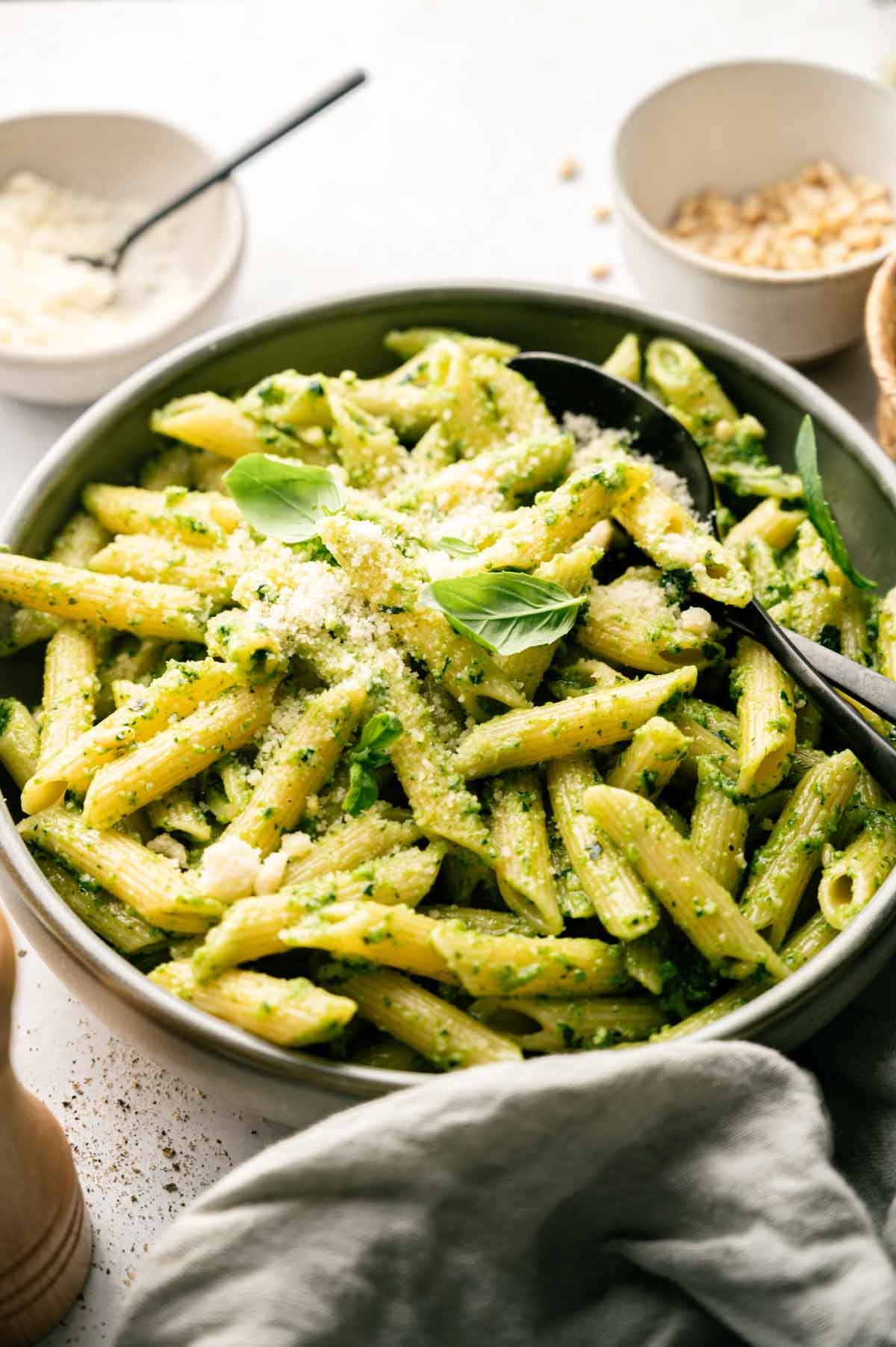
- Serve immediately, topped with extra grated Parmesan cheese if desired.
Notes
Nutrition
